NEW ADAM, 2026
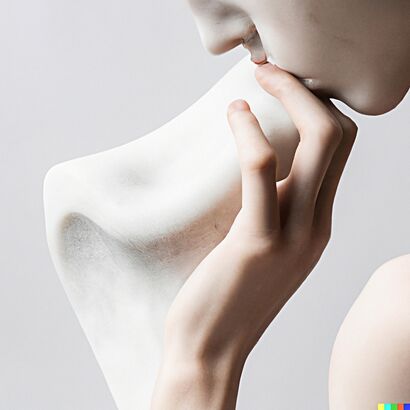
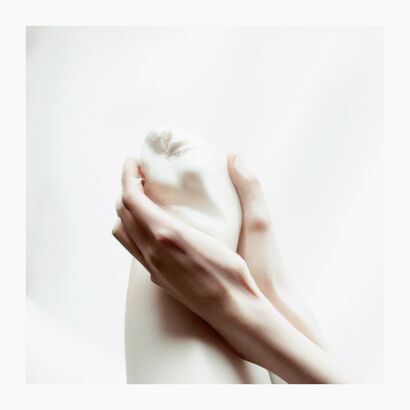
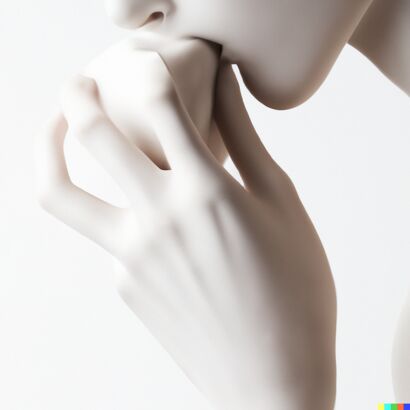
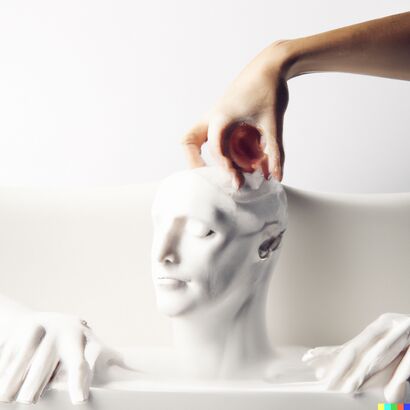
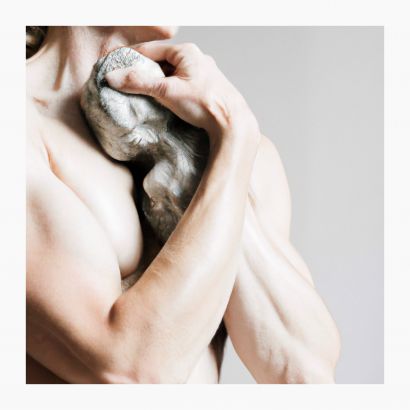
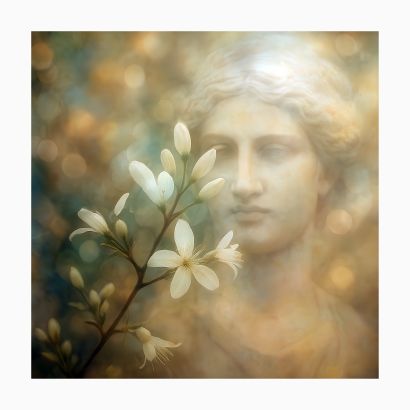
The work originates from the combination of original photographs, details of the human body, images of sculptural matter, and visual references developed by the artist. The hand, still marked by plaster dust, introduces the tangible presence of the creative gesture into the image, while the unfinished face evokes the tradition of classical sculpture and the process through which identity takes form.
Artificial intelligence was used as a tool for composition and visual synthesis, enabling the integration of the different source materials, the exploration of the relationship between the face, the hand, and the material, and the creation of certain formal transitions. The conception of the work, the selection of the images, the composition, the proportions, and the final definition remain entirely under the artist’s direction.
Following the AI-assisted processing stage, the image underwent manual digital recomposition, erasure, layering, tonal adjustment, and surface refinement. Particular attention was devoted to the unfinished areas of the head, the traces of plaster, the skin, and the relationship between bodily presence and matter that has not yet taken form.
The work is produced as a Fine Art print using archival pigment inks on 350 gsm museum-grade Hahnemühle paper, resistant to UV light, and subsequently mounted on an aluminium Dibond panel. The matte surface of the paper preserves the tactile and sculptural quality of the image, while the aluminium support ensures stability and durability.
“New Adam” belongs to the New Humanity project, a body of research devoted to the possible construction of a new human identity. The series reflects on overcoming inherited models of strength, domination, and perfection, imagining figures that remain unfinished, vulnerable, and capable of transformation. The new Adam is not born already defined: he is shaped by a civilisation attempting, with fingers still stained by matter, to be born anew—and better.
New Adam imagines the possible rebirth of the masculine beyond war, domination and violence. A white, unfinished face emerges like a sculpture still in formation: not a hero, not a warrior, not an idol, but a vulnerable presence, still open to transformation. The hand stained with plaster does not impose a form; it accompanies a birth. The gesture becomes care, matter and desire: the beginning of a new contemporary Eros.
The work moves beyond the simple aesthetics of the face to become a contemporary myth. It evokes a civilization trying, with fingers still soiled, to be born better. Here, the masculine is no longer a force that conquers, but a presence that listens; not a power that wounds, but a regenerative energy. New Adam suggests a future figure of humanity: fragile, luminous and capable of imagining the world anew.