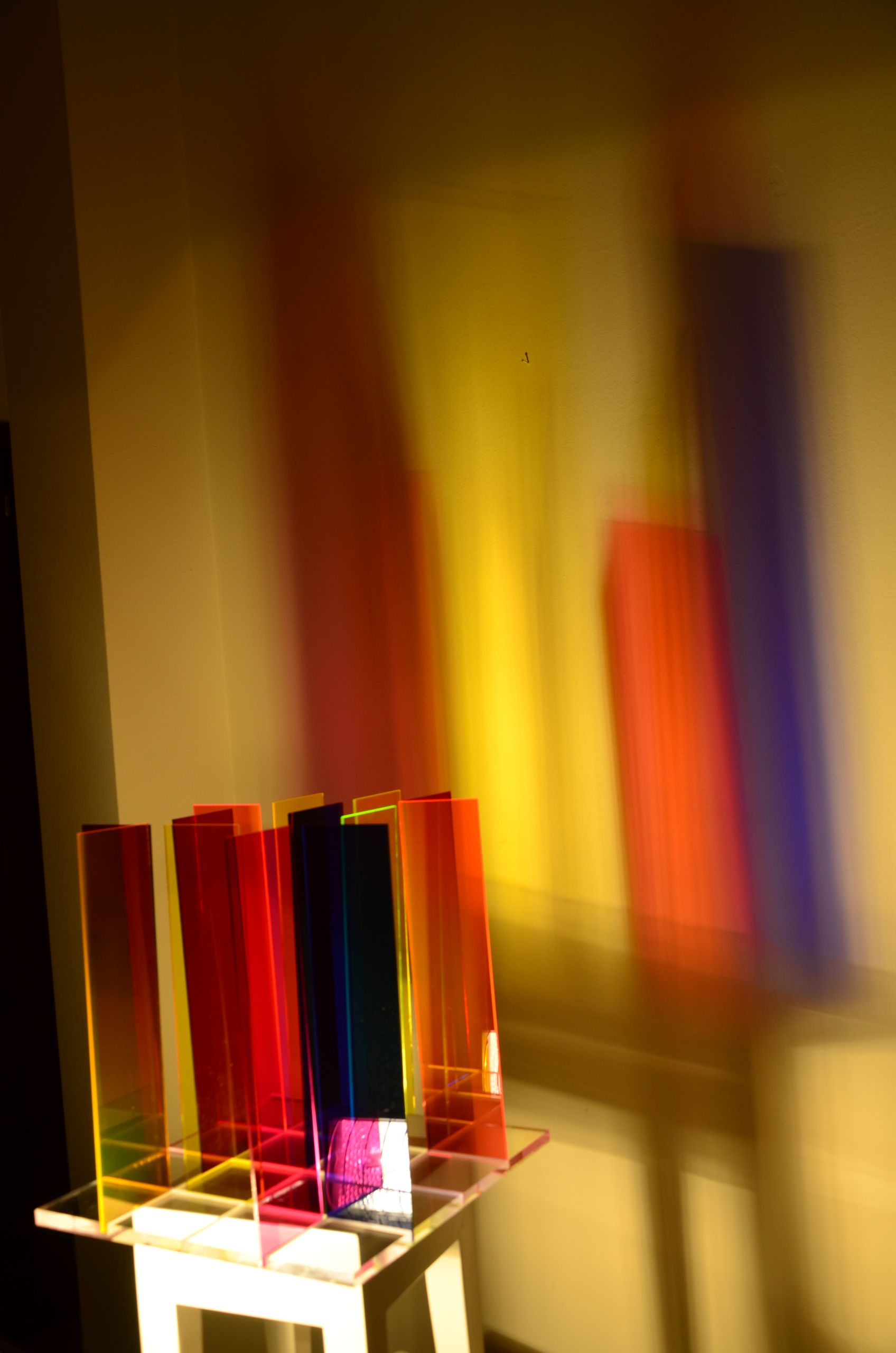
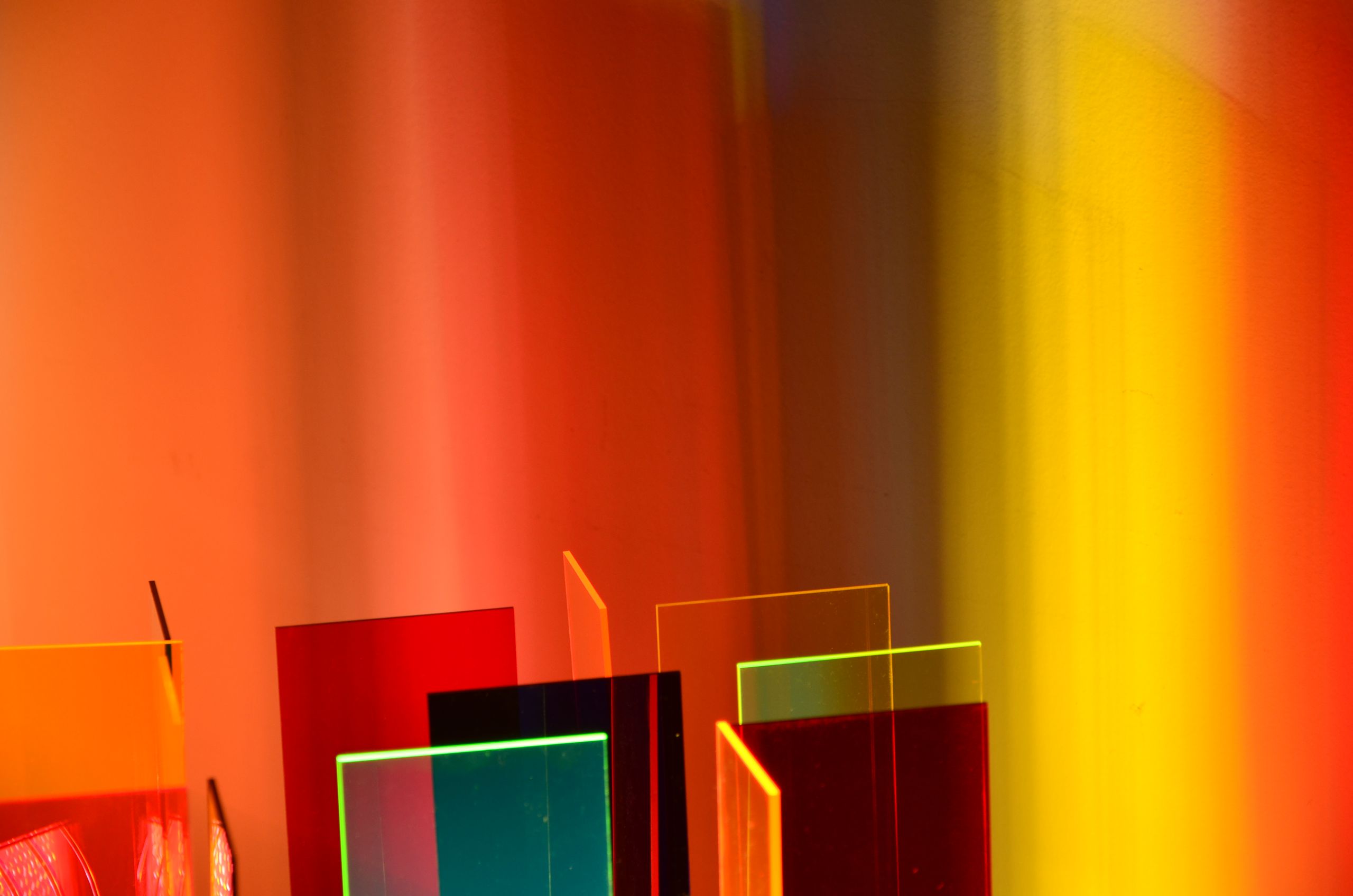
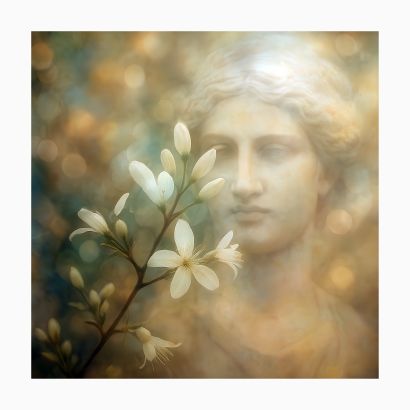
Le Cromosculture generano colori virtuali sia all’interno sia all’esterno della loro struttura. Realizzate attraverso materiali trasparenti e riflettenti, non si limitano a contenere il colore, ma lo producono, lo moltiplicano e lo proiettano nello spazio circostante.La luce attraversa la materia, la modifica e ne rivela possibilità inattese: riflessi, ombre, variazioni cromatiche e presenze immateriali nascono dall’incontro tra opera, ambiente e punto di vista dello spettatore. Il colore non è dunque un elemento fisso, ma un fenomeno in trasformazione, mutevole e relazionale.In queste opere la scultura supera la propria dimensione oggettuale per diventare esperienza percettiva. La forma agisce come dispositivo sensibile, capace di rendere visibile ciò che normalmente sfugge: la vibrazione della luce, l’instabilità del colore, la natura poetica della visione. Le Cromosculture anticipano una ricerca che attraversa tutta la pratica dell’artista: il rapporto tra corpo, percezione, materia e spazio, dove l’opera non è mai soltanto da guardare, ma da attraversare con lo sguardo.
Chromosculptures
The Chromosculptures generate virtual colors both inside and outside their structure. Created through transparent and reflective materials, they do not merely contain color, but produce it, multiply it and project it into the surrounding space.Light passes through matter, transforms it and reveals unexpected possibilities: reflections, shadows, chromatic variations and immaterial presences arise from the encounter between the artwork, the environment and the viewer’s point of view. Color is therefore not a fixed element, but a mutable and relational phenomenon in constant transformation.In these works, sculpture moves beyond its object-based dimension to become a perceptual experience. Form acts as a sensitive device, capable of making visible what usually escapes perception: the vibration of light, the instability of color, the poetic nature of vision.The Chromosculptures anticipate a research path that runs throughout the artist’s practice: the relationship between body, perception, matter and space, where the artwork is never only something to be looked at, but something to be crossed by the gaze.