DANCE TO LIFE
Rewriting the Archive of Movement
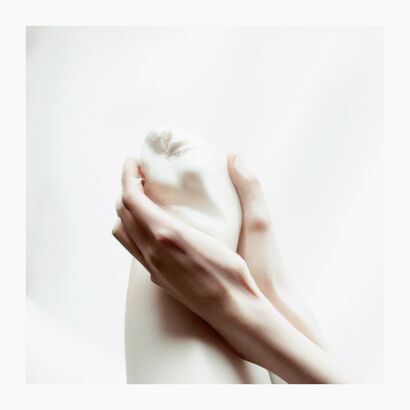
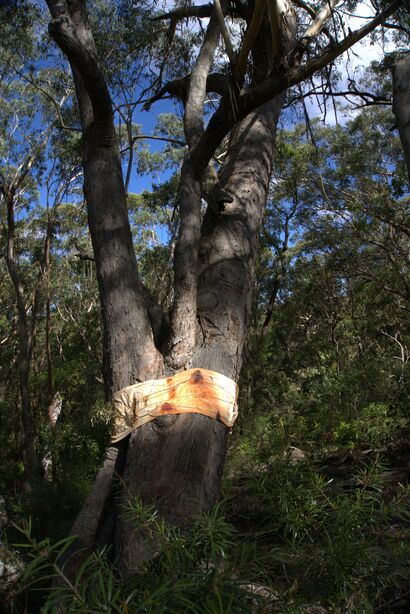
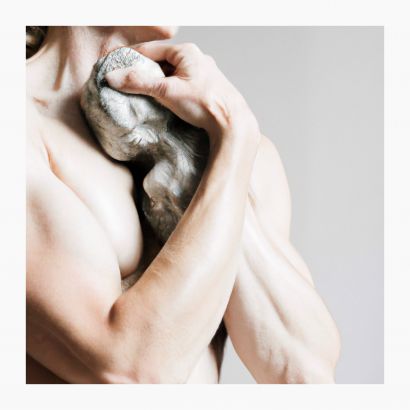
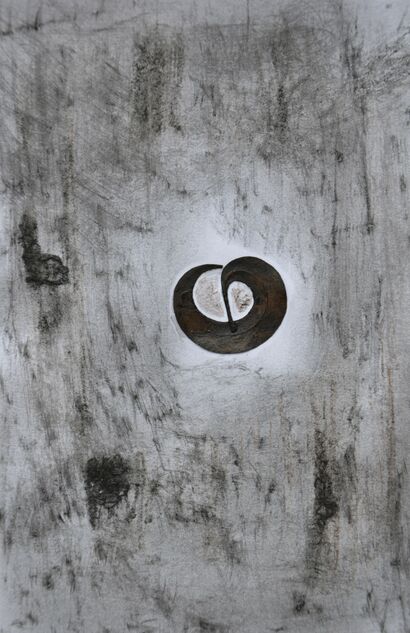
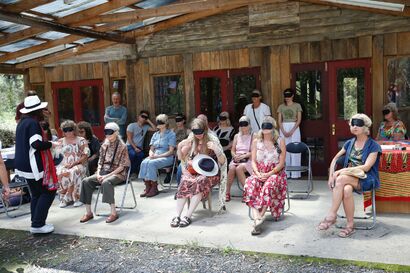
Dance to Life transforms found photographs, taken from an old publication on dance, into contemporary archetypes of the body. Originally intended to document movement, grace and discipline, these images are removed from their archival context and reactivated through erasure, graphic intervention and textual insertion.
The dancing body becomes a threshold between freedom and constraint. What appears as movement is also the trace of invisible rules: social conventions, gender roles, desires, expectations and systems of power that shape the way bodies inhabit space. Dance is no longer only a form of beauty, but a metaphor for the human condition: a choreography of desire, resistance and adaptation.Words such as ONE, UP and NO RABBIT interrupt the original narrative of the image. They do not explain; they disturb, open and displace. Their presence creates a suspended language, in which the past does not remain fixed, but becomes available to new meanings.Through appropriation and transformation, Dance to Life reopens the archive as a living space of tension, where images remember, bodies are rewritten, and identity emerges through gesture. What once documented movement becomes a new choreography of memory, in which the past is no longer still, but begins to move again.
Technique
Found photographic images taken from an old publication on dance, reworked through erasure, visual writing and image manipulation. The works are digitized through high-resolution professional scanning and produced as museum-quality Fine Art prints, using archival pigment inks on certified UV-resistant paper.
《舞向生命》
重写运动的档案
《舞向生命》 将取自一本旧舞蹈出版物中的现成照片转化为身体的当代原型。这些图像最初旨在记录运动、优雅与纪律,如今被从原有的档案语境中抽离出来,并通过擦除、图形干预与文字插入被重新激活。
舞动的身体成为自由与约束之间的一道门槛。看似自由的运动,同时也是无形规则留下的痕迹:社会习俗、性别角色、欲望、期待以及权力系统,共同塑造着身体在空间中存在的方式。舞蹈不再只是美的形式,而成为人类处境的隐喻:一场由欲望、抵抗与适应构成的编舞。
诸如 ONE、UP 和 NO RABBIT 这样的词语打断了图像原有的叙事。它们并不解释;它们扰动、开启并转移意义。它们的出现创造出一种悬置的语言,使过去不再固定,而是向新的意义敞开。
通过挪用与转化,
《舞向生命》 将档案重新开启为一个充满张力的活性空间:在这里,图像记忆,身体被重新书写,身份通过姿态浮现。曾经用于记录运动的影像,成为一场新的记忆编舞;在其中,过去不再静止,而是重新开始移动。
技法
取自一本旧舞蹈出版物中的现成摄影图像,经过擦除、视觉书写与图像处理重新创作。作品通过高分辨率专业扫描进行数字化,并制作成博物馆级 Fine Art 艺术微喷作品,使用档案级颜料墨水印制于经认证的抗紫外线纸张上。