ITA
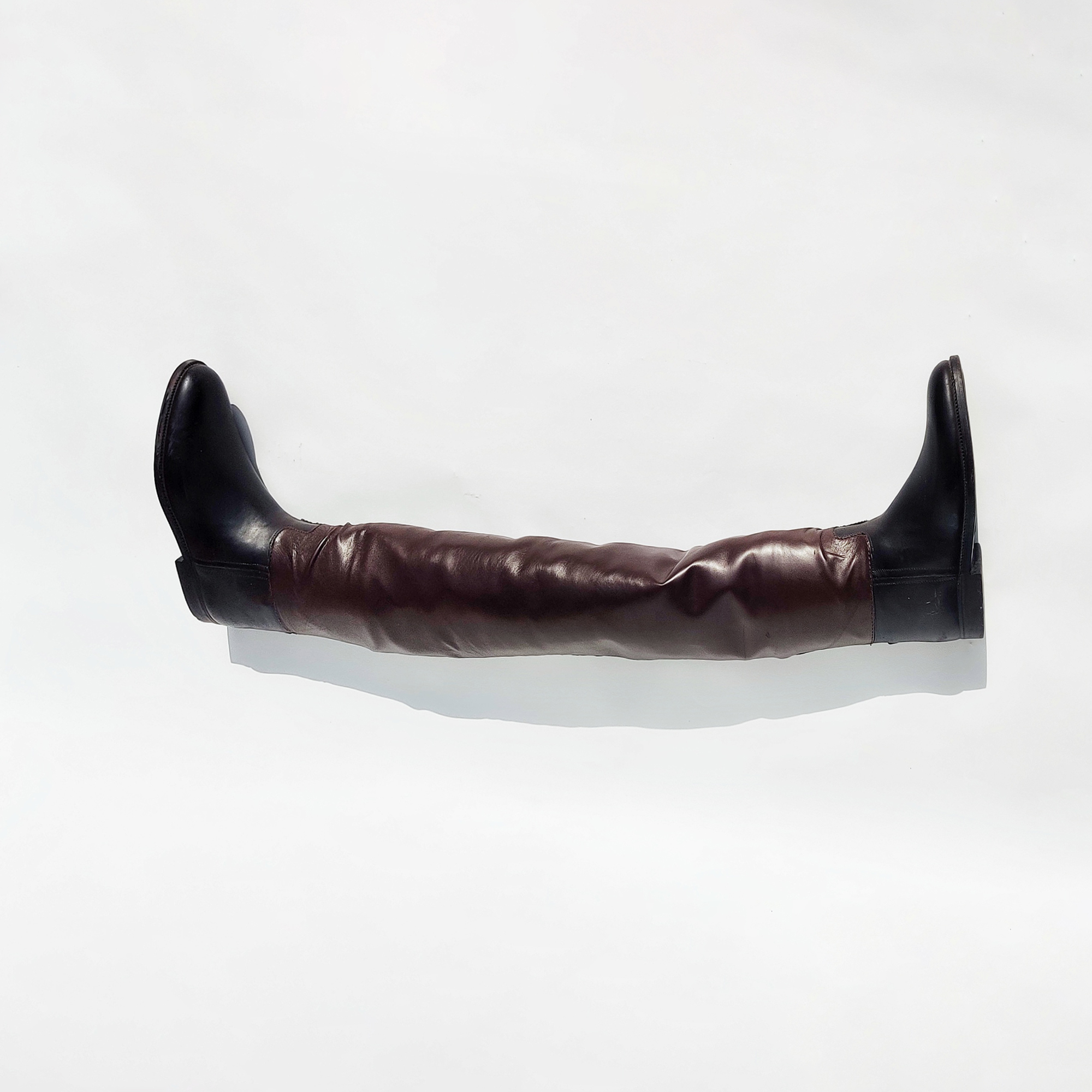
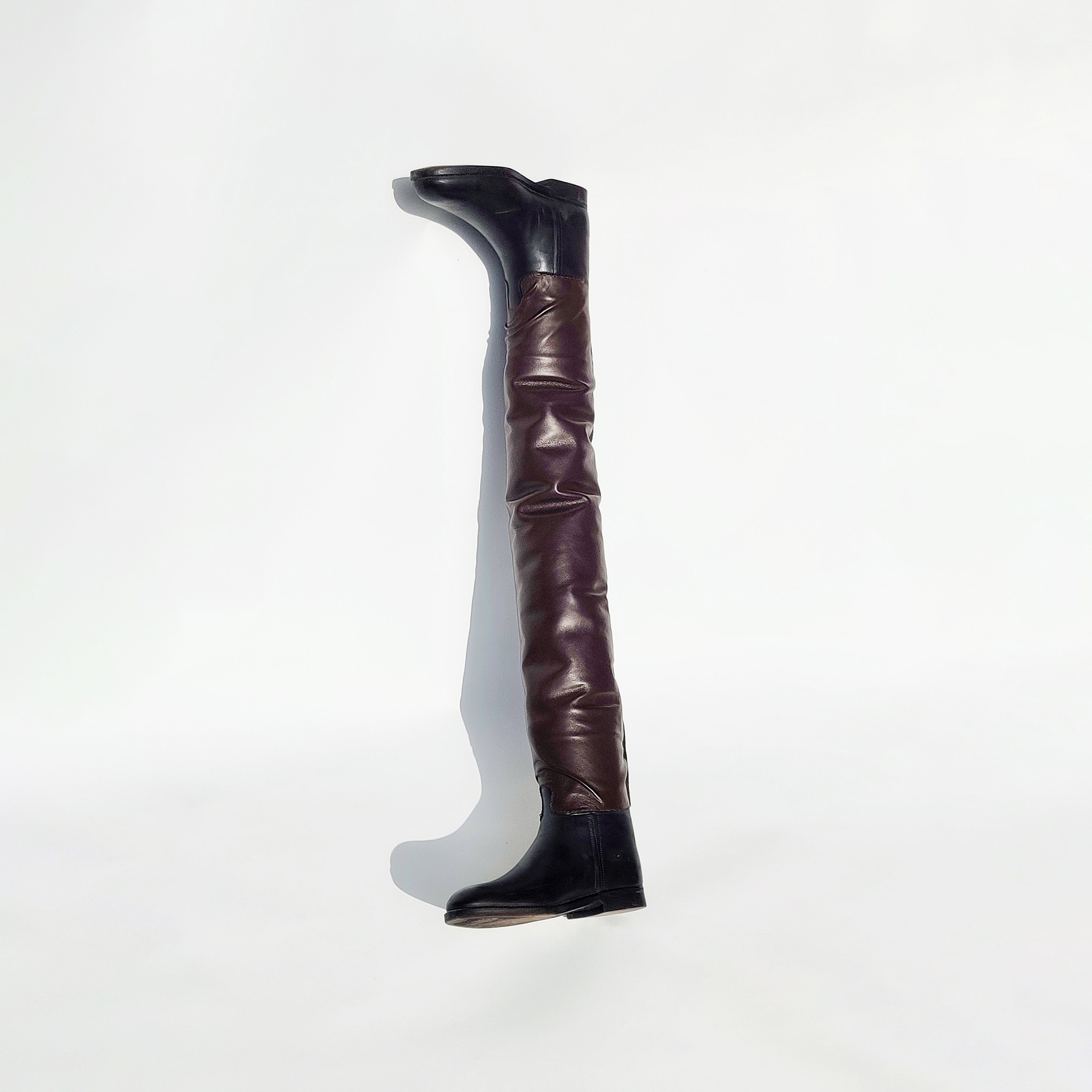
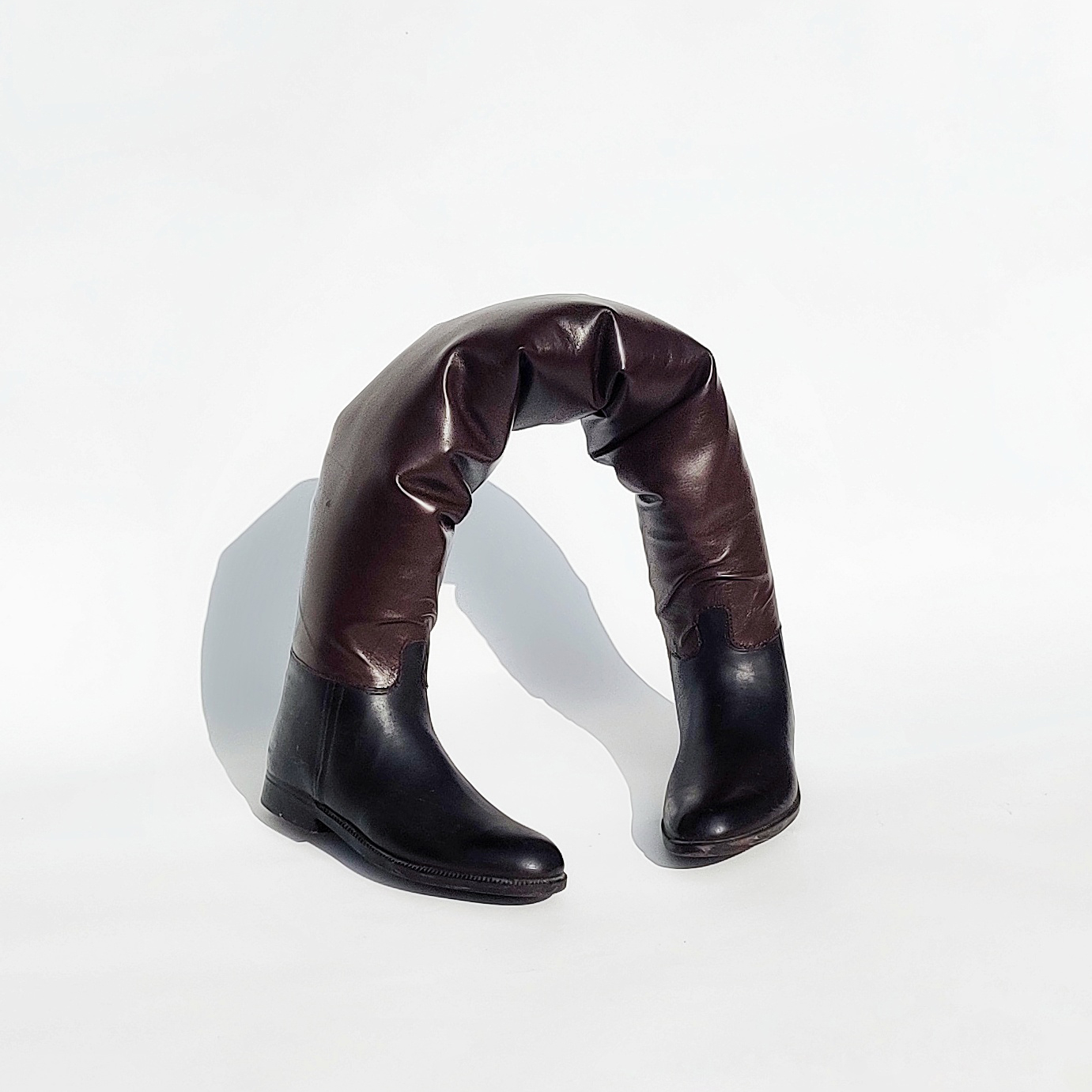
In "STEPS", l’artista opera un radicale sabotaggio semantico e funzionale del quotidiano, trasformando il concetto di "paio" in una singolarità indissolubile che eleva l’oggetto oltre la sua natura di strumento di locomozione. Attraverso la fusione anatomica di due stivali in un unico corpo scultoreo, l’opera rinuncia violentemente alla propria funzione pratica per assurgere a simbolo di una stasi riflessiva: qui, il vanto della tradizione manifatturiera marchigiana si emancipa dalla schiavitù dell’uso e dalle logiche del mercato per farsi pura forma visiva, diventando un’entità autonoma che nega il movimento per favorire il pensiero. Questo "essere uno" risolve la doppiezza opportunistica insita nel proverbio dei "due piedi in una staffa" in una sintesi estrema e forzata, dove la calzatura, smettendo di essere merce di consumo, costringe l’osservatore a confrontarsi con un oggetto che ha sacrificato la propria utilità per rivendicare il diritto di essere esclusivamente un'opera da guardare.
ENG
In "STEPS", the artist executes a radical semantic and functional sabotage of the everyday, transforming the concept of a "pair" into an indissoluble singularity that elevates the object beyond its nature as a tool for locomotion. Through the anatomical fusion of two boots into a single sculptural body, the work violently renounces its practical function to become a symbol of reflective stasis: here, the pride of the Marche manufacturing tradition is emancipated from the bondage of utility and market logic to become pure visual form. It emerges as an autonomous entity that denies movement in favor of contemplation. This "oneness" resolves the opportunistic duplicity inherent in the Italian proverb "keeping one's feet in two stirrups" (being on both sides of the fence) into an extreme and forced synthesis; by ceasing to be a consumer commodity, the footwear compels the observer to confront an object that has sacrificed its utility to reclaim the right to exist exclusively as a work of art.