THE OILMEN'S PARADISE
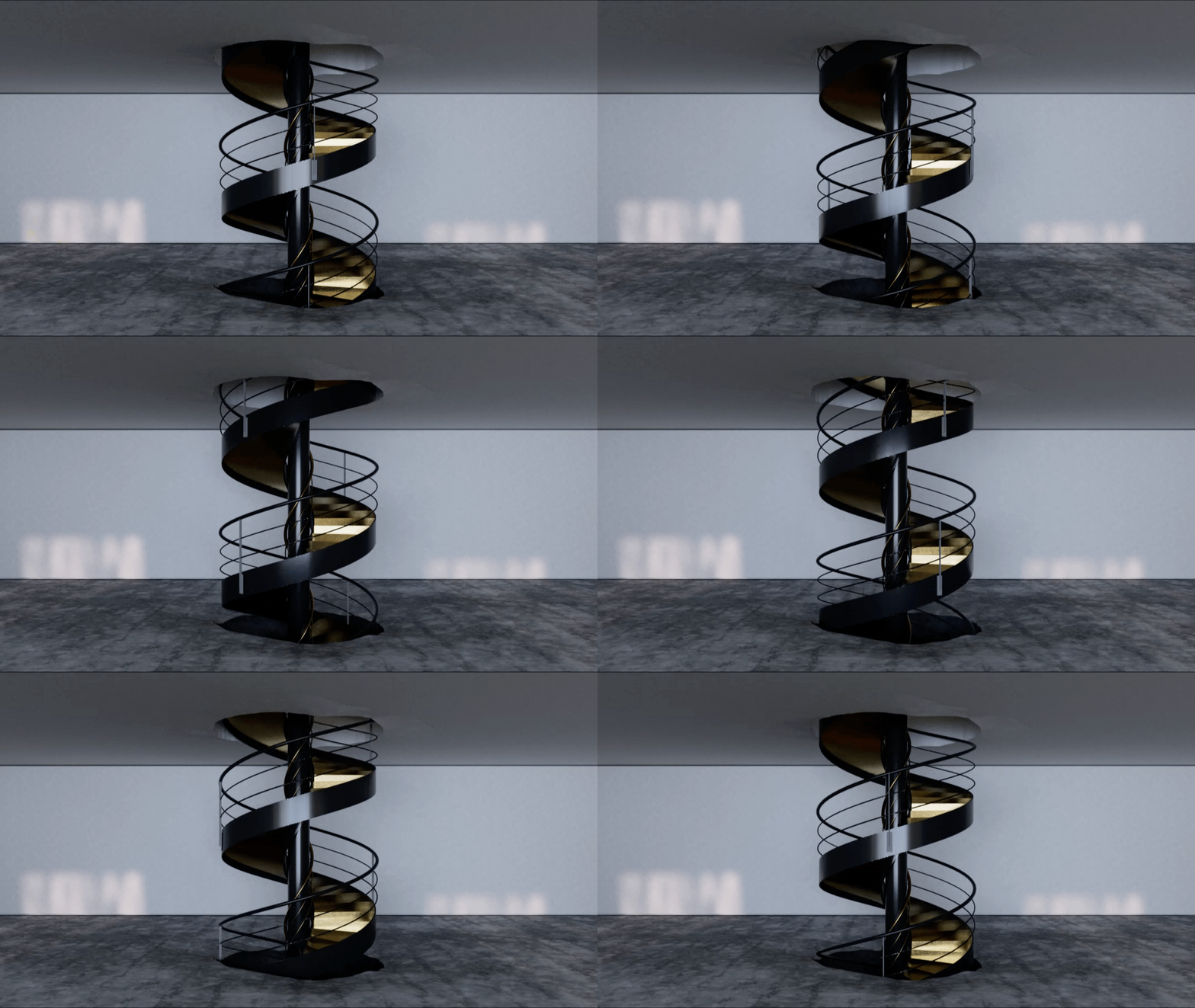
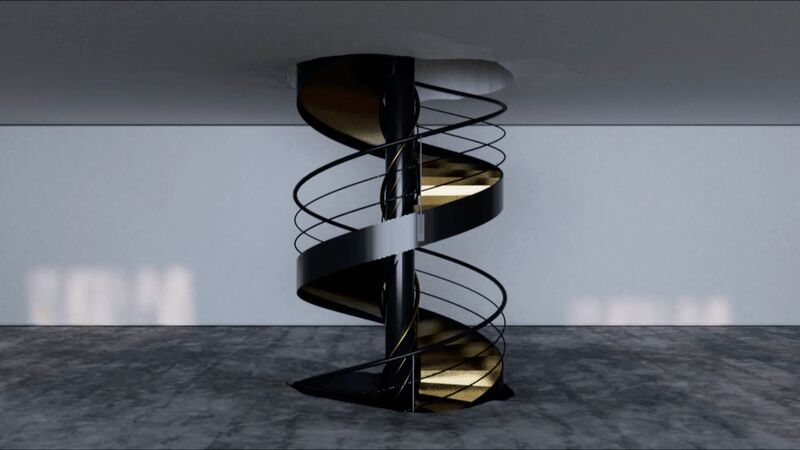
A spiral staircase drilling the world in search of the gateway to paradise.
Crude oil more than a mighty source of energy for all is a ramp for the few to riches.
Renewable energies seem to have apparently taken the place of old fuels; with this work, the artist wants to remind us of the role played by multinational hydrocarbon corporations in the last century. Crude oil, rather than a mighty source of energy for all, is a ramp for the few to riches. The work takes its cue from the similarity between the spiral staircase and the helix of a drill. Rotating on its central pivot, the spiral of the staircase seems to descend into the ground, perforating the ceiling and floor in search of crude oil, while simultaneously elevating the wealthy oil workers to paradise.
Thus Jacob's Ladder is a modern interpretation of one of the most recurrent themes in early Christian art: the name of the work refers to the 'Jacob's Ladder', a staircase uniting heaven and earth that appeared to Jacob in a dream. The mythological staircase, recurring in the religious literature of the 13th-14th centuries, is also described as golden in Dante Alighieri's work; Papi leaves the golden steps on an iron structure as black as oil, like an immense drill bit in search of black gold. In contrast to the religious interpretations of Jacob's Ladder descending from heaven and only passable by angels and purified entities, Jacob's Drill is a human construct invading hell in search of wealth and power, the only tools capable of opening a way into earthly paradise. Thus the spiral staircase pierces ceiling and floor, drilling the world down into the waters of Cocytus and simultaneously ascending from Judecca to Saturn's heaven.