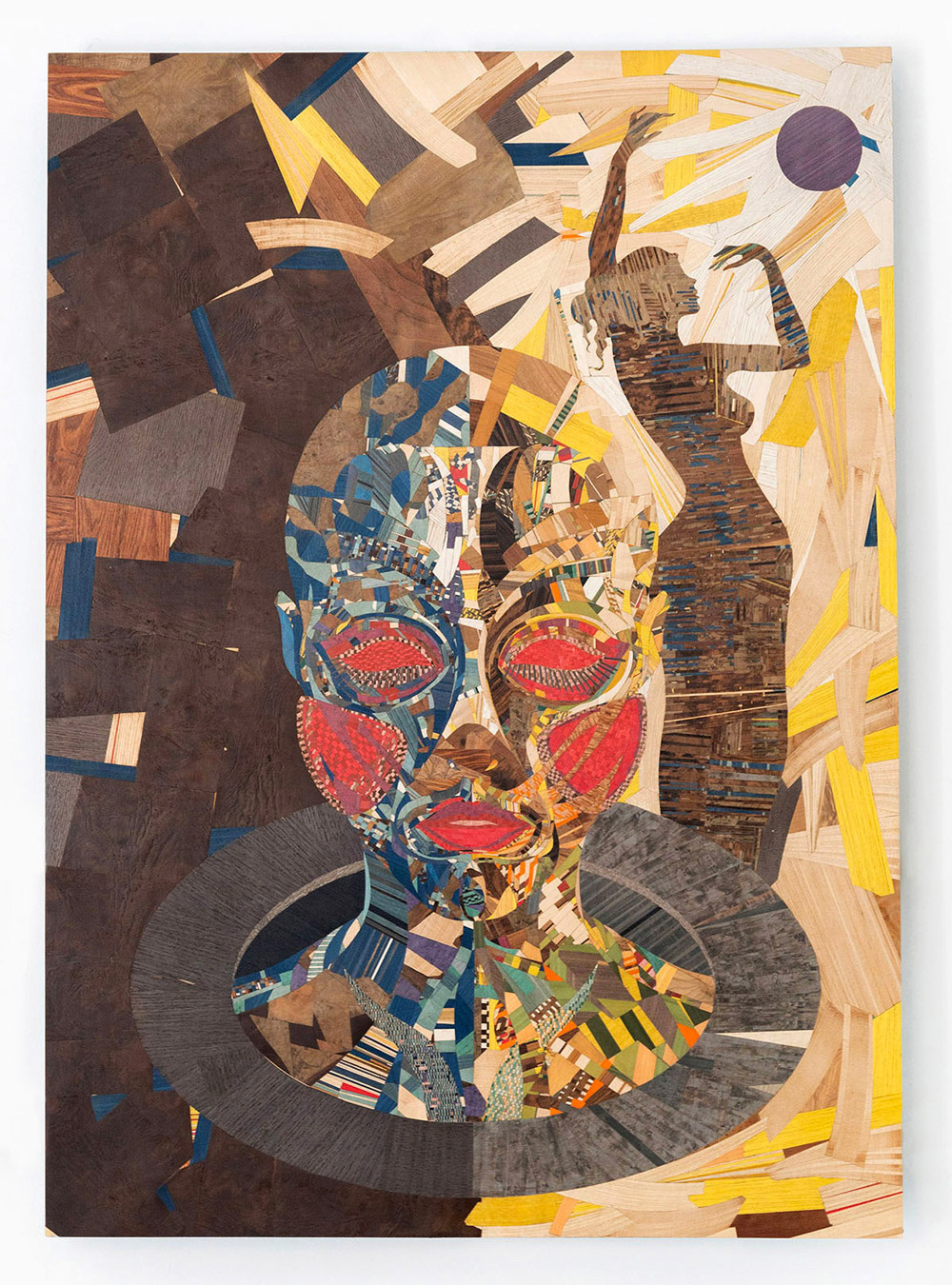
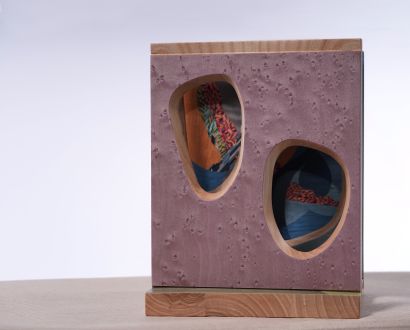
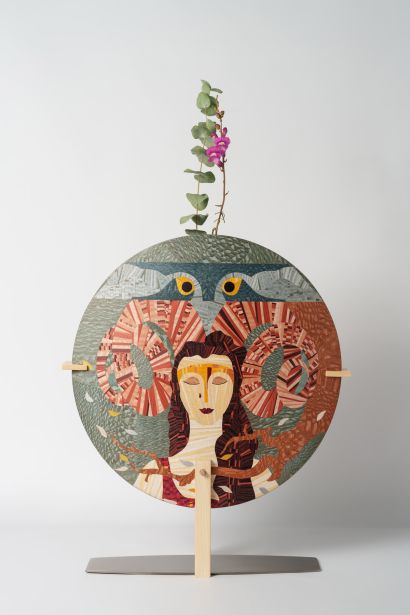
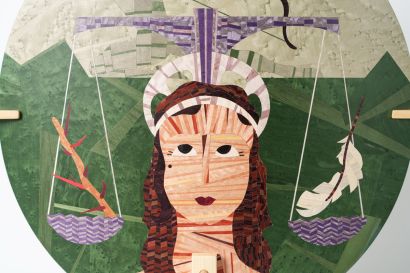
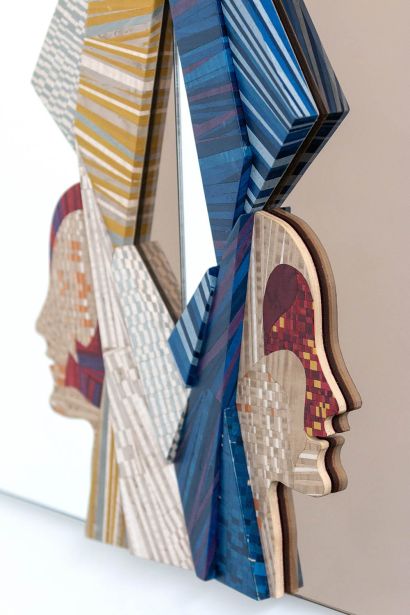
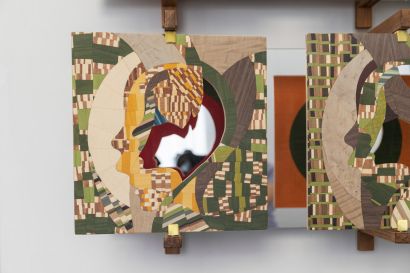
The work reflects on the spread of cosmetic surgery and questions the nature of the impulse that drives people to resort to it.
Salome fulfills her mother’s will by asking the king for the head of John the Baptist on a silver platter.
Whether to avoid getting her hands dirty or because the macabre sight horrifies her, the platter becomes Salome’s defining object. In the same way, the incessant, ego-driven and capricious production of our mind urges the self to distort its own nature, and the submissive response places the individual themselves upon that very platter.
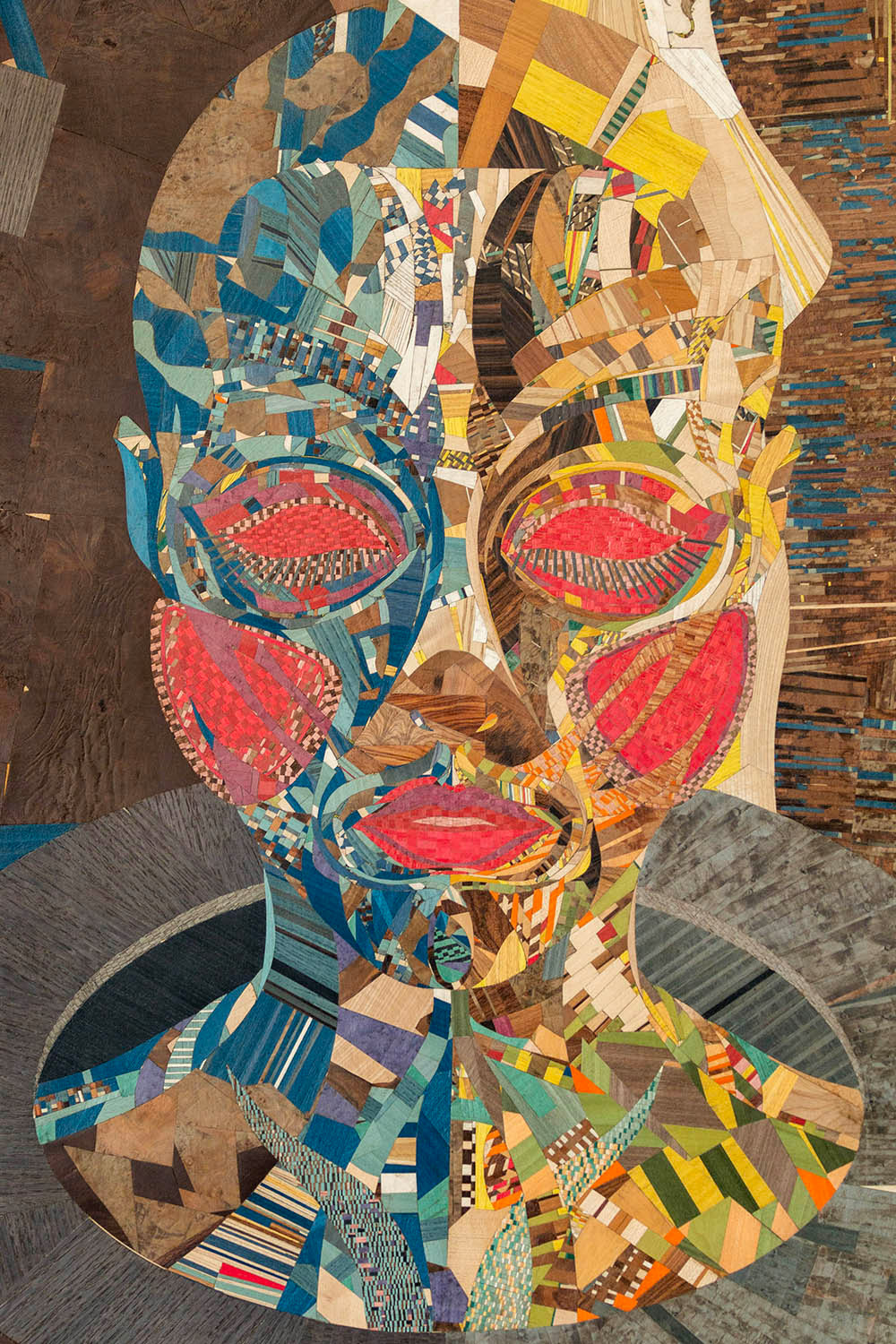
New colored forms, marked by concentric and expanding surgical traces, insert themselves into and overlap the harmonious interweaving of lines that define the natural muscular (anatomical) structures of the face. In the background, the shadow of a dancing woman can be glimpsed: it is Salome, a reference to that part of the personality that is impressionable, fragile, and insecure.
Work created in collaboration with Maestro Aniello Smilzo, also known as Frantumi.