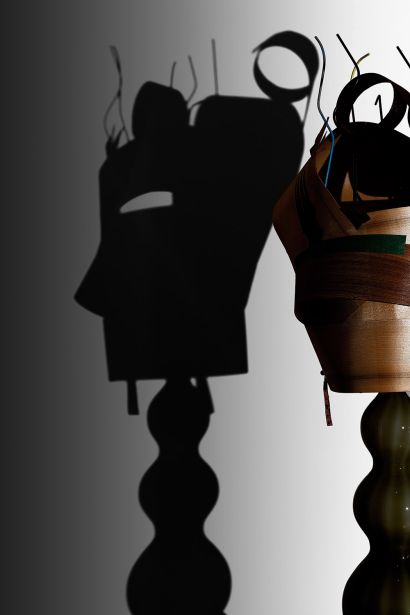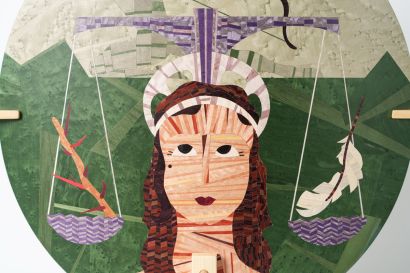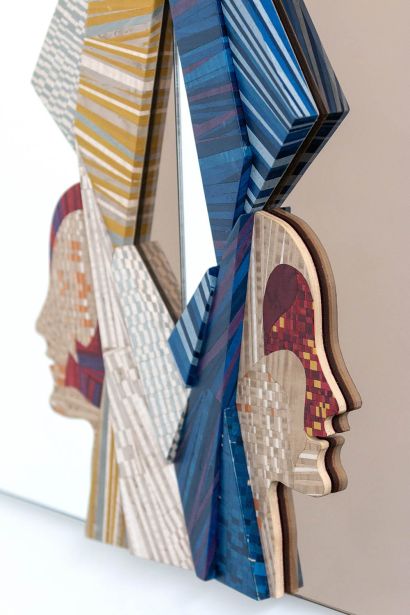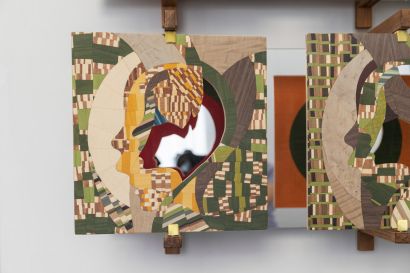
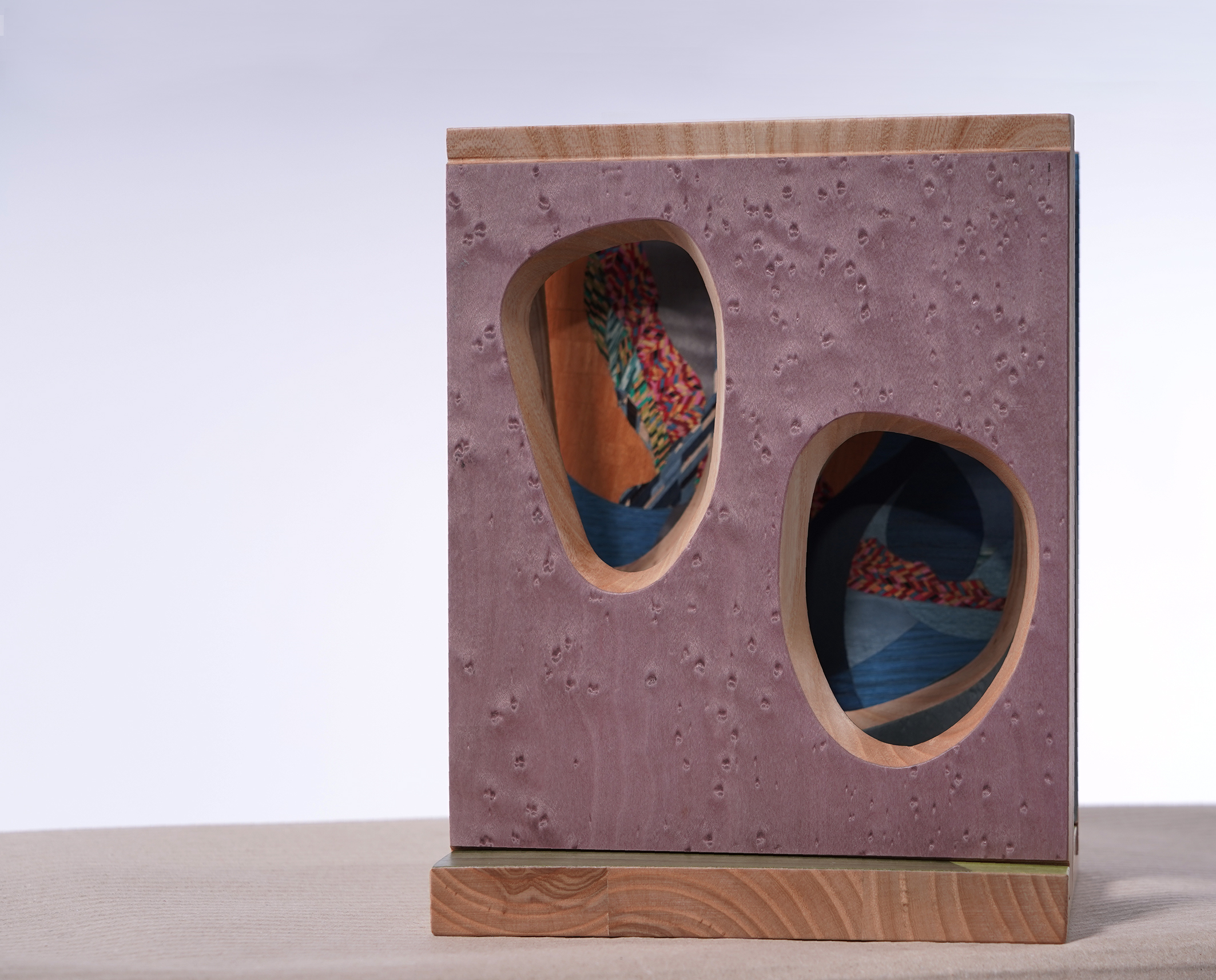
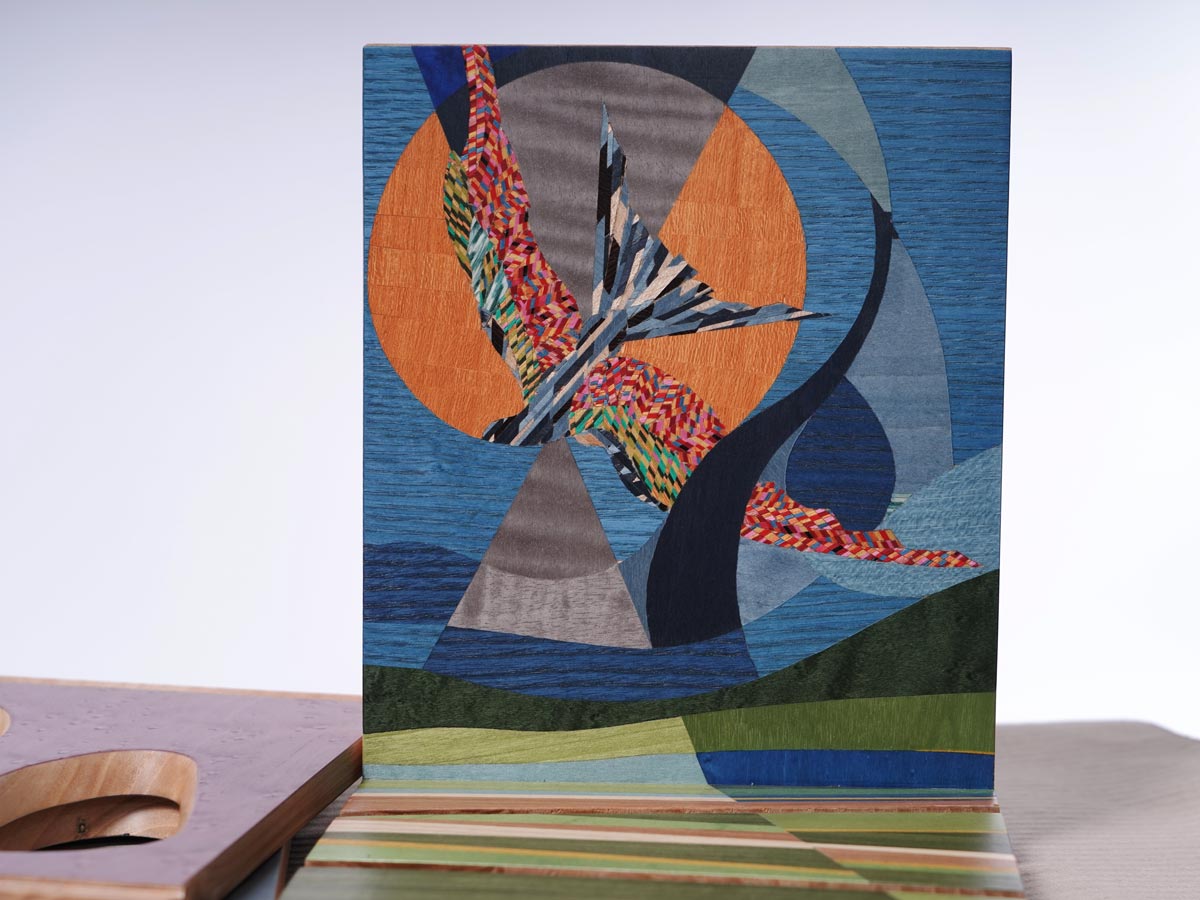
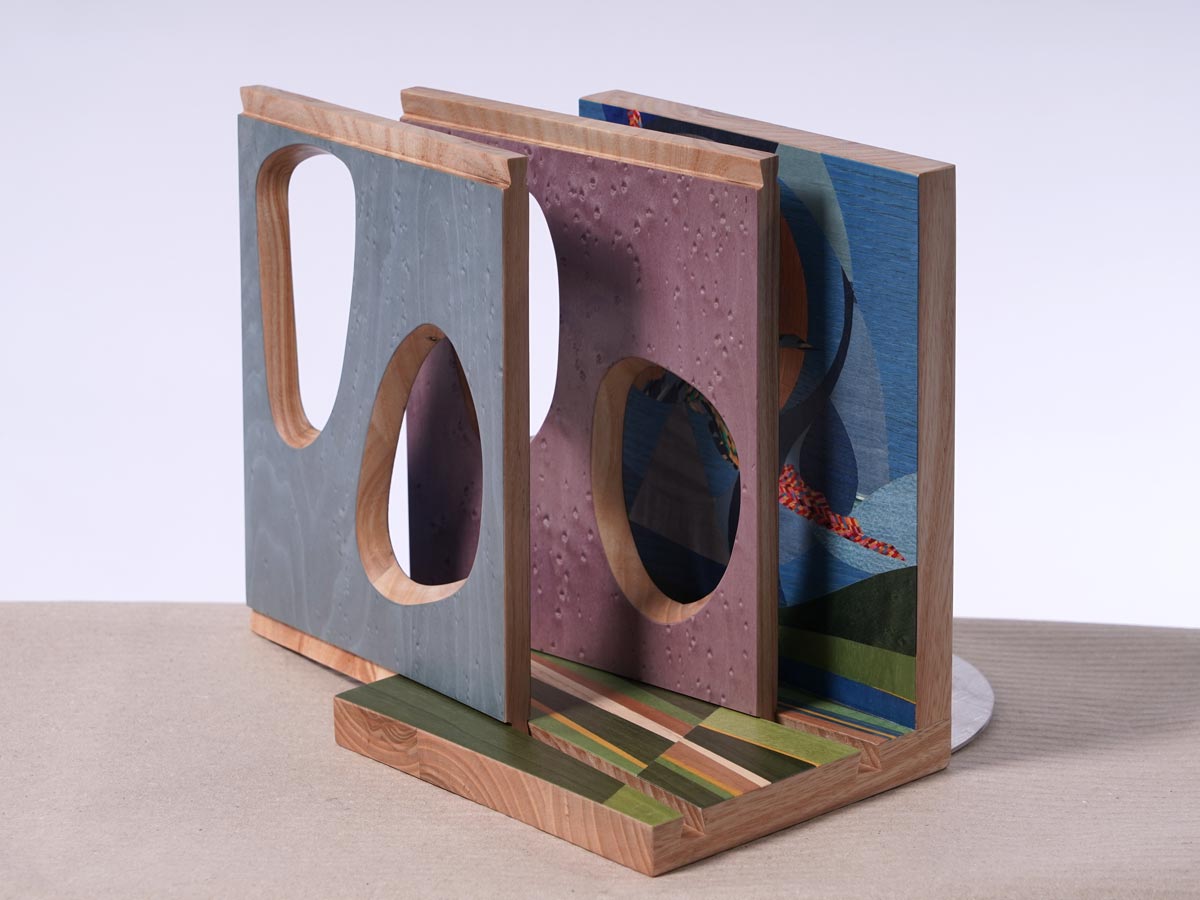
The bookend is conceived as a conceptual device in which the choice of its name consciously refers to Primo Levi’s essay “Paracrono”. The reference is not merely affective, but guides the entire project: reading is understood as a subjective experience in which time expands and transforms.
The layered surfaces and organic openings suggest a fragmented and non-linear temporality, turning the book into an active element within a perceptual relationship. In this sense, the bookend does not merely support, but constructs a space in which the time of reading is reworked.
The reference to Levi thus takes on a structural value, contributing to the definition of an object that becomes a critical reflection on the experience of reading.