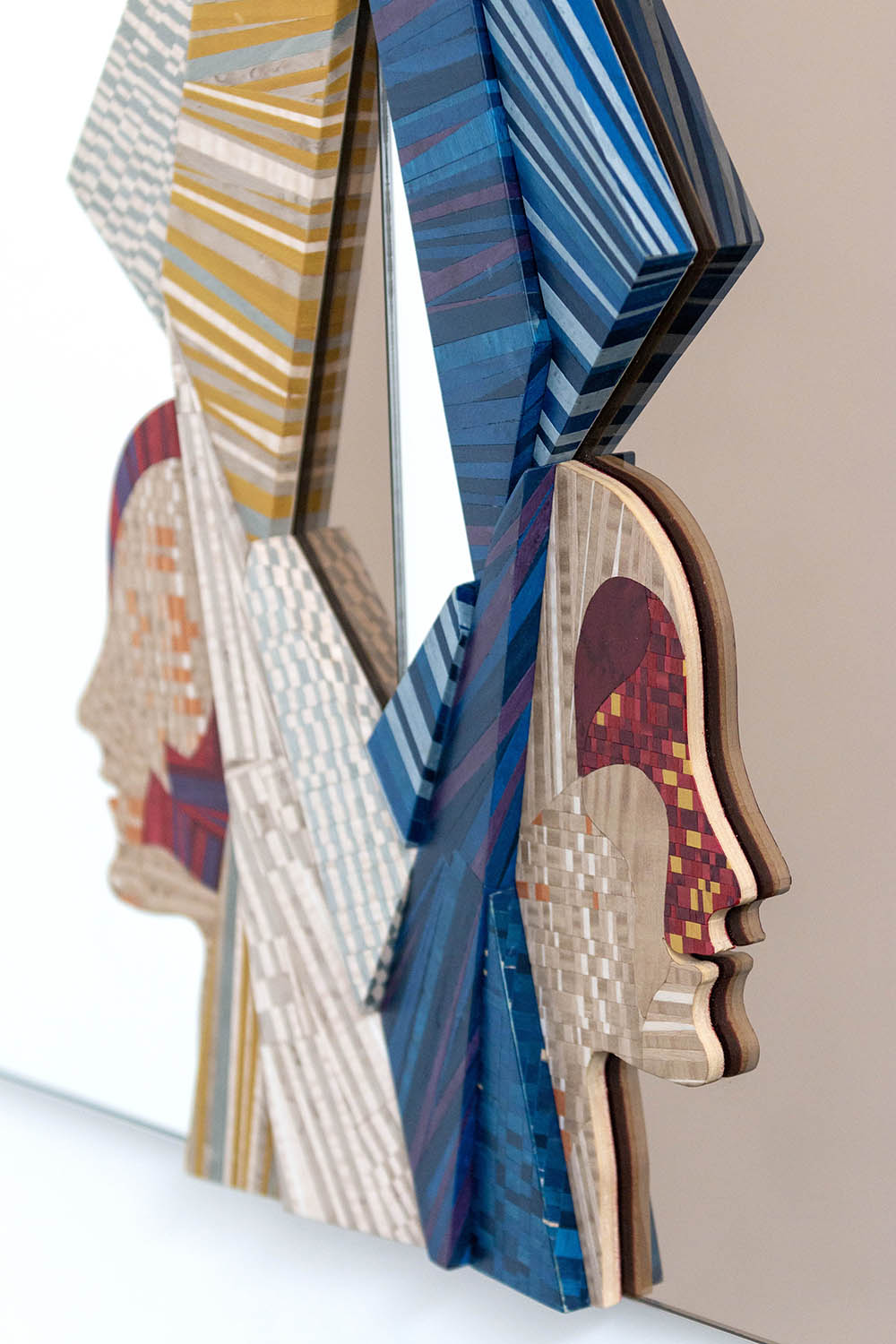
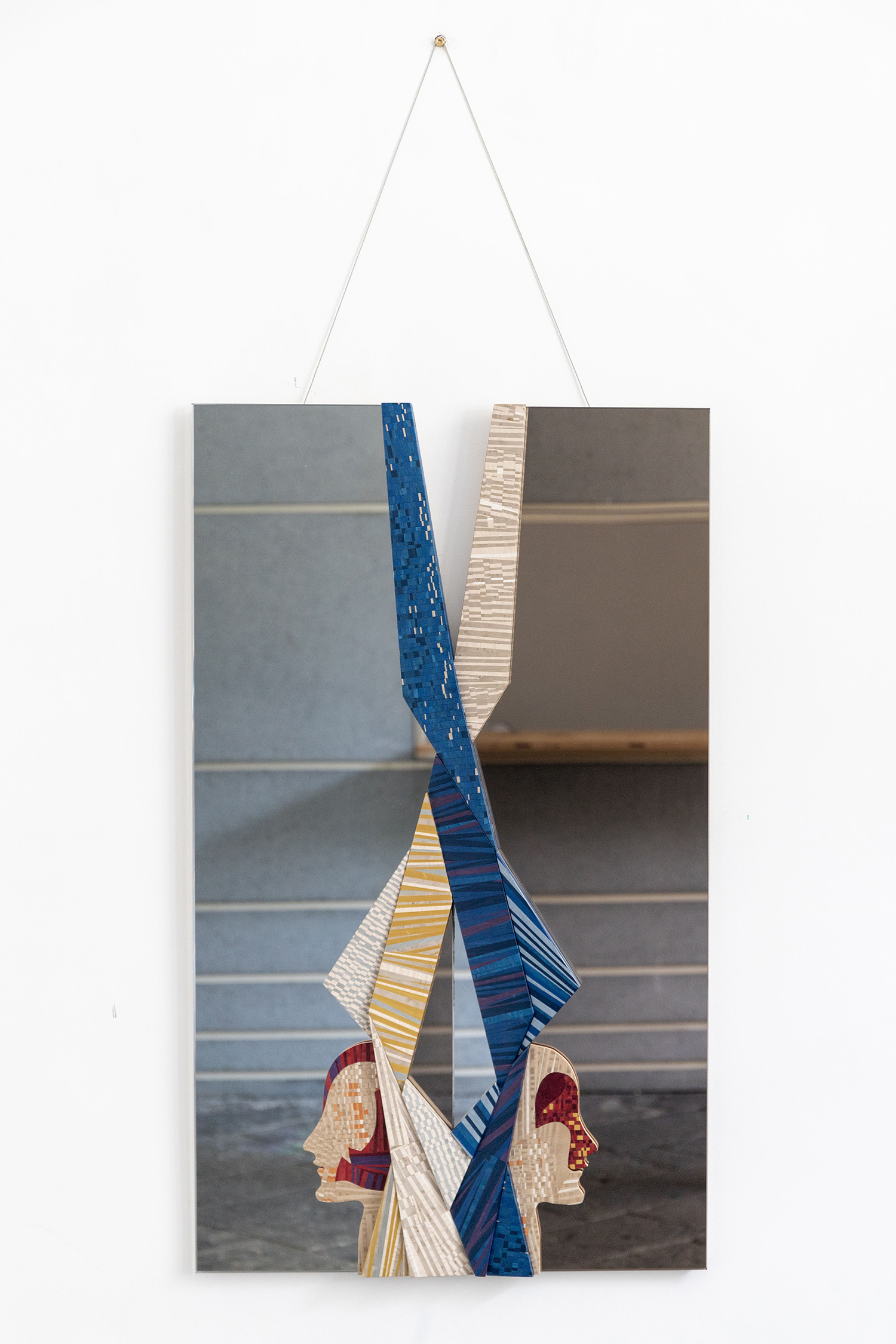
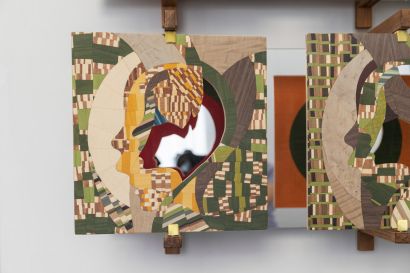
The Hamlet mirror takes shape as a symbolic device intended to investigate the inner conflict that precedes action, suspended between fundamental oppositions: to act or not to act, right and wrong. The work constructs a complex visual field in which thought stratifies into images.
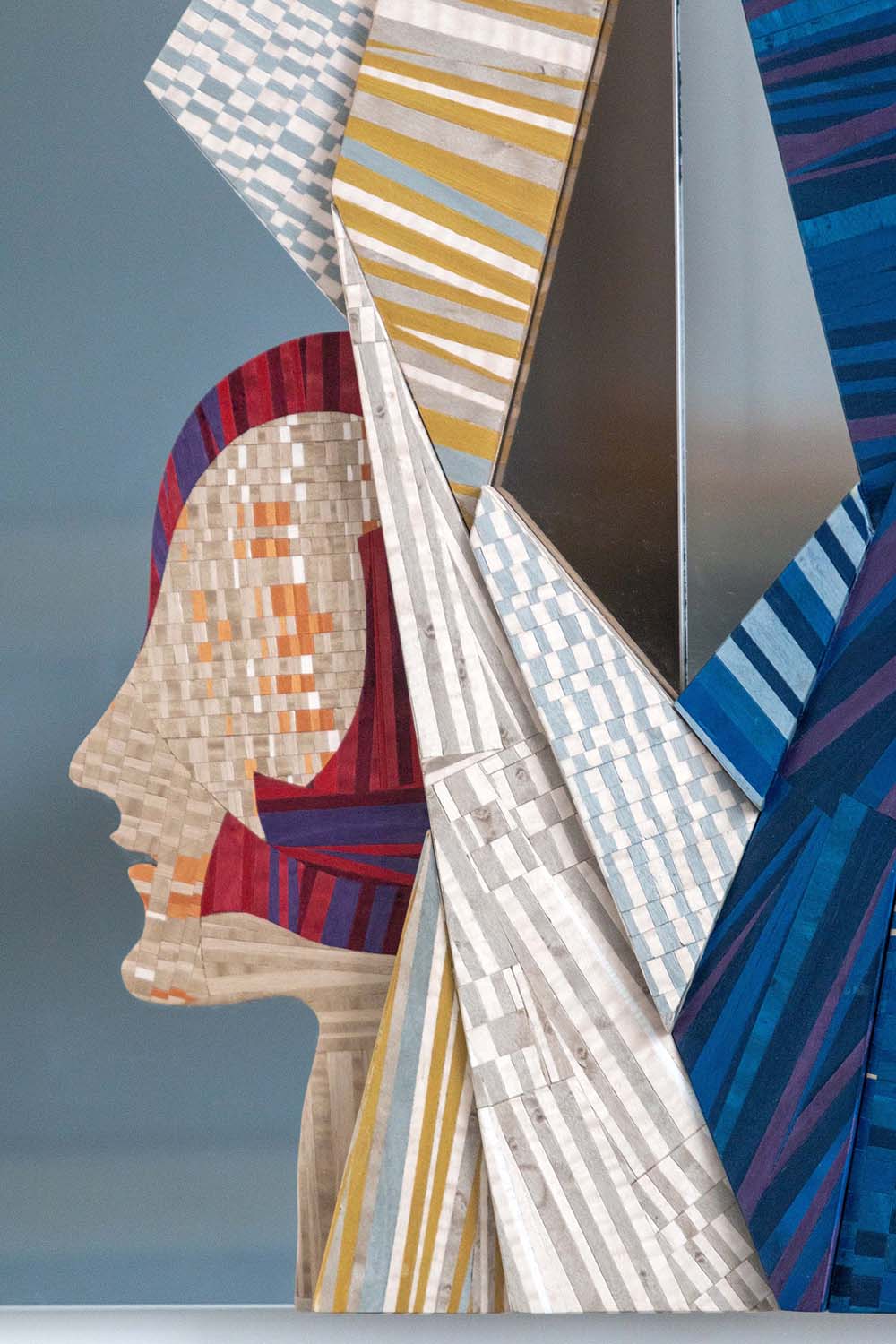
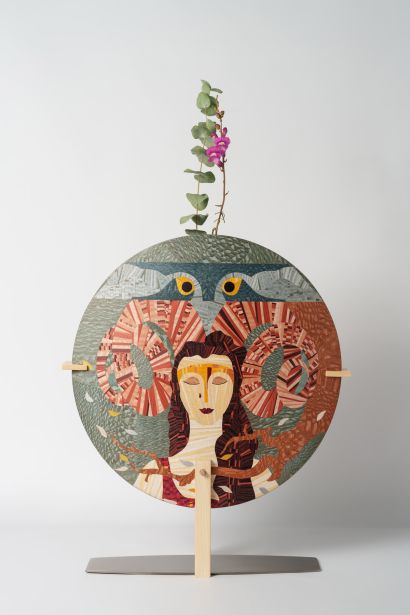
On one side, the smiling masked face clearly evokes the Pirandellian dimension of the multiplicity and instability of the self; on the other, the face marked by the presence of a helmet introduces an opposing tension connected to defense and the affirmation of identity.
The dynamic ribbons that envelop the mirrored surface, articulated through contrasting chromatic marquetry and generated by divergent directions, function as the formal matrix of conflict. Within this system, the differentiation of the mirrors contributes to making an oscillating condition visible, translating the theme of being and not being into a layered and unstable visual construction.
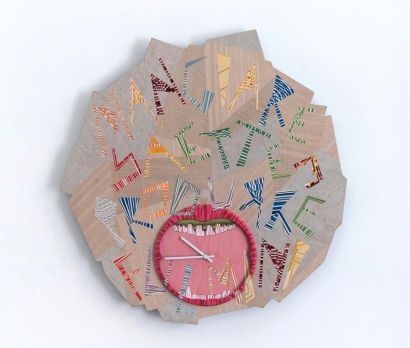
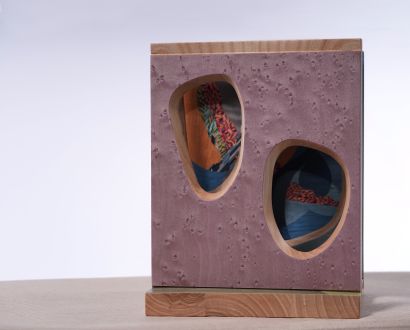
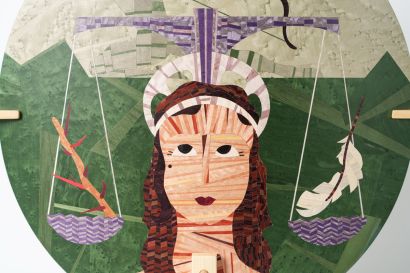
The structure is made of blockboard wood with marquetry inlays created using Tabu Wood veneers in different color gradations of maple, sycamore, frisé eucalyptus, plane tree, tanganika, and bolivar. Mirror surfaces in natural and bronze-colored glass.