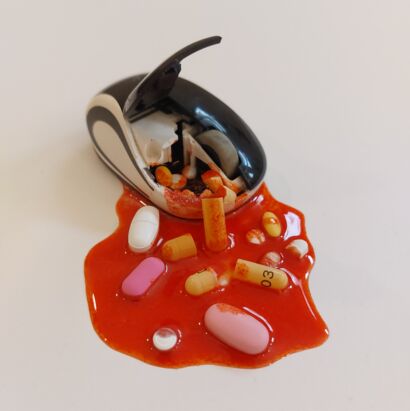
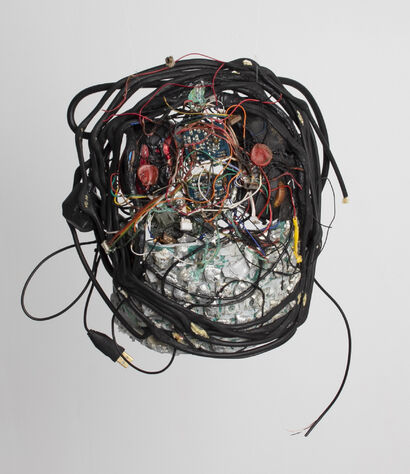
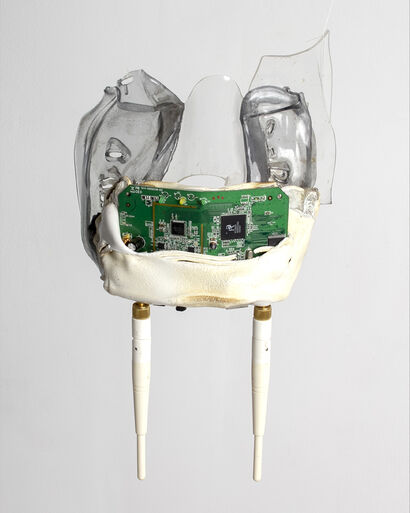
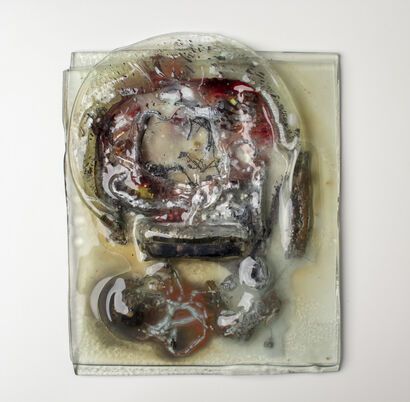
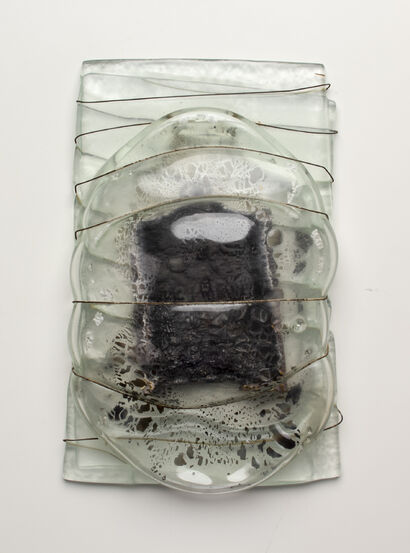
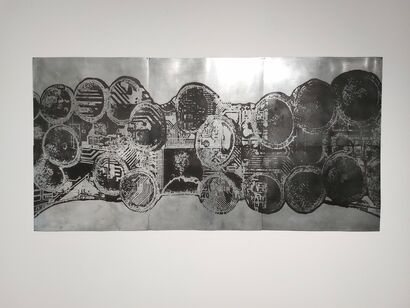
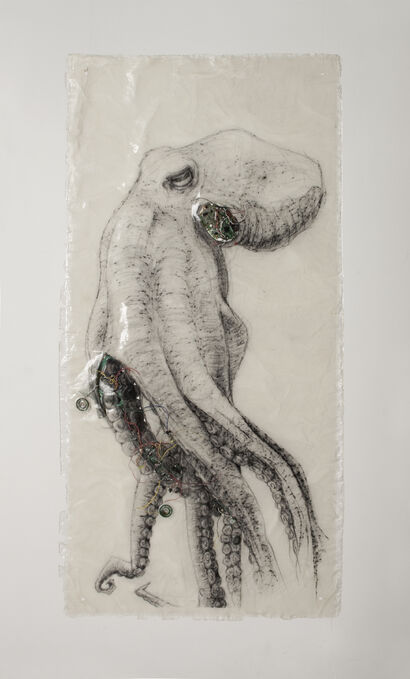
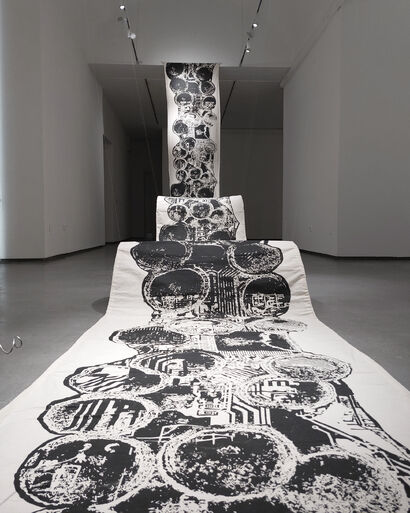
The Psycho-Tech series began with the reading of the Francis Haugen Papers — the leak of internal Facebook documents that exposed the company's outrageous practices, including internal reports on the increase in suicide rates among teenage girls due to body image dysphoria and other psychological harms generated by social media use. It was from this milestone that I started using medications as a visual and conceptual element in the series.
One of the works, titled Backstage, addresses what lies behind the user's everyday experience — the gap between the seemingly harmless content we scroll through (cat videos, memes, entertainment) and the psychological toll it quietly exacts. The title refers to the backstage of the screen: the space where anxiety builds, isolation deepens, and self-perception warps, all while the user remains absorbed in the flow of content. Drawing from the Francis Haugen Papers, which revealed that Facebook's internal research acknowledged the harmful mental health effects of its platforms — particularly on teenage girls — the work interrogates this invisible architecture of feeling: what we are sold as connection, and what it actually costs us. What happens when human psychology becomes a resource to be exploited behind closed doors?