The installation “Il Tempio di Trayma" is conceived as a profound exercise in Stoic reflection, a dialogue between body, mind,... Read More
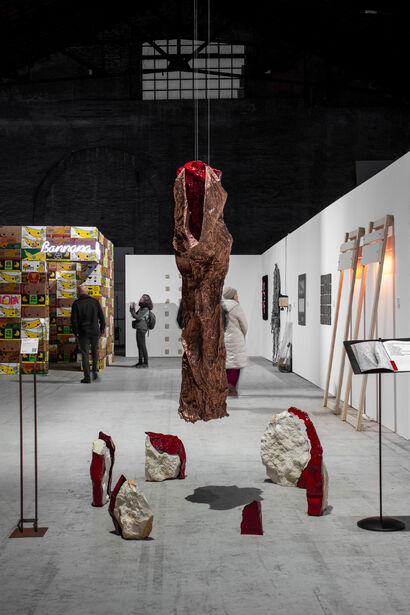
The installation “Il Tempio di Trayma" is conceived as a profound exercise in Stoic reflection, a dialogue between body, mind, and matter that invites one to confront pain and suffering, not as evils to be avoided, but as opportunities to exercise virtue and wisdom. The gym wall bars, traditionally a symbol of physical training and discipline, are here transfigured into an altar of resilience, a place where the mind and spirit can train themselves in overcoming adversity.
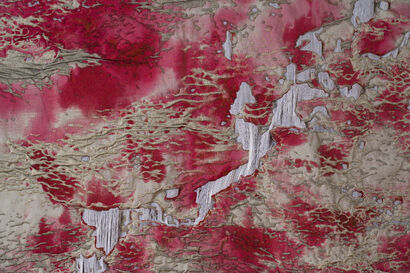
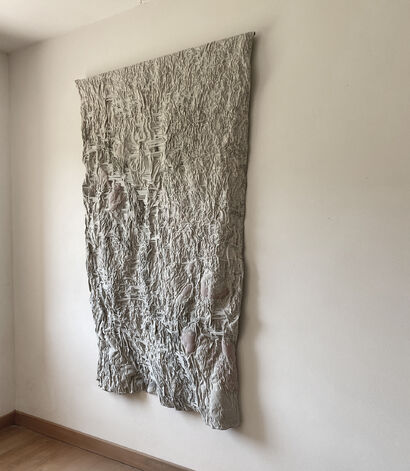
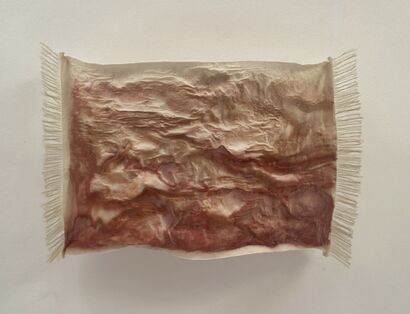
The remnants of the artist's previous works, residues of past creative processes, have been arranged with meditative ritual within the wall bars. This act echoes the Stoic practice of transforming what seems useless or painful into tools for inner growth. Each fragment placed becomes a testament to transcended suffering, to experiences that, while a source of pain, have contributed to forging a stronger character and deeper wisdom.
The strips of fabric that wrap and intertwine between the gaps in the wall bars evoke the bandages that Seneca, in the final act of his life, used to bind his own wounds. In this gesture, Seneca did not seek to escape pain, but rather to master it, accepting with serenity the fate that had been assigned to him. By binding and unbinding his wounds, Seneca teaches us that suffering, if faced with the right disposition, can be transformed into a means of exercising the virtue of fortitude.
The installation, in line with the principles of Stoic philosophy, does not merely celebrate strength and resilience but invites us to recognize the value of pain as a teacher of life. The bandages, symbols of care and healing, do not cover pain to hide it but embrace it, allowing it to become part of the healing process.