Florilegical Narration
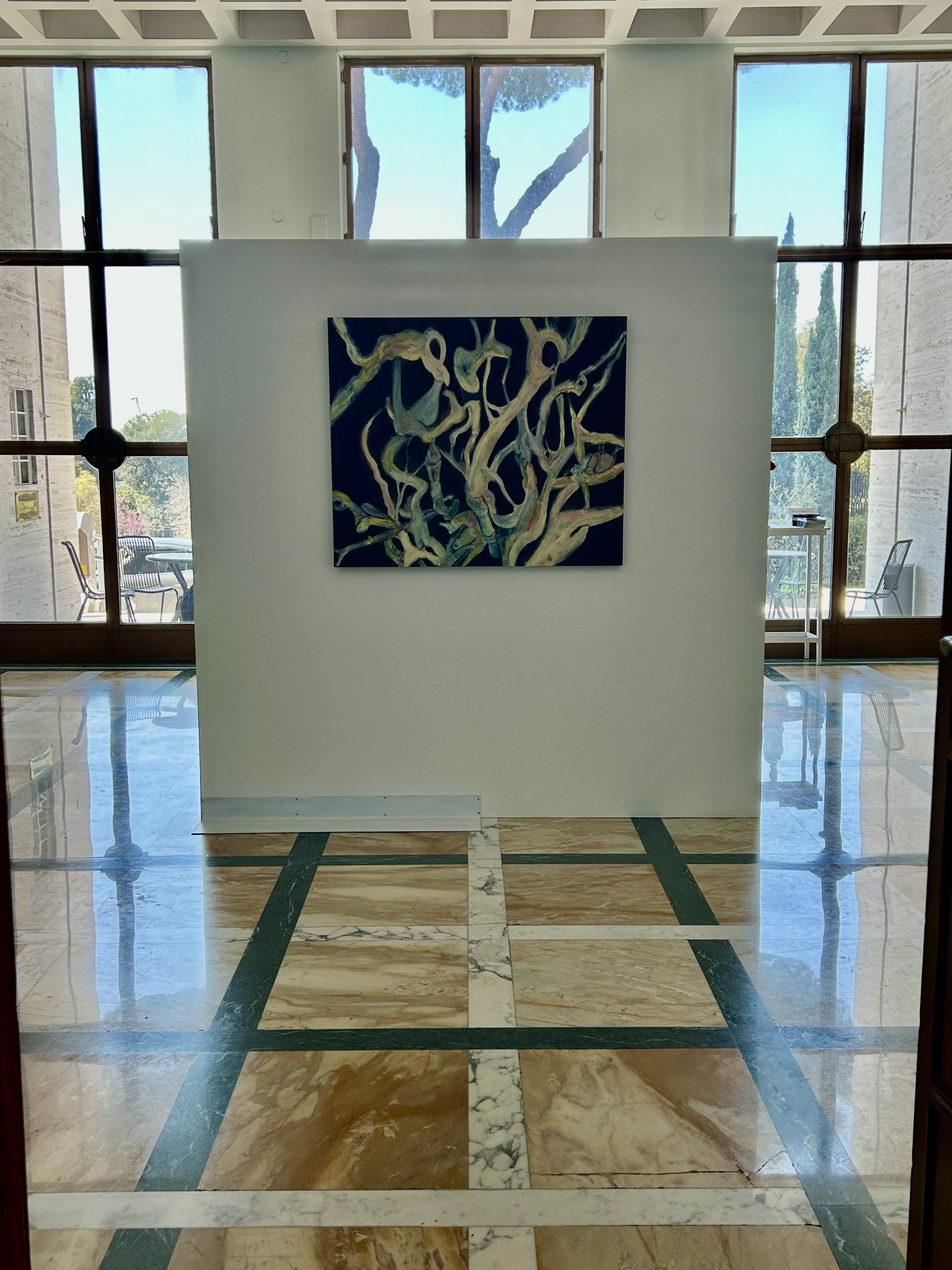
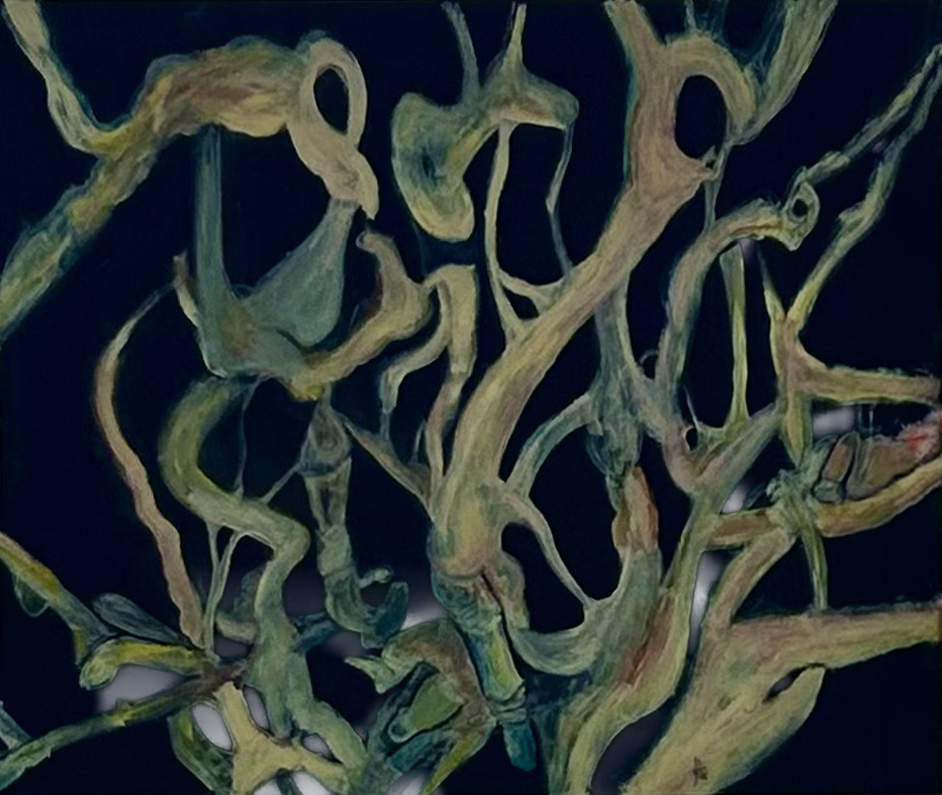
In her ongoing painting series Florilegical Narration, Ruth Mateus-Berr explores the fragile relationships between biodiversity, cultural memory, and ecological transformation. Focusing on rare and endangered plant species, the paintings emerge from extensive scientific, botanical, historical, mythological, and ethnobotanical research, including investigations into endangered flora in Italy. Rather than illustrating botanical knowledge, the works transform research into multilayered visual narratives in which ecology, mythology, religious symbolism, literature, and cultural history intertwine.
The paintings propose a contemporary form of arts-based research, positioning painting as a medium of knowledge production. Plants are no longer treated as decorative motifs or passive elements of landscape but as living protagoniststhat embody memory, resilience, vulnerability, and interconnectedness. Each composition becomes a visual ecology in which human and more-than-human histories overlap, revealing hidden relationships between environmental change, cultural imagination, and collective responsibility.
Inspired by ecofeminist and posthumanist perspectives, the series reflects critically on extractivist models that reduce biodiversity to economic value. Instead, it foregrounds care, reciprocity, and interdependence as alternative ways of understanding the living world. Drawing upon contemporary research into plant intelligence, root communication, and symbiotic relationships with fungi and microorganisms, the paintings invite viewers to reconsider plants as active participants within complex ecological networks rather than silent witnesses to human history.
Particular attention is given to the hidden world beneath the soil. Roots appear not merely as botanical structures but as living systems of exchange, connecting plants with mycorrhizal fungi and microbial communities through networks of communication, nutrient sharing, and mutual support. These underground ecologies challenge the notion of individual survival and instead reveal resilience as a collective process. In the paintings, roots become visual metaphors for memory, kinship, and coexistence, suggesting that what remains invisible is often fundamental to life itself. Just as memories connect generations, these subterranean networks sustain biodiversity through continuous relationships of exchange and care.
Through surreal juxtapositions, symbolic transformations, and poetic visual metaphors, Florilegical Narration dissolves conventional boundaries between science and imagination, archive and myth, nature and culture. The paintings function simultaneously as visual archives, speculative narratives, and ecological portraits. They preserve endangered species while revealing the invisible networks that sustain them and questioning the cultural systems that have contributed to their vulnerability.
At the heart of the series lies an exploration of ecological sustainability understood not only as environmental protection but also as a cultural practice of remembrance, responsibility, and care. The paintings propose biodiversity as a shared cultural heritage whose preservation depends upon relationships rather than isolated entities. By connecting endangered plants with mythology, scientific knowledge, and contemporary ecological thought, the series fosters new ways of imagining coexistence between humans and the more-than-human world.
Beyond documenting threatened species, Florilegical Narration advocates for the sustainability of relationships—between generations, between scientific and artistic knowledge, and between human and non-human life. The paintings invite viewers to recognise that the future of biodiversity depends on cooperation, communication, and mutual care, both above and below the surface. In this sense, painting becomes a space where ecological awareness, cultural memory, and poetic imagination converge, encouraging a renewed ethics of interconnectedness in an era of accelerating environmental change.