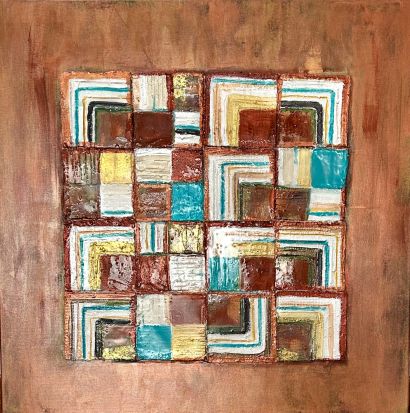
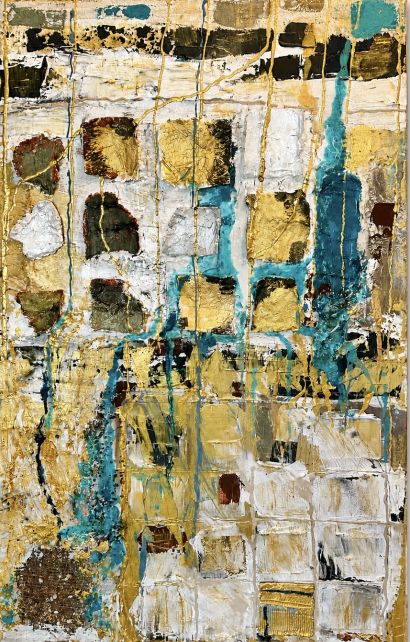
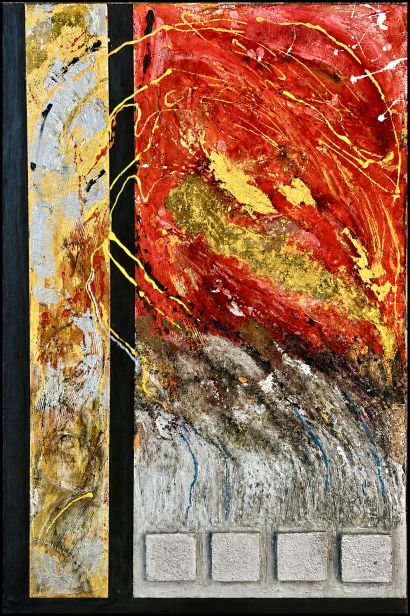
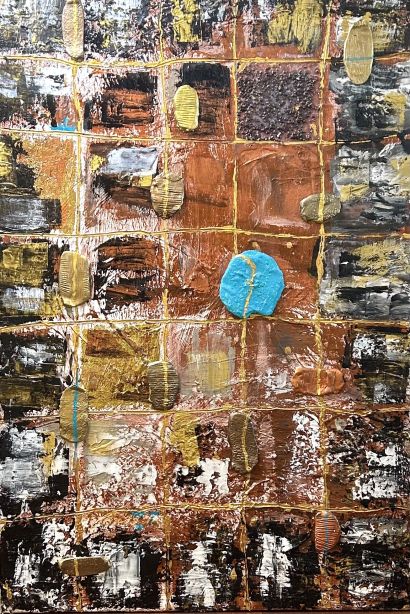
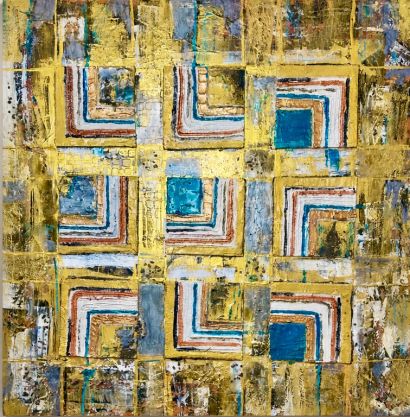
The work explores the sea as a space of crossing, fracture and human connection.
The composition takes shape as a fragile raft made of worn nautical charts, layered materials,
fragments of everyday objects and hand-stitched gauzes. The sutures, stretched to the limit of
breaking, become a metaphor for the vulnerability and resilience of those who cross the seacarrying memories, trauma and hope.
The gauzes assume multiple identities: bandages attempting to heal invisible wounds, but also
sails, fishing nets and ties that still allow human connections to endure.
Within the collage emerge traces of suspended lives: fragments of childhood, objects that evoke
violence against women during migrant crossings, and memories of children who do not survive
the journey.
These presences are never directly illustrated; instead, they surface like archaeological remains,
sedimented by salt, water and time.
The vertical black marks interrupt the horizontal structure of the composition like silent totems or
coordinates. They may evoke graves, shipwreck remains, navigational markers or residual
human presences.
Above them, the sea opens toward a fragile horizon line — a symbol of possibility, continuity and
hope.
In Linea di sutura, the sea is not only a border or a place of tragedy, but also a space of
transformation: wound and healing, loss and arrival, separation and connection.
The stitched lines running across the work become a universal image of the human attempt to
hold together what violence, exile and displacement continuously threaten to tear apart.
Materials:
Structural paste, plaster, sand, pumice, volcanic lapilli, silicone rubber, recycled cardboard, organic fragments, plaster bandages, cotton thread