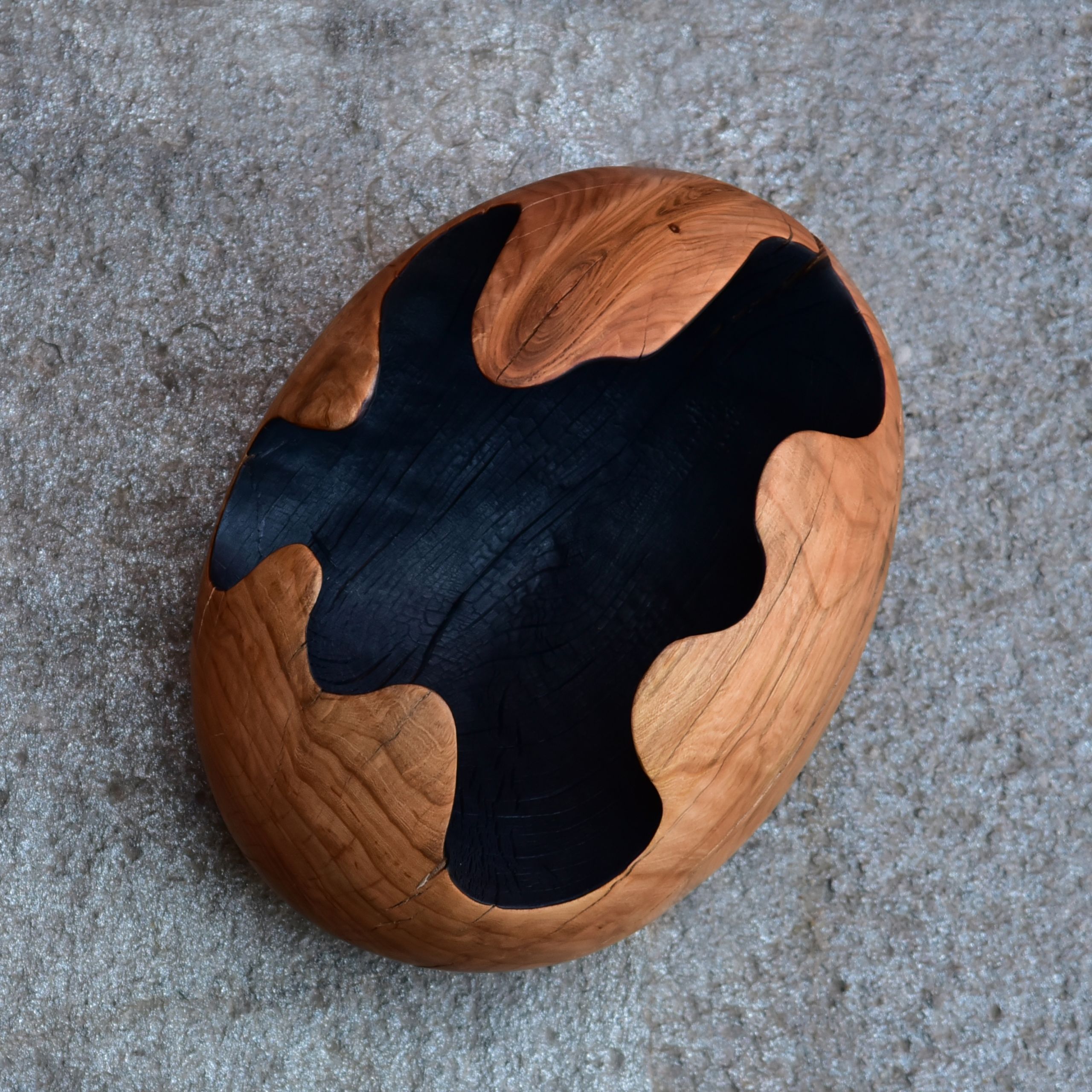
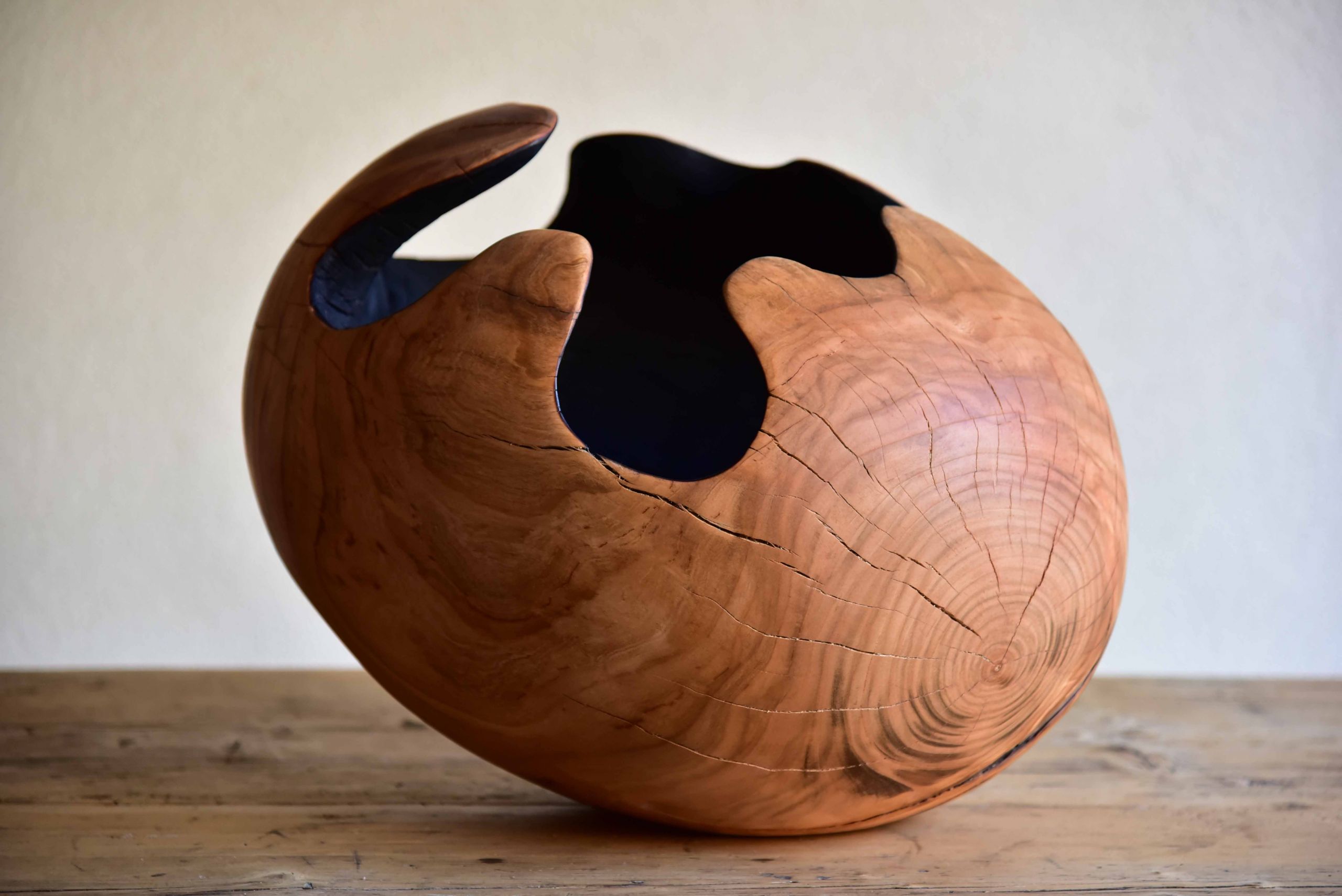
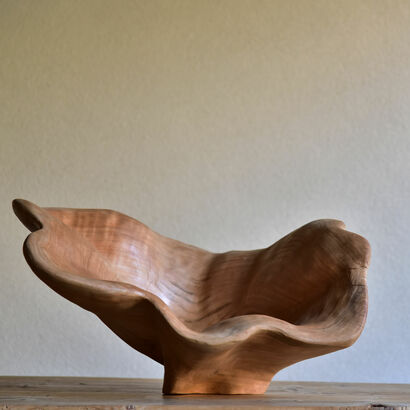
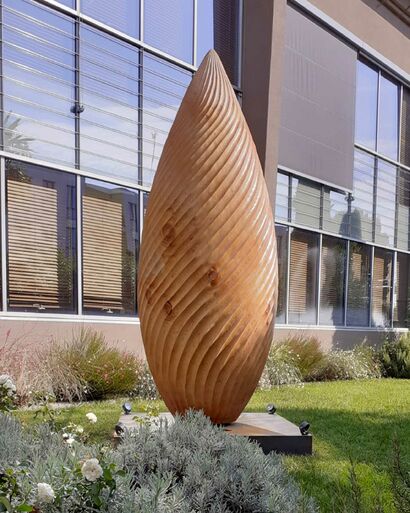
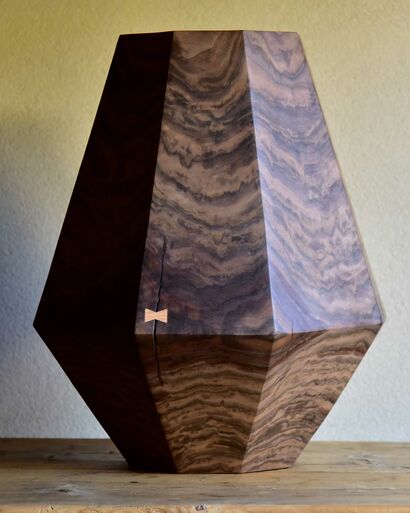
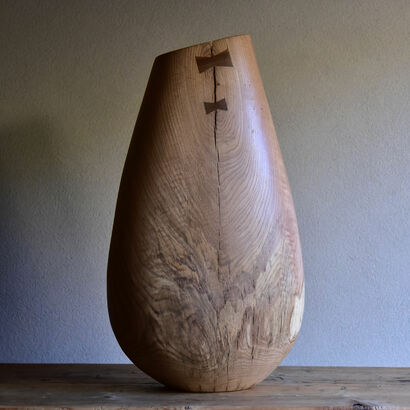
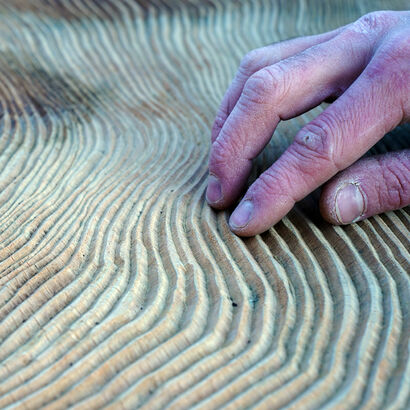
Woto is made from a solid trunk of wild cherry wood—a rare and precious essence, especially difficult to find in large dimensions. It has been hand-carved into a shape that is as simple as it is fascinating and perfect: an egg.
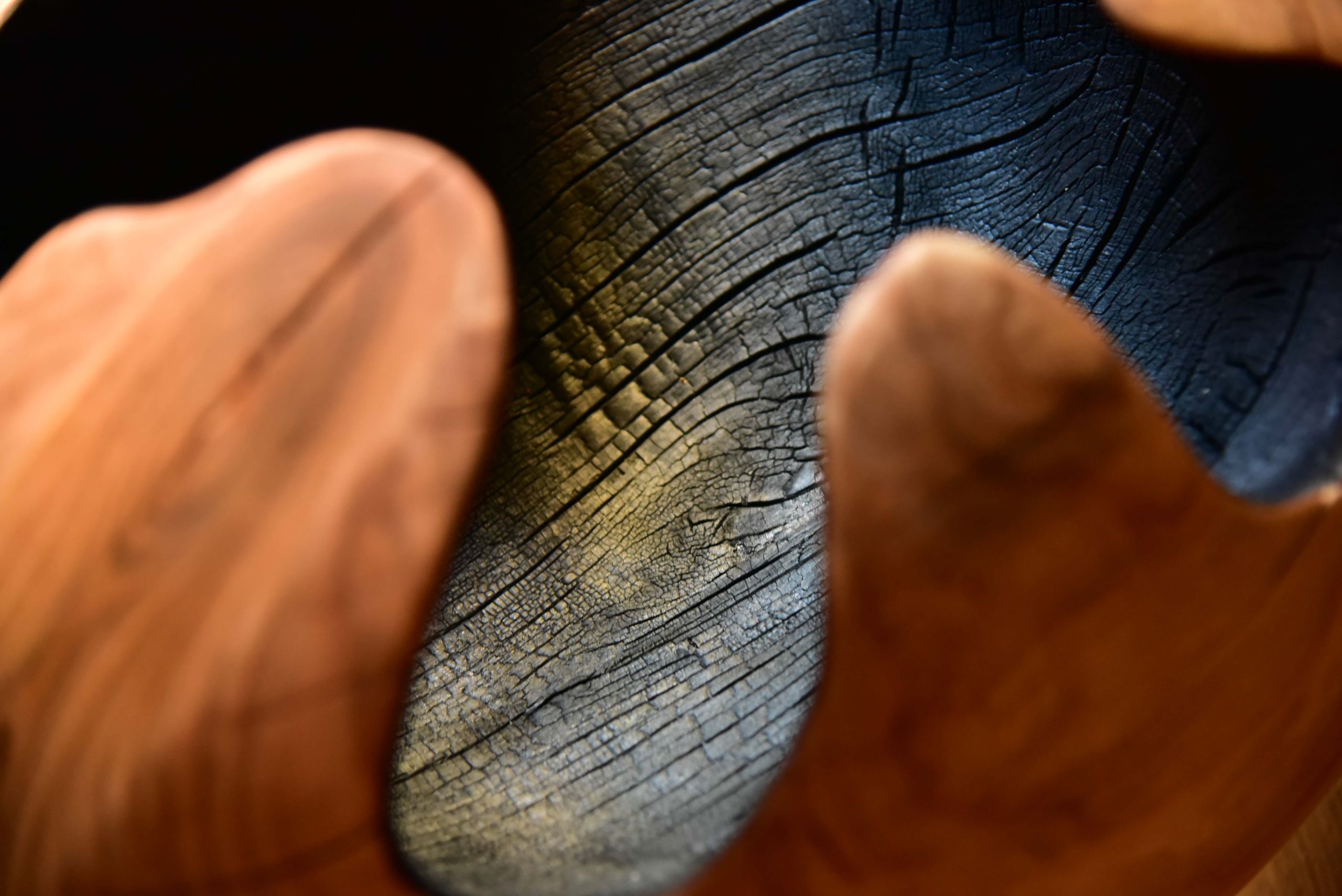
The interior has been hollowed out and treated using the ancient Japanese technique of yakisugi (also known as shou sugi ban), which involves charring the wood surface until it becomes carbonized, enhancing its durability. This technique deeply reflects the Japanese philosophy of life, which holds that:
“The discovery of beauty lies in imperfection, in the acceptance of life and death.”
These elements are evident in the sculpture, where the wood’s natural imperfections and the asymmetry created by manual processes result in a unique kind of beauty.
A destructive and death-like process such as fire gives rise to an entirely new surface—one that is impossible to ignore. Destruction gives birth to strength and resilience.
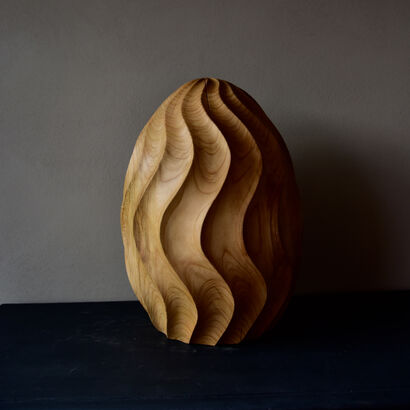
The name Woto plays on the phonetic similarity to the Italian word vuoto (void or emptiness), referencing the hollow, charred interior. It also alludes to the earlier work, Wovo.
Each Woto has a different design: the hollow, burned interior is never the same from one piece to the next. Cracks, holes, and shifts in color are natural features of every piece of wood and contribute to the uniqueness of the final work.
All the wood used in these sculptures is reclaimed—“rescued” after storms or tree removals.
Wood that would otherwise be left to rot or be burned.
Woto is meant to be a discreet artwork—not one that aggressively demands attention, but one that quietly draws you in, inviting contemplation of every detail.