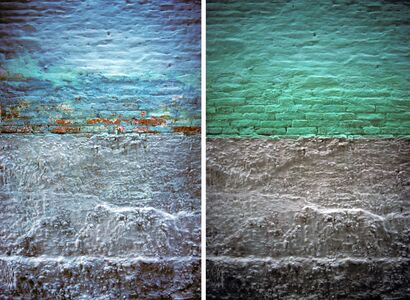
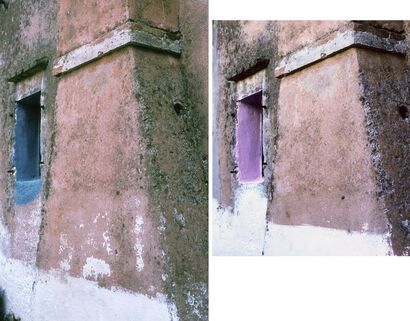
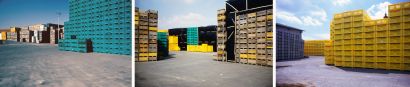
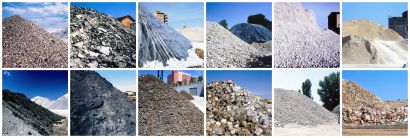
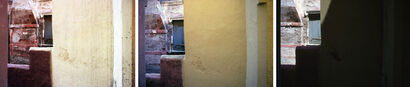
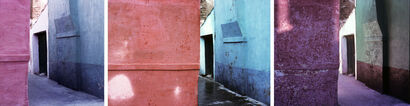
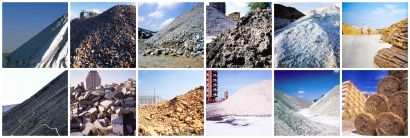
Guardare un paesaggio è sempre un esercizio di tempo.
Il paesaggio non si offre mai tutto in una volta: si lascia intuire, si modifica con la luce, cambia con le stagioni, si costruisce nella memoria di chi osserva.
Questa raccolta di montaggi nasce da una pratica fotografica basata sul ritorno, sullo sguardo che insiste e si trattiene.
I luoghi qui presentati — colline coltivate, filari, campi in lavorazione, pendii segnati dal gesto agricolo — sono ripresi più volte nel corso dell’anno.
La sequenza delle immagini non fissa un istante, ma espone una variazione continua.
È un invito a vedere come il paesaggio non smetta mai di essere altro, pur restando sé stesso.
La fotografia, in questo contesto, assume il ruolo di strumento di osservazione lenta.
Non cerca la spettacolarità né l’eccezione: cerca il ritmo.
L’atto del fotografare diventa un modo di misurare la durata, di rendere visibile ciò che muta con gradualità.
Looking at a landscape is always an exercise in time.
A landscape never reveals itself all at once: it allows itself to be sensed, it changes with the light, shifts with the seasons, and takes shape in the memory of the observer.
This collection of montages arises from a photographic practice based on returning — on a gaze that persists and lingers.
The places presented here — cultivated hills, rows of vines or trees, fields under work, slopes marked by agricultural gestures — are photographed multiple times over the course of a year.
The sequence of images does not capture an instant but reveals a continuous variation.
It is an invitation to see how the landscape never ceases to become something else, even while remaining itself.
In this context, photography takes on the role of an instrument of slow observation.
It does not seek spectacle or exception; it seeks rhythm.
The act of photographing becomes a way of measuring duration, of making visible what changes gradually.