The main figure in my work frequently wears formal clothing: blazer, tie, dress
shoes. This attire retains a strong symbolic charge associated with responsibility, prestige,
professionalism, and social performance. The suit functions not only as an aesthetic
element, but also as a symbolic device capable of activating associations related to discipline,
aspiration, authority, and adulthood. Fashion becomes important in this context because
clothing immediately transforms the body into a performative subject. By putting on the
suit, the individual enters a socially codified role.
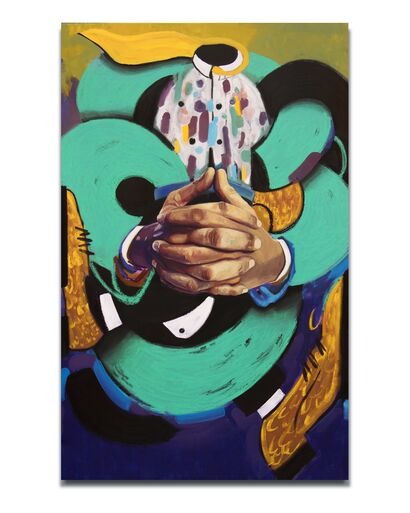
Shoes in particular carry a strong emotional dimension within the work. They evoke
movement, routine, commuting, rush hour, exhaustion, and the repetitive choreography
of adult life. They are linked to the accelerated rhythm of productivity and to the physical
wear produced by repetition. In this sense, the suit and its accessories are not merely signs of
elegance or status, but extensions of systems that organize and discipline the body.
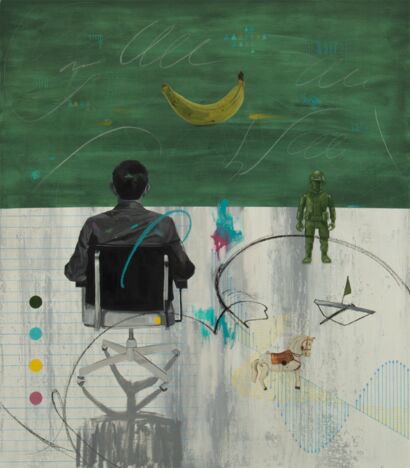
This image of the dressed man constitutes both a residue of my previous work experience and
an internalized image of the “successful character” within professional culture. It extends
beyond the corporate world toward artists, businessmen, politicians, and actors: subjects
historically associated with success, productivity, visibility, and recognition. Within my
paintings, however, these visual codes become unstable. The suited figure often appears
fragmented, bent, exhausted, grotesque, or psychologically fractured. Rather than embodying
authority or confidence, the suit begins to reveal anxiety, fragility, absurdity, and collapse.