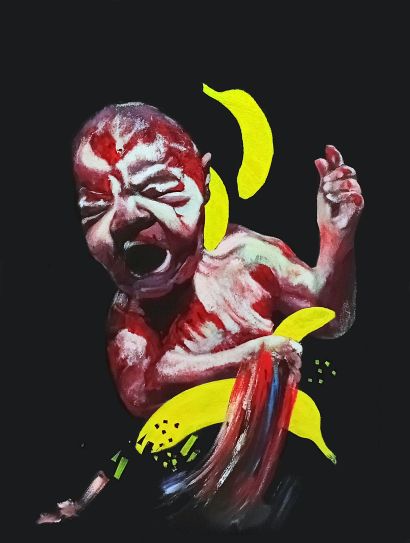
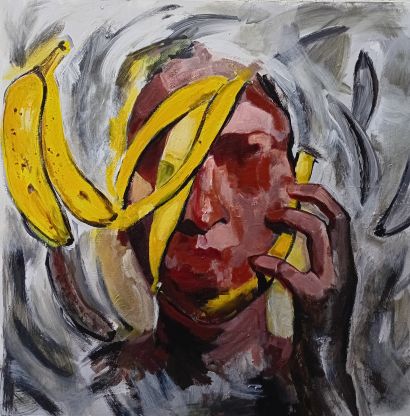
The final movement of the cycle marks a radical departure from the dark void, the biological constriction of the umbilical cord, and the absurd mask of the "System." It represents the resolution of Geworfenheit through the only means Heidegger deemed authentically possible: a return to the truth of Being through connection and care (Sorge).
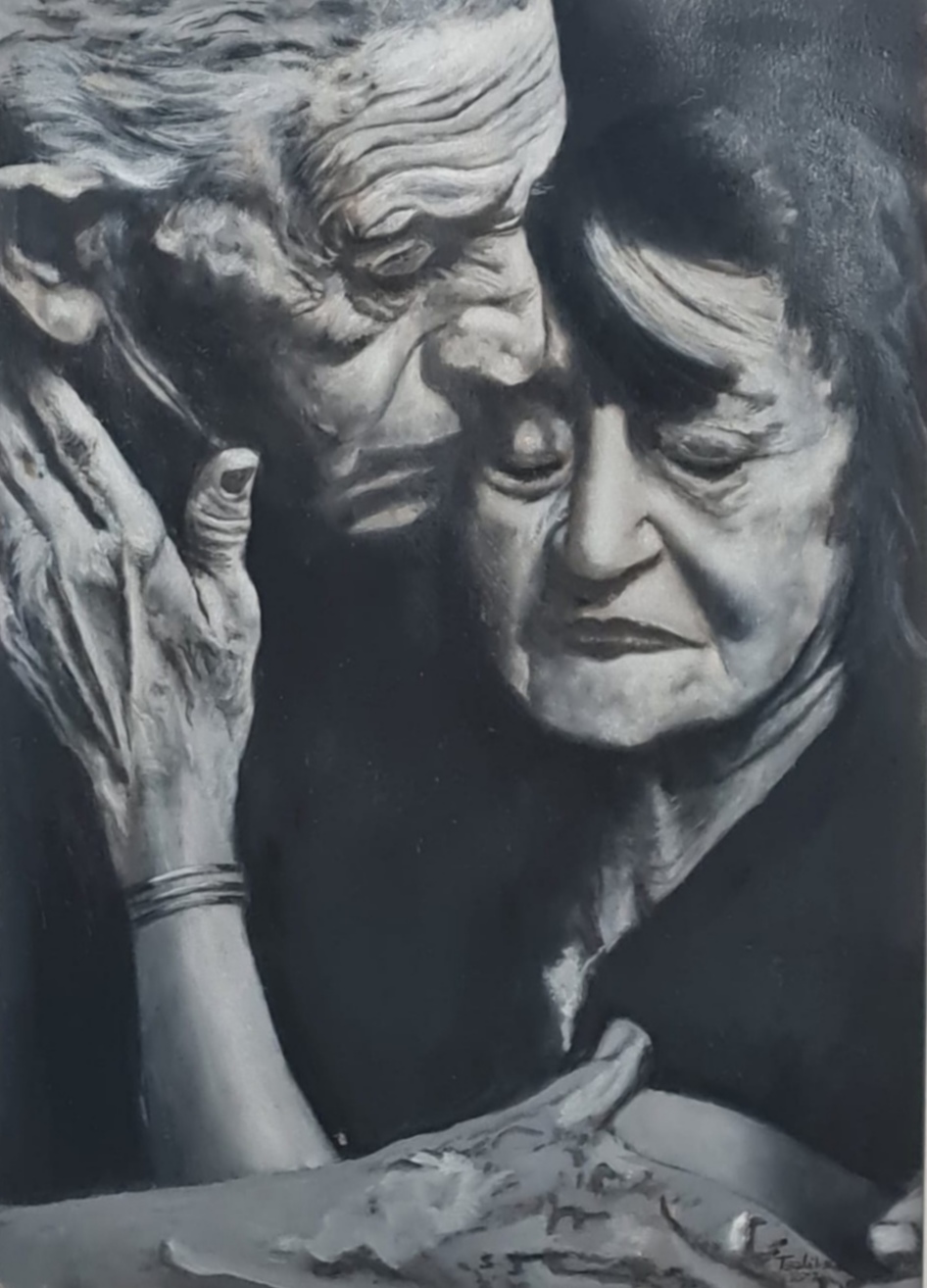
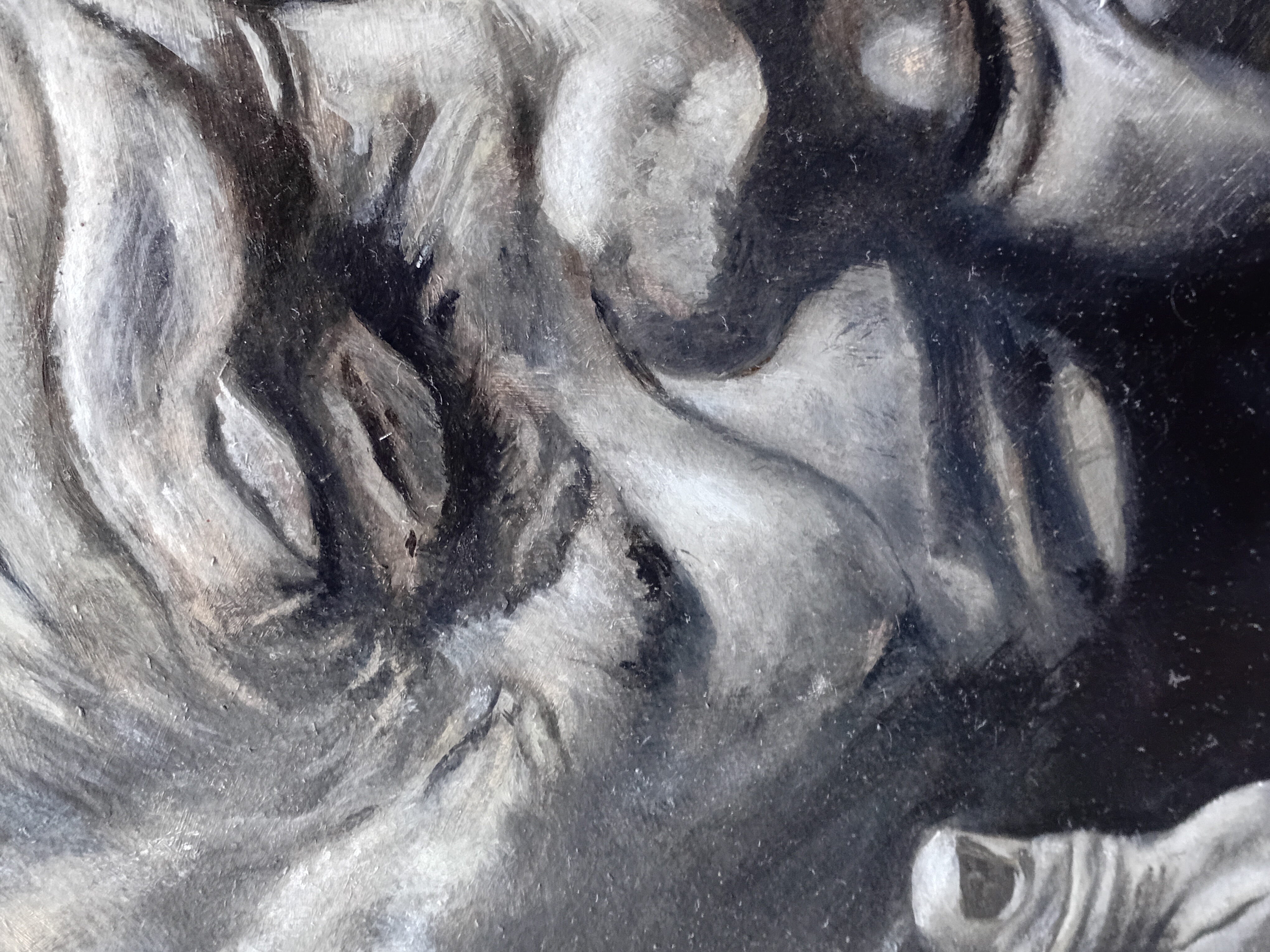
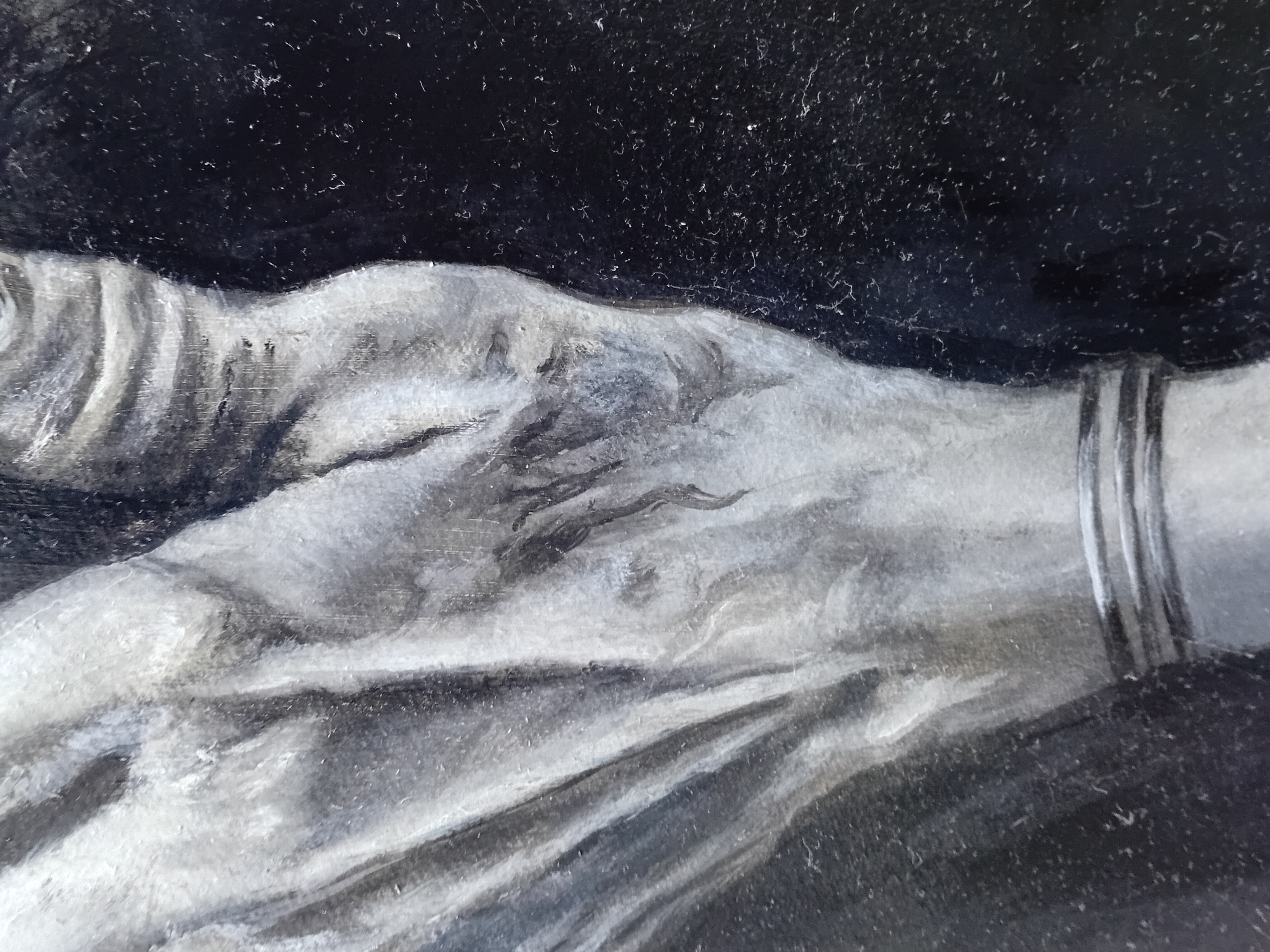
In "Salvator Mundi IV," the cynical irony and the yellow, synthetic motifs of the previous stages vanish. They are replaced by a monochromatic, tender study of two elderly figures. After a lifetime of navigating the systems and masks explored in the first three works, the "Savior" is finally revealed—not as a divine figure or a commodified spectacle, but as a human being in a moment of profound, quiet vulnerability.
The resolution lies in the "truth" of the flesh—the wrinkles, the touch, and the shared silence of old age. While the previous works dealt with the noise of the "They" (Das Man), this work embraces what could be perceived as "kitsch" but is, in fact, Radical Sincerity. It is the acknowledgment that at the end of the struggle with the "thrown" nature of existence, what remains is the simple, undeniable reality of human love and mortality.
The title Salvator Mundi finally finds its "valid" meaning here. Redemption is not found in saving the world or conquering the system, but in the small, private act of being present for another. This is the ultimate "Erlösung" (salvation): the moment where the individual is finally "un-thrown," finding peace in the presence of the other before returning to the void.