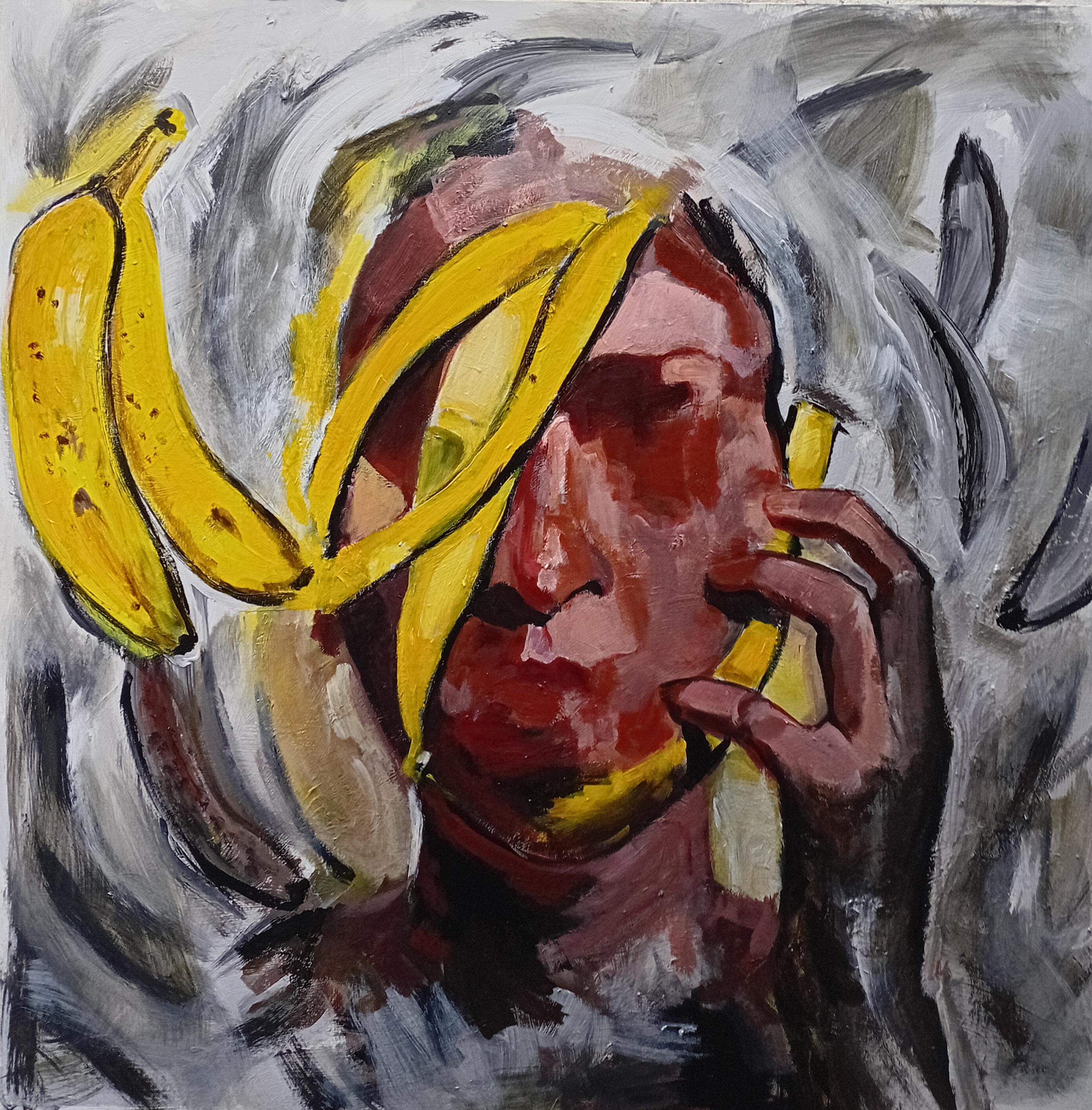
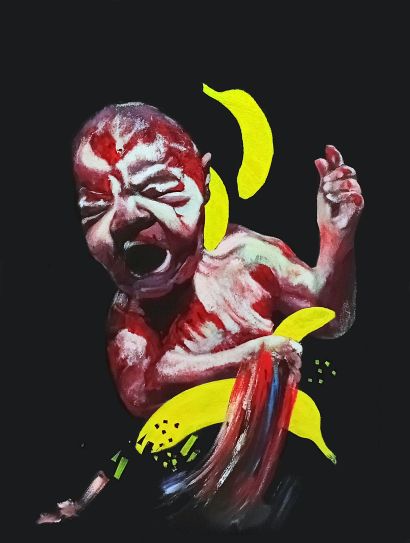
The third movement of the cycle marks the utter absorption of the individual into the "System." Here, the tension between authenticity and the manufactured world collapses into grotesque conformity. The "Salvator Mundi," once a struggling, primal being, is now an adult whose identity has been entirely overwritten by the symbolic order.
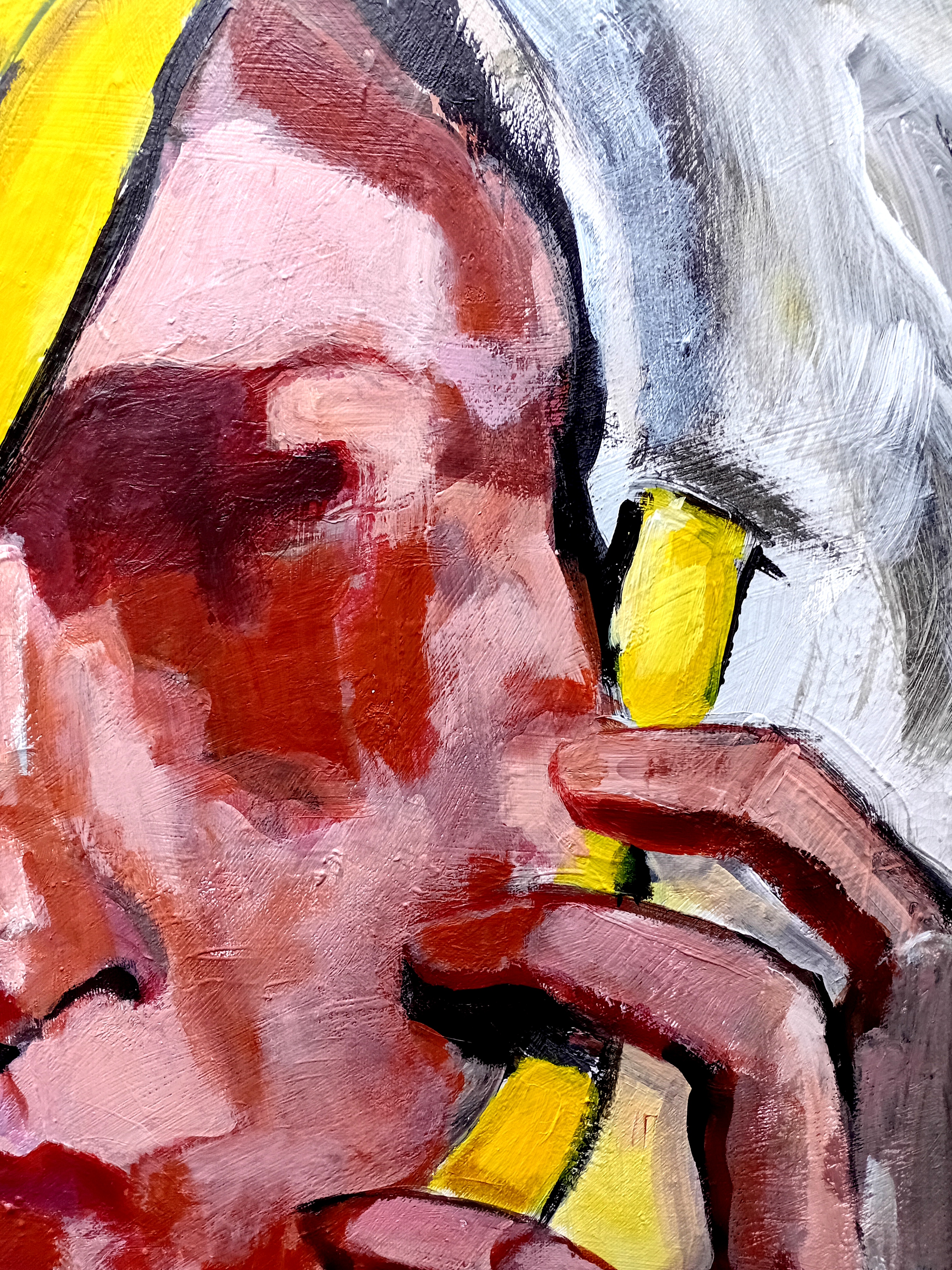
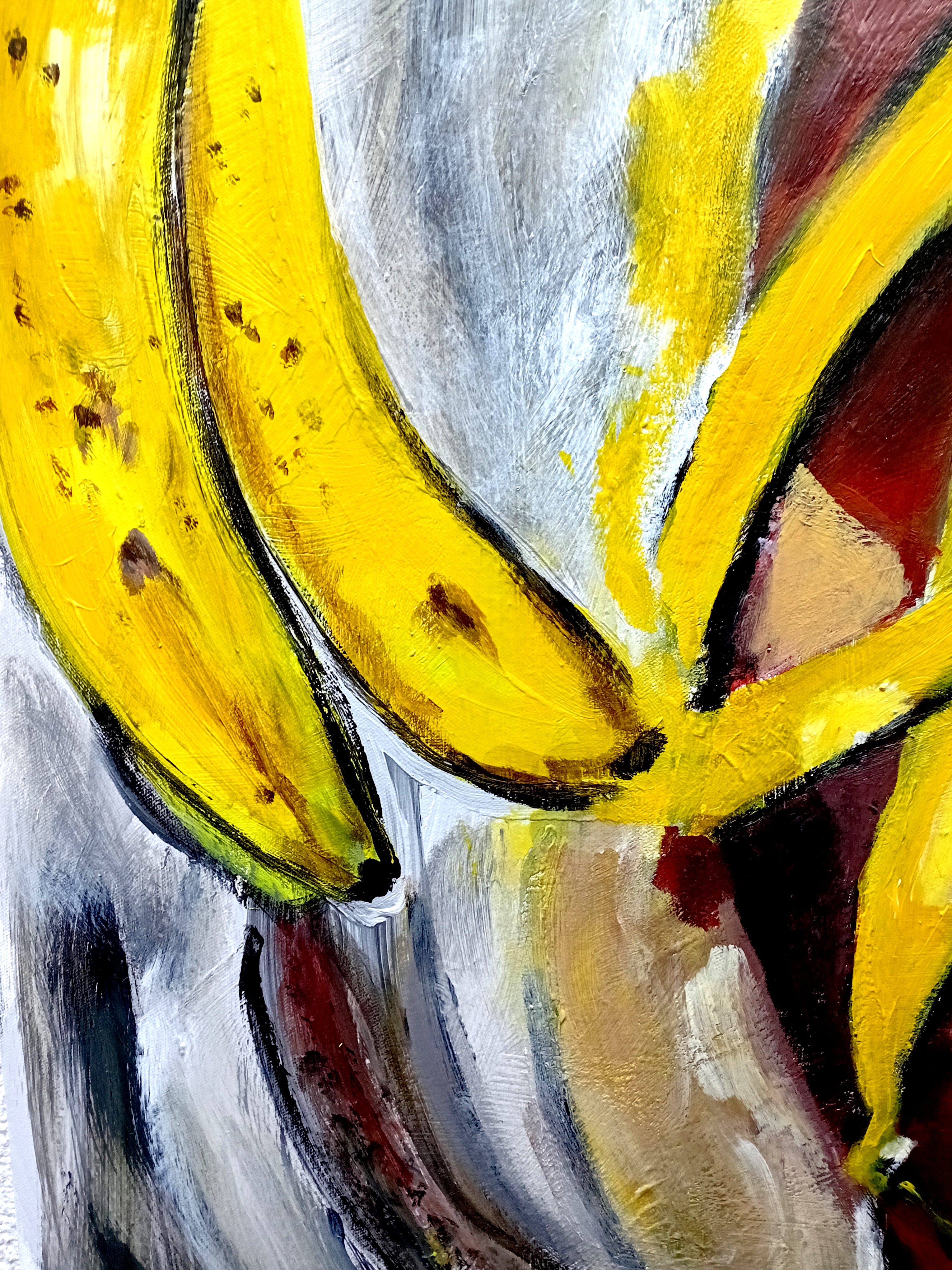
In this work, the Heideggerian concept of "Das Man" (The "They") is visualized through the banana motif, which has now mutated from a commodity into a complete persona. The figure is utterly enveloped, constricted, and blinded by a chaotic cascade of bananas and, most significantly, a mask constructed from banana peels.
This image represents the hyper-assimilation of the self. The individual is not merely participating in the system; they have become the spectacle. The use of the mask, referencing and mocking Maurizio Cattelan’s "Comedian," symbolizes the absolute suppression of genuine Being-in-the-World in favor of a superficial, marketable identity. The person is trapped within a reality they believe they are "saving," while their true nature is concealed by the very absurd symbols they grasp.
The title Salvator Mundi III reaches its cynical apex in this image. We are presented with a "Savior" who has become a commodity himself—a blinded caricature of leadership, trapped in the infinite loop of a constructed, absurd system. This is the moment where the "thrown" nature is utterly masked by the "They," setting the stage for the raw, deconstructed "truth" of the final work.