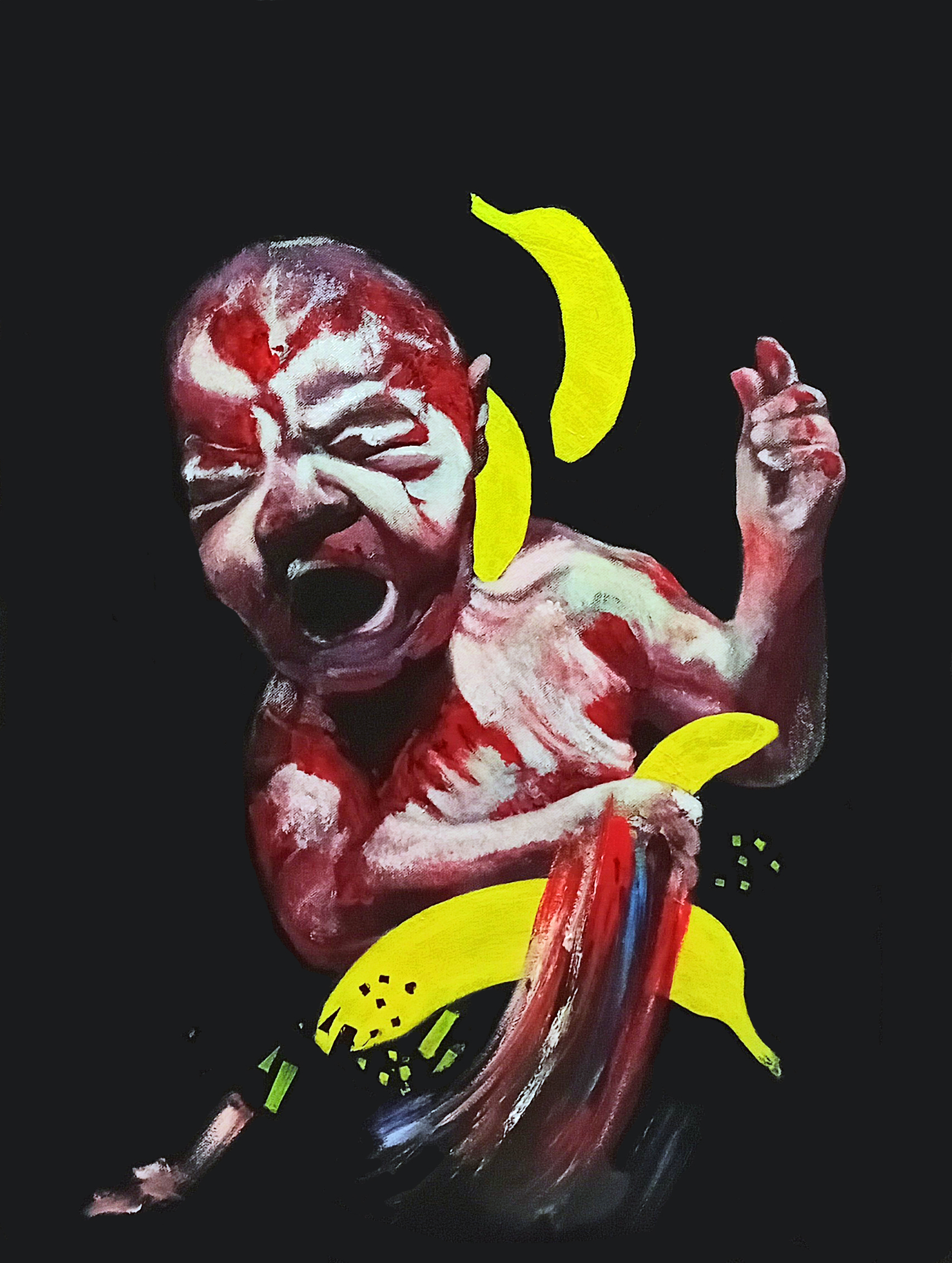
In the second movement of the cycle, the "thrown" individual transitions from the purely biological struggle into the sphere of societal structures. The umbilical cord has been severed, yet the state of being bound remains—only now, the constraints have shifted from nature to the "System."
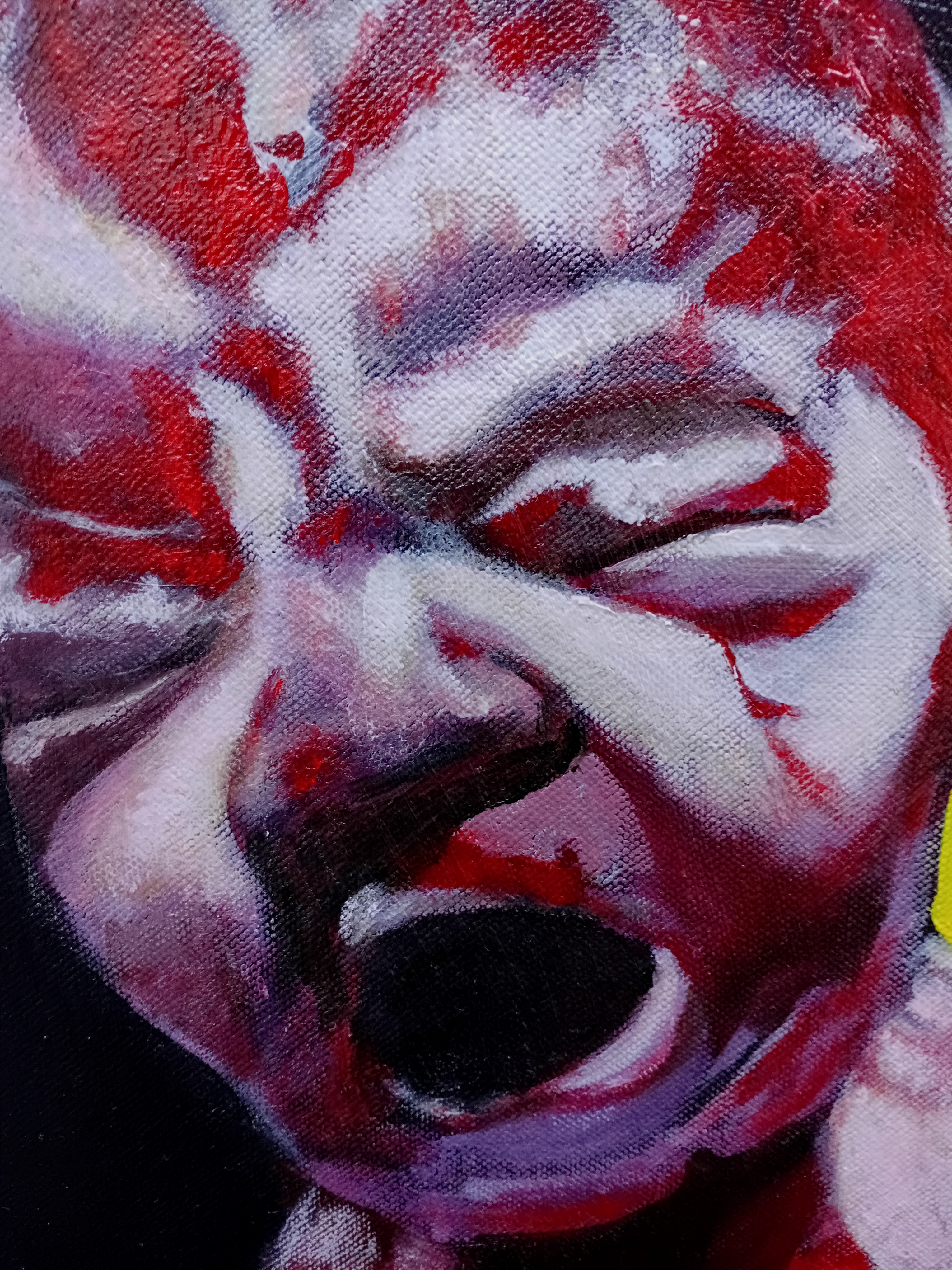
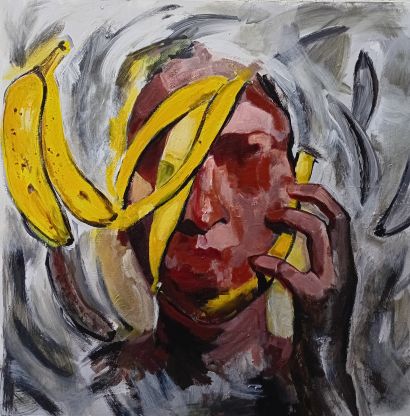
This work introduces the banana not merely as a fruit, but as a semiotic anchor referencing Maurizio Cattelan’s "Comedian." Here, it represents the absurdity and inevitability of the systems we are born into: the market, the spectacle, and the predefined symbols of value. The infant—the supposed Salvator Mundi—is depicted in a state of primal reaction, screaming or gasping as it is confronted with these floating icons of consumption.
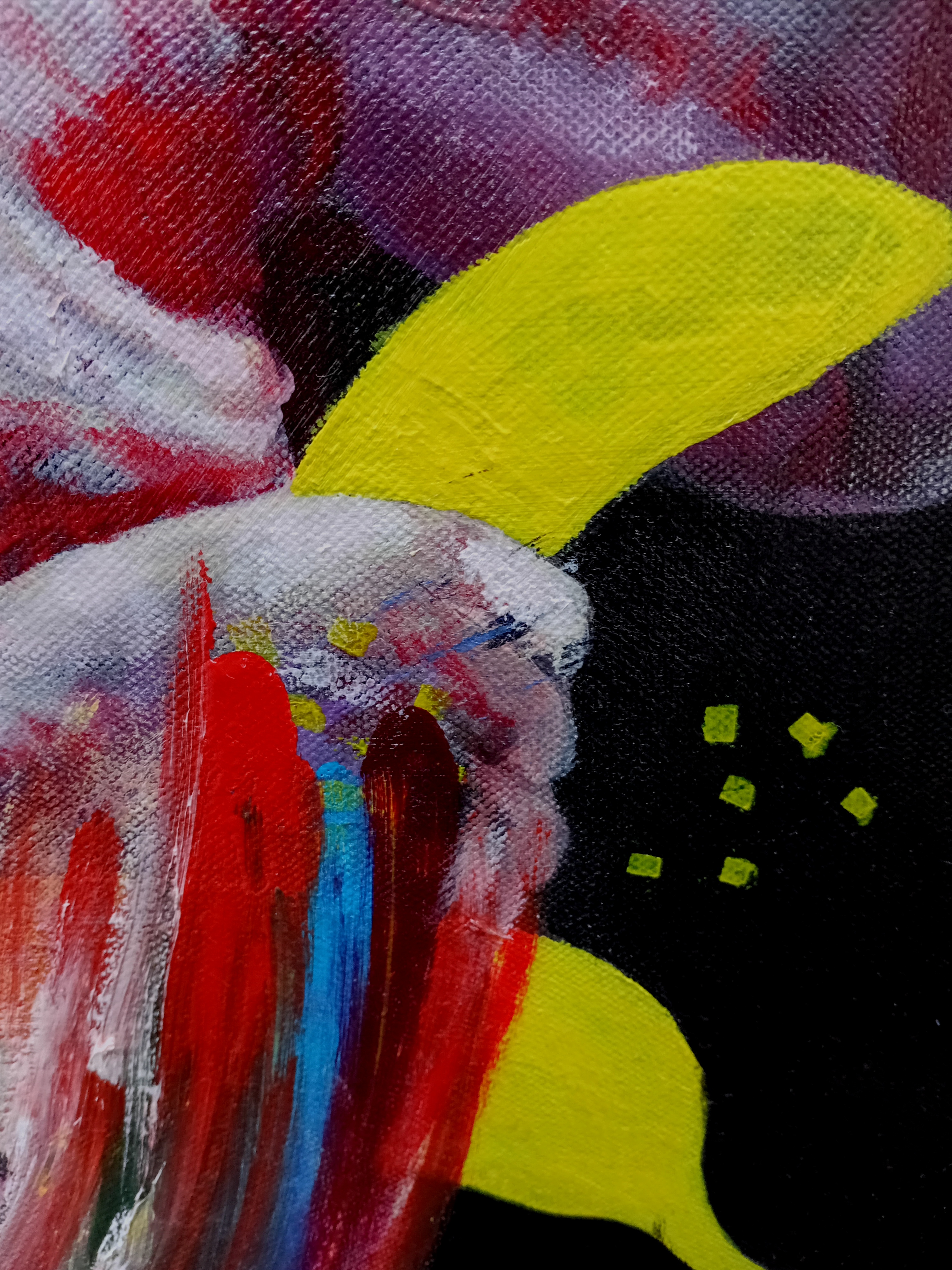
The bright, synthetic yellow of the bananas creates a jarring aesthetic dissonance against the raw, fleshy tones of the child. This visual conflict illustrates the tension between authentic human existence and the "artificial" world of signs. The child attempts to grasp or interact with the banana, symbolizing the beginning of our lifelong assimilation into a world where everything, even life itself, is branded and commodified.
By continuing to use the title Salvator Mundi, the work highlights the irony of a "Savior" who is already being shaped by the very systems they are meant to transcend. It is the moment where the infant’s "first touch" becomes a "first transaction" with reality.