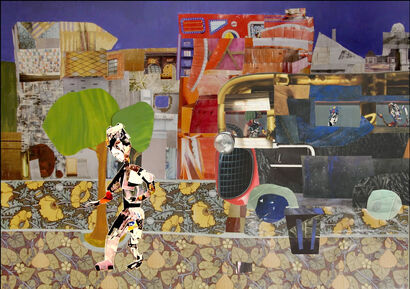
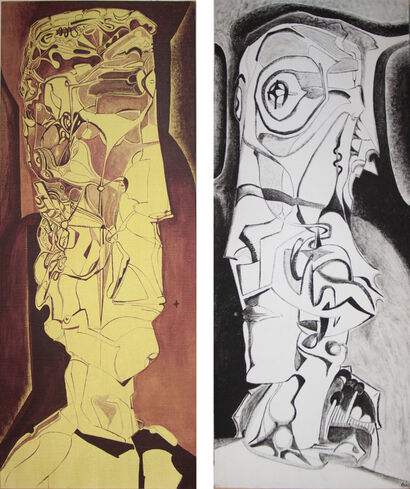
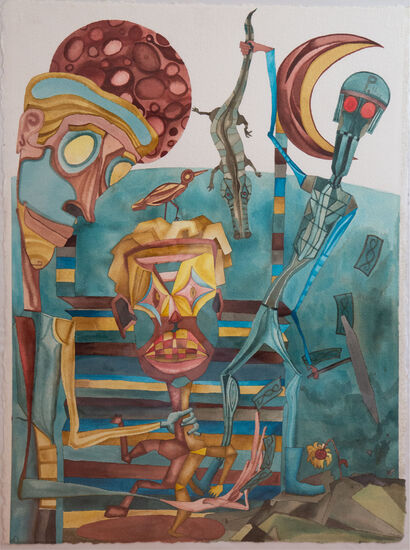
The work is a contemporary interpretation of Jacques Prévert's poem To Paint the Portrait of a Bird (Pour faire le portrait d'un oiseau). While Prévert celebrates patience and the possibility of welcoming a free bird, Poème encagé questions what freedom means today and examines the place we leave for the living world in an era of profound environmental transformation.
Poème encagé explores the relationship between humans and the living world through the figure of the bird, a symbol of freedom, adaptation and resilience. The work reflects on the fragile balance between species and the ways we inhabit a shared environment.
Created on reclaimed wood, whose materiality remains intentionally visible, the painting preserves the memory of the tree from which it originates. This choice of material reflects on the transformation of natural resources, the notions of habitat and ownership, and the traces of human activity within ecosystems.
Through the dialogue between painting, materiality and symbolism, the work creates an open space for reflection on our relationship with nature, inviting viewers to imagine new forms of ecological, emotional and collective coexistence.