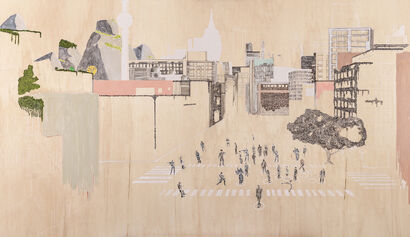
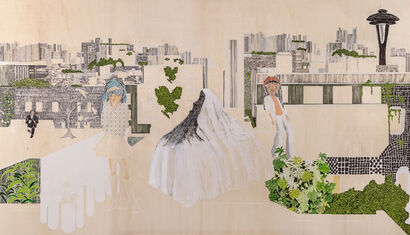
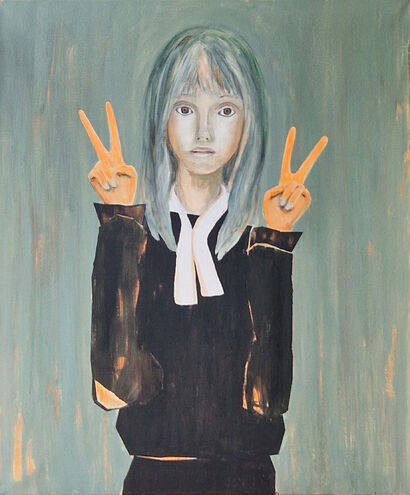
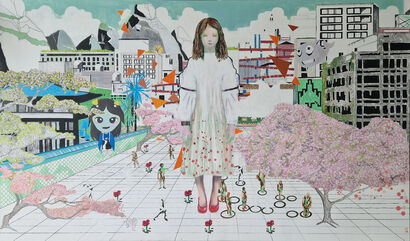
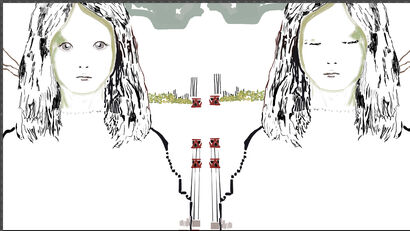
Nadja Willekens starts in the most traditional way possible: she paints and cuts a landscape collage from tape, paper and brushstrokes you could literally run your fingers over. This analogue stage anchors the piece in physical reality, but only for an instant. The collage is then photographed, its textures flattened into pixels, and the original may be stored away or even disappear. What remains is a high-resolution digital duplicate—already a first slippage between what was and what is.
From here the work enters a second, more volatile life. Custom software—written by Willekens yet given permission to act autonomously—re-stacks, distorts and recolours the image in real time. Every presentation is unique: layers slide, objects fade, hues erupt or dissolve according to rules laced with randomness. The result feels less like a replay and more like watching a landscape dream itself alive.
That constant flux exposes several friction points. Material turns immaterial, yet traces of paper edges and torn tape still haunt the screen, so presence and absence coexist. Artistic intention meets algorithmic chance: Willekens selects the source material and the parameters, but the machine decides what the viewer sees in any given second. A static picture mutates into an event, and the audience—artist included—can only witness, never steer. In that sense the work is a mirror: it performs the same question it raises—what counts as the “real” image, the vanished original or its restless copy?
Because these tensions remain visible rather than hidden, Painted Forest reads as both a poetic landscape and a quiet essay on authorship, authenticity and our increasingly mediated vision. By letting analogue and digital, control and indeterminacy, nostalgia and novelty collide, Willekens keeps the boundary between reality and appearance in play—not to solve it, but to make us feel its continual negotiation. The piece lasts exactly as long as you watch, and when the screen goes dark only the memory of a changing forest is left.