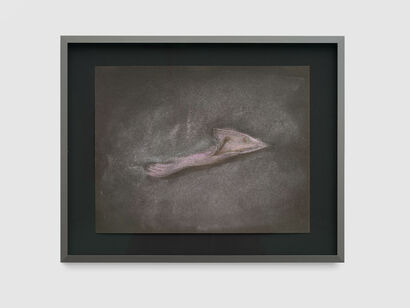
The marble sculpture, part of the Soft Syntax series, operates within a temporal register: that of geological time, accretion, and... Read More
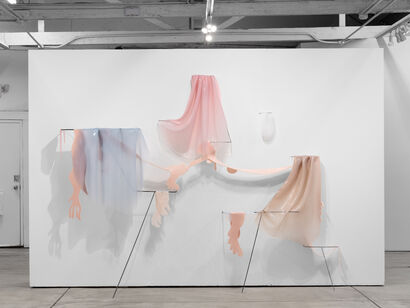
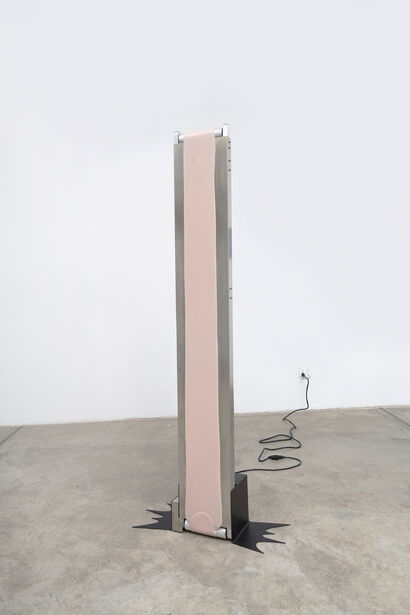
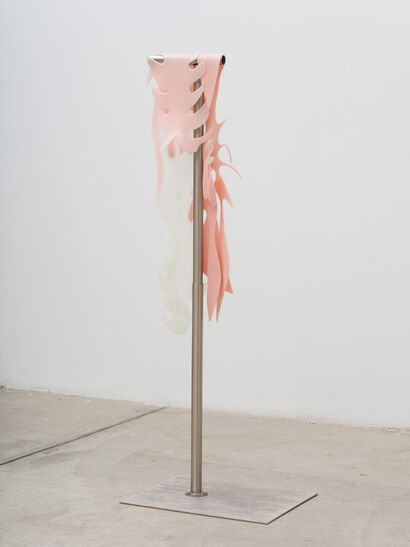
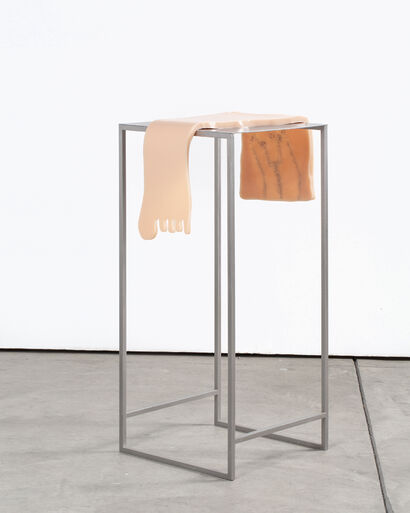
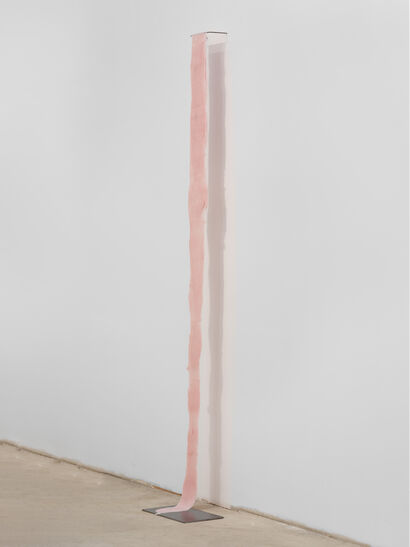
The marble sculpture, part of the Soft Syntax series, operates within a temporal register: that of geological time, accretion, and pressure. Carved from marble, a material both revered in classical tradition and laden with imperial histories, Wojas subverts its historical associations of permanence, idealized form, and monumentality by embedding within it a soft, ambiguous anatomy. The shape, a limb-like abstraction, is neither fully figurative nor entirely ornamental; it suggests motion halted, a gesture preserved in stone.
What might first appear as a decorative inlay reveals itself instead as a kind of fossilized performativity. Wojas’s treatment of the surface evokes not just the trace of the body, but its dispersal through time, trauma, and sediment. Here, the body is not a subject, but a syntax: fractured, recomposed, and ultimately illegible within classical language. This is a monument not to power, but to soft refusal.
Crucially, the work is steeped in contradiction. Marble, a material associated with luxury and timelessness, is recontextualized to express fragility and unfinished becoming.
By inserting softness into stone, Wojas reconfigures sculpture as an archive of vulnerability, an object not of mastery, but of yielding. The marble doesn’t dominate space; it quietly holds it, gathering the residues of labor, violence, and time into a form that refuses closure. In this way, the work aligns with Wojas’s poetic inquiry into what resists erasure, what survives translation, and what material might yet remember, long after the systems it served have dissolved.