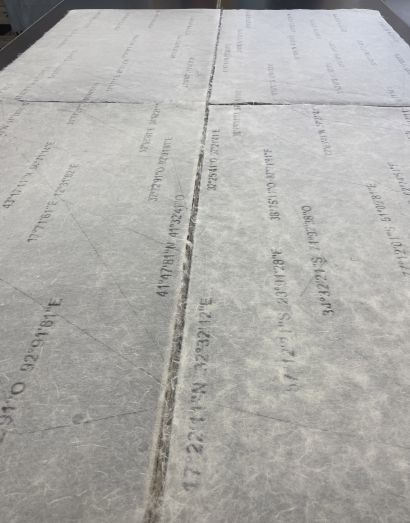
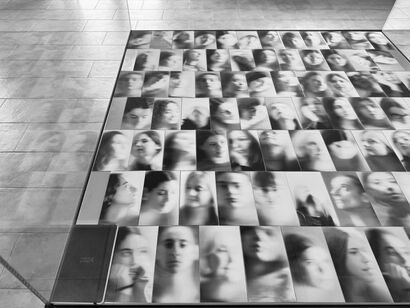
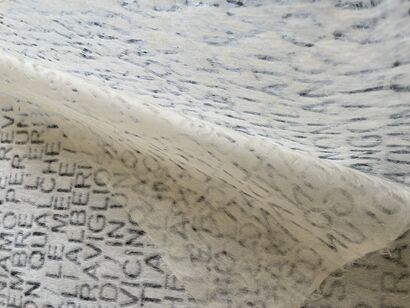
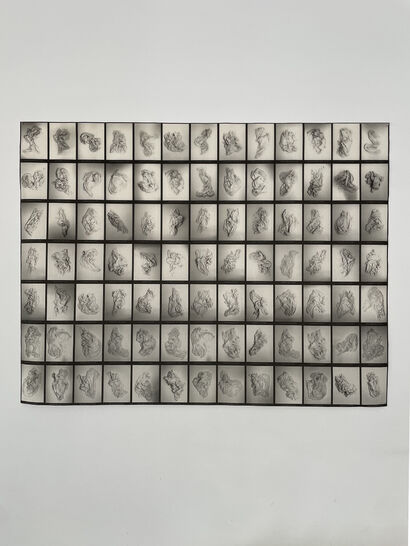
The installation, variable in size and configuration, consists of a photo wall, an audiovideo and a very small photo. It is part of a larger project that includes an archive of images made with a scanner, an audiovideo and a series of maps related to a reconnaissance of Amatrice's places after the 2016 earthquake.
The title 'Mundus Patet' refers to an ancient Roman festival held on August 24 on the Palatine Hill that celebrated the world of the dead, but also what is hidden: the soil, the earth. On August 24, 2016, the earthquake destroyed the artist's family home and took away three loved ones.
The work reflects on how the human is constantly intertwined with matter: objects, buildings, landscapes and atmospheres combine with our existences and influence our stories in unpredictable and mysterious ways. In the entanglements of matter we find the traces of different ways of inhabiting the world, fragments of lives, cultures and happenings that bind and dissolve without interruption, between reality and memory, between present and past. The strong connection with material reality suggests that listening, attention and care toward the world in which we are immersed, temporarily, should be the foundation of our way of inhabiting the Earth.
The visual archive consists of 513 images created using a scanner operated outdoors, allowing the atmosphere surrounding the fragments to be captured:
– 171 objects, mostly glass fragments belonging to the family;
– 171 stones that once formed the walls of the house;
– 171 branches from the adjacent apple orchard.
The video presents a sequence of diagrammatic images of the house, the orchard, and the surrounding mountain landscape, transformed through the use of an oscilloscope. The soundtrack, composed of birdsong, was recorded during an autumn site visit.
Taken as a whole, the work takes the form of an intimate and sensitive archive, in which memory acquires a physical presence through matter, and loss is transformed into an act of care and awareness toward the world.