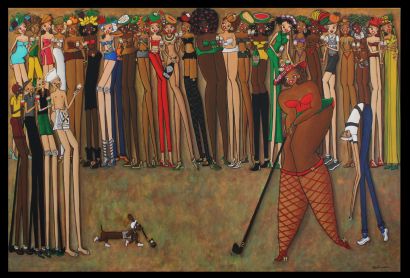
Barcode: Agnisa Talks - Hidden story in the headscarf
The Surinamese headscarf Agnisa, is an important cultural heritage and a symbol of pride, identity, and femininity within the Afro-Surinamese community. During slavery, enslaved women were required to wear head coverings imposed by colonial authorities. Over time, this symbol of oppression evolved into a powerful expression of resilience and cultural identity.
Towards the end of the 19th century, particularly after 1874 when clothing laws required women to cover their upper bodies, Afro-Surinamese women developed a symbolic language through the folding techniques of the angisa. Each style carried a specific meaning, often representing a proverb or message rooted in traditional wisdom known as odo. In this way, the angisa became a subtle form of silent communication.
Today, the angisa represents identity, spirituality, strength, and a deep connection to ancestors. It forms part of the traditional Afro-Surinamese dress known as the koto misi, worn with pride during celebrations and commemorative events such as Keti Koti in Suriname, marking the abolition of slavery on July 1, 1863, and Juneteenth in the United States, commemorating June 19, 1865.
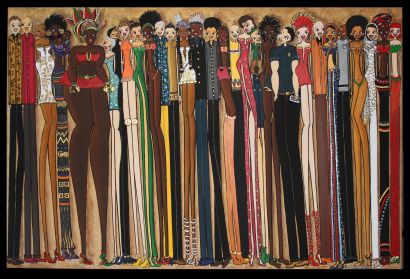
In the painting, the women proudly carry this cultural heritage while holding a designer handbag and a mobile phone—symbols of the present day, where tradition, technology, and individuality coexist. The symbolism of the angisa deeply fascinated me and inspired this work.
The painting builds on one of my earliest works from the Barcode series, “Dare To Be Yourself” . In this version I introduce more movement and dynamism and another subject; the composition breathes life, strength, and joy. The women radiate confidence, vitality, and resilience.
The work reflects how cultural heritage is not static, but continues to evolve through the strength, creativity, and identity of modern women.
As humans, every action we take shapes the world around us. We all have a choice, choose wisely.
=====
From left to right name and the story behind the headscarfLet them talk A specific tying style that indicates the wearer does not care about what others say and follows her own course. It conveys a “let them talk” message.
Feda no frede Means “today no fear, only peace” and is a symbol of strength and courage. This style is similar to Fede Ede and can also indicate anger, conflict, or readiness to resist.
Krioro Mama Symbol of a strong or proud mother. Represents female power and authority within the family.
Feida Ede Similar to Let Them Talk. A style with upright points symbolizes “walk to the pump, don’t touch me.” If the points face downwards, it means the wearer seeks peace after a conflict.
Makeba Named after and worn during a visit to Suriname by Miriam Makeba, African singer and anti-apartheid activist. A symbol of African pride, inspiration, beauty, and international elegance.
Mis de Neef Named after Francina Jacoba Elisabeth de Neef, entrepreneur, fashion designer, social worker, and cultural icon. The angisa symbolizes her influence on Afro-Surinamese clothing and her contributions to the community.
Afu Skin Literally means “bare skin.” Can express playfulness, charm, or seduction, but also identity, beauty, and strength. Symbolizes the transition from slavery to freedom and from shame to pride. Often the angisa matches the jacket pattern.
Prodo Ede Literally “proud head.” Symbolizes pride, dignity, self-respect, and female strength. The wearer holds her head high, regardless of circumstances or past.
Maxi Linder Named after a well-known prostitute from early 20th century Paramaribo. The angisa represents female freedom, self-worth, and strength—a tribute to women who hold their heads high despite judgment.
Dja Dja Uma Symbol of the strong, dignified, and confident Surinamese woman. The message: “I will not be pushed aside.”
Feda Ede Same style as Fede Ede. A style with upright points, similar to Feda no frede. Symbolizes courage, readiness, and sometimes resistance; conveys that love overcomes everything, including pride, conflict, pain, or distance.
Lobi na Basi Means “love never fades.” The angisa is worn as a sign of love, reconciliation, and harmony.
Wakti mi na Tapu Uku Also called the “appointment headscarf.” Symbolizes confidence, triumph, or success.
Paw Tere Refers to figurative or humorous styles, often named after animals or objects (like ducks or dog tails) because of the fold shape. Meaning can vary: playful, funny, or eye-catching.
Otto Baka A striking style with a wide back, inspired by the bumper of the first car that arrived in Suriname. Symbol of status, elegance, and female pride.
Fini Plooie Style with many fine, neat folds. Symbolizes refinement, care, and modesty. Worn mainly on formal or traditional occasions, such as funerals or ceremonial celebrations.
Waaier Ede Angisa in fan shape. Symbolizes elegance, grace, and festivity. Worn during cultural and celebratory occasions.