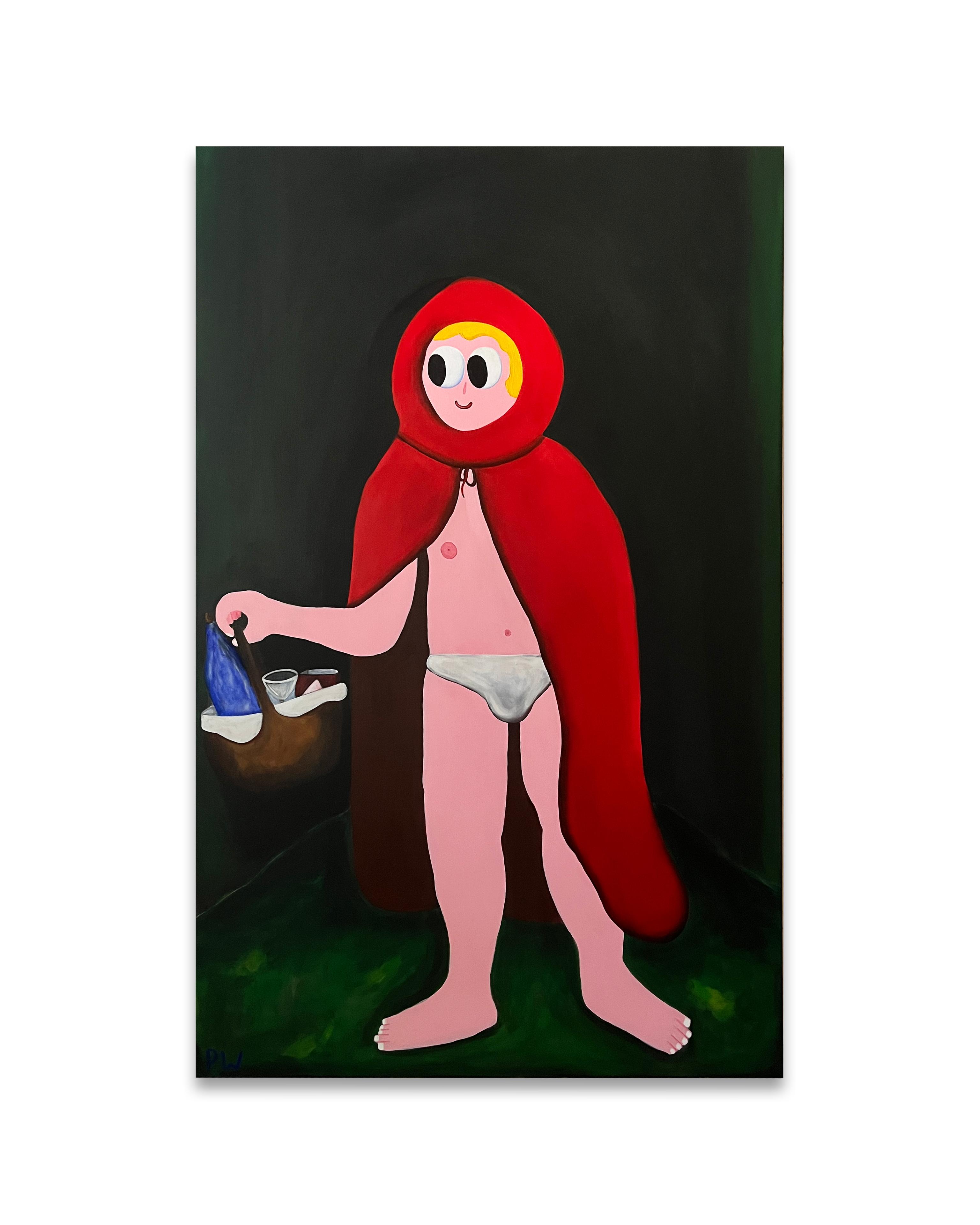
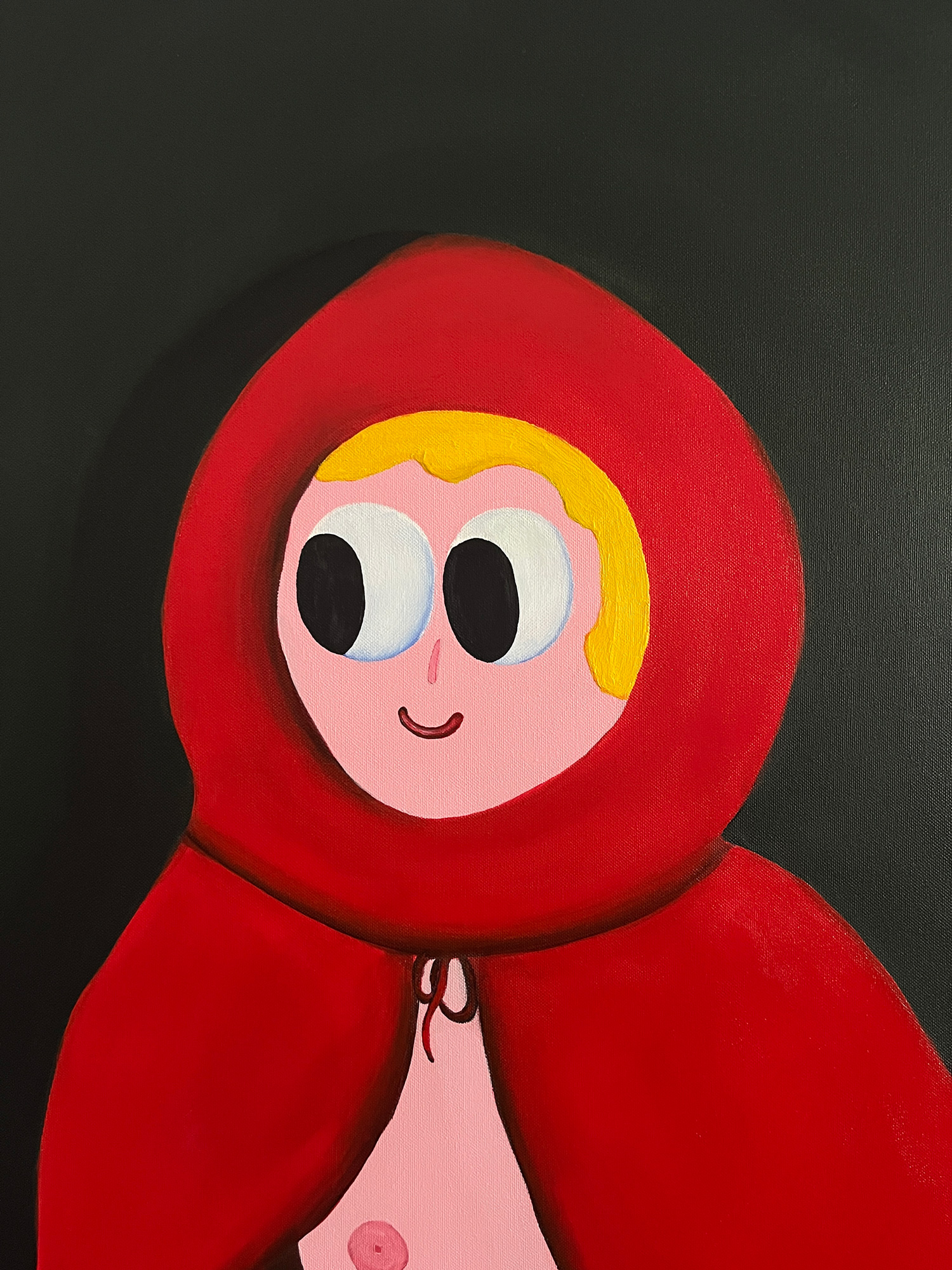
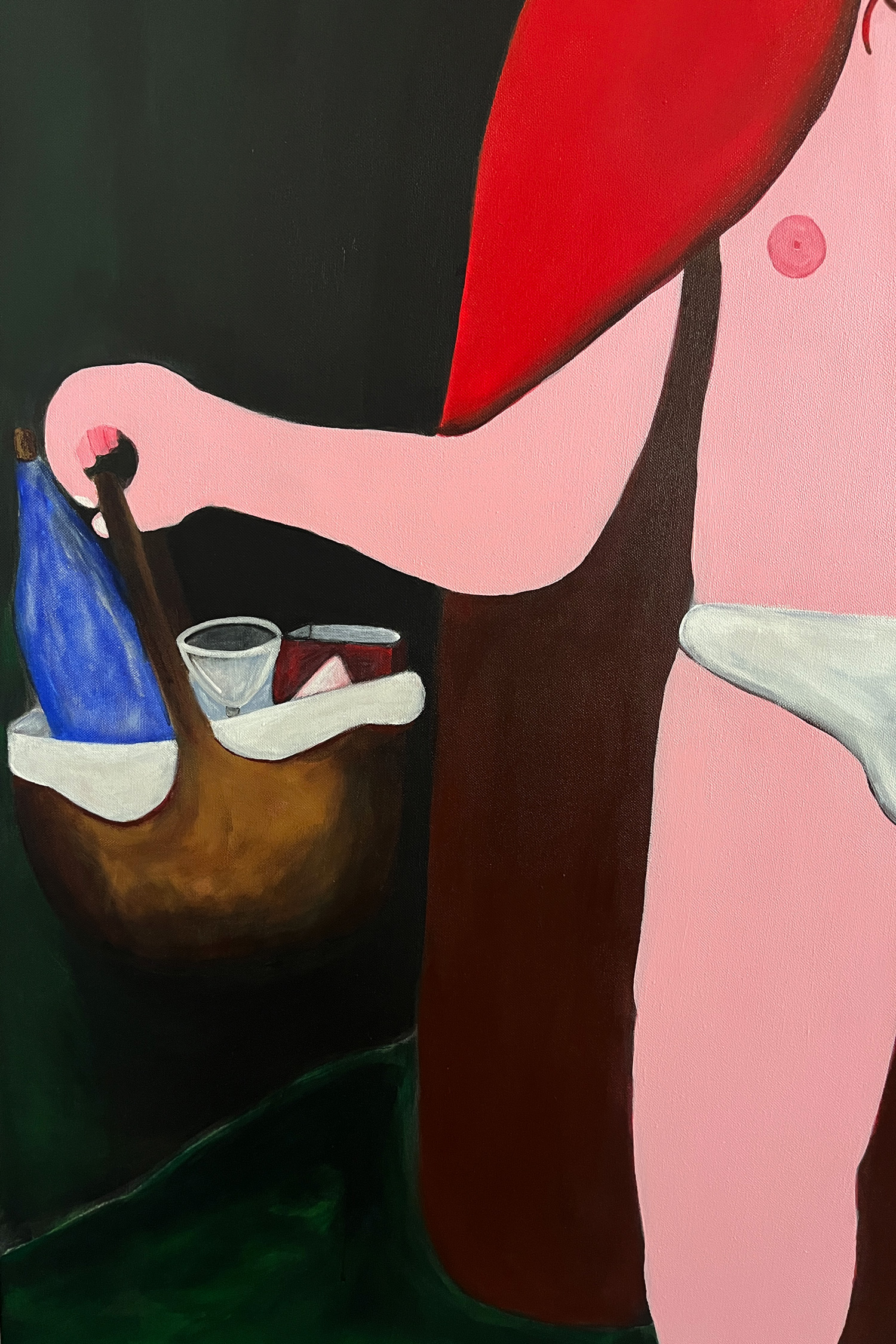
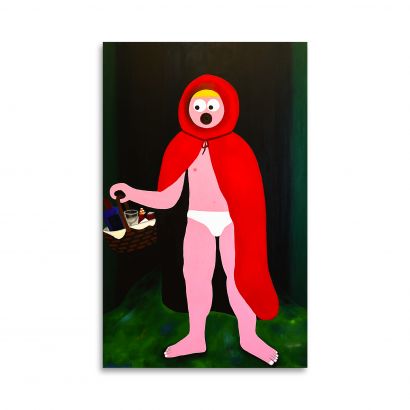
In Aufm Heimweg von Großmuddi, I revisit the well-known fairy tale of Little Red Riding Hood, but through a language that is deliberately naïve and subversive. The figure, oversized eyes staring outward, appears at once innocent and strangely exposed: the red cape is present, yet the underwear and awkward stance destabilize the narrative. The basket, traditionally filled with bread and wine for the grandmother, here contains everyday objects that shift the tone from mythic to absurd.
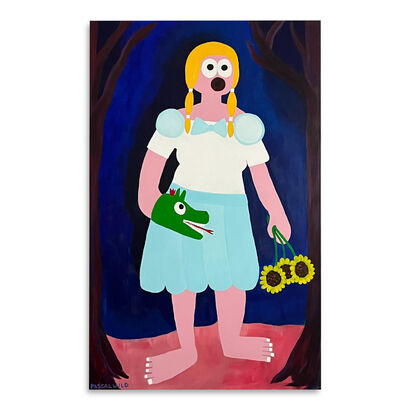
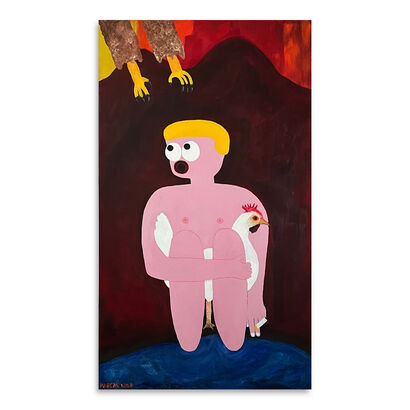
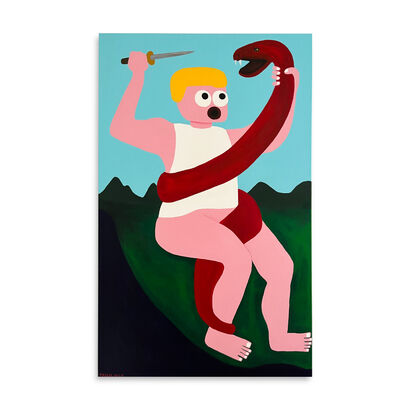
The work was created in a broader exploration of how childhood stories and archetypes continue to shape cultural imagination. By translating them into my visual vocabulary – bold colors, cartoon-like figures, and playful reduction – I aim to reveal the tension between the harmless and the unsettling. What appears humorous at first glance carries undertones of vulnerability, shame, and corporeality.
Historically and literarily, the work references both the Brothers Grimm and the long tradition of reinterpreting Red Riding Hood as a tale of sexuality, danger, and power relations. Philosophically, it resonates with Michel Foucault’s reflections on how narratives discipline bodies and identities, and with Mikhail Bakhtin’s idea of the carnivalesque, where laughter distorts and destabilizes authority.
Within my practice, Aufm Heimweg von Großmuddi embodies my consistent attempt to oscillate between accessible, almost childlike forms and deeper existential questions. It is representative of my broader body of work, where humor and irony serve as entry points into darker realities, and where cultural clichés are reconfigured into new, ambiguous constellations.