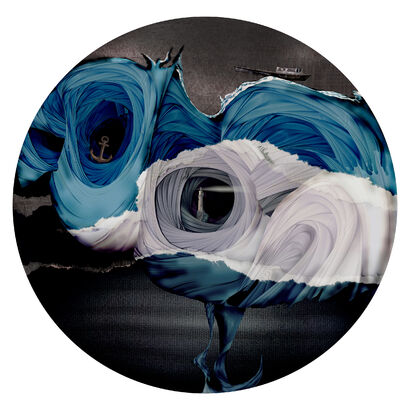
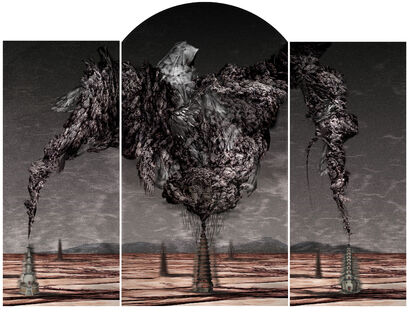
This artwork primarily explores the relationship between concealment, hiding, reality, and hypocrisy in a society of extreme order. Originally, screens... Read More
This artwork primarily explores the relationship between concealment, hiding, reality, and hypocrisy in a society of extreme order. Originally, screens were used to block wind and retain warmth, but through historical evolution influenced by humanistic spirit, screens have become not only decorative elements enhancing the aesthetics of a room but also symbols of power and mystical concealment. As a semi-transparent medium, screens can obscure tangible forms while casting vague, shadowy aesthetics, adding a unique sense of beauty through their covering and revealing. This beauty, enriched by mystery and new aesthetic value, is exemplified through the use of symbols from Japanese Ukiyo-e culture such as screens, cranes, geishas, and samurai, arranged in a highly formal, symmetrical composition. It narrates a corner of society shaped by millennia of change, questioning whether the history we see is genuine or veiled by some form of concealment. Externally, the beauty may be an artifice created through the use of screens, not necessarily reflecting its true nature. The characters or animals hidden by these screens can embody deceit or falsehood, while the true aspects often remain unseen by the audience. This mirrors our own world. The piece uses a theater-style wide screen composition from the perspective of the audience to reveal this mystery and diverse beauty.