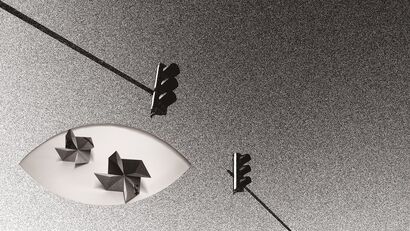
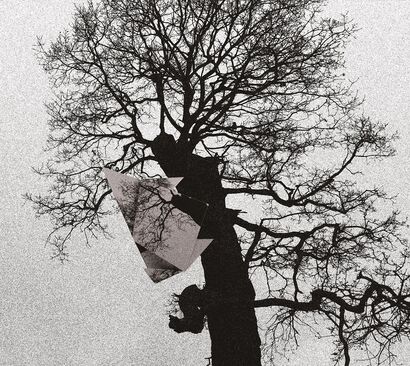
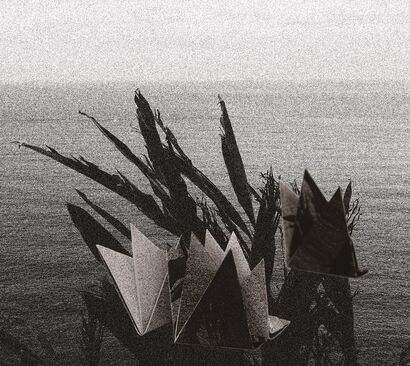
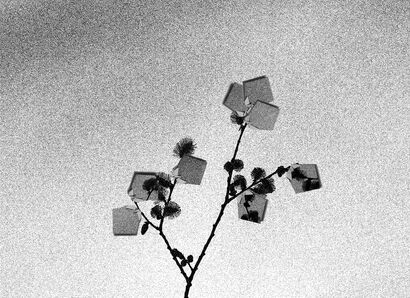
Narrative Time series consists of eleven components, from thinking about past activities and related subjective memories. Changing experiences, knowledge, beliefs, or faith can influence memories, causing their contents to be reshaped, rationalised, or romanticised. The mechanisms of time and forgetting cause omissions in memories, so memory and forgetting are in a permanent dialectical and unconscious transformation. After questioning whether past experiences were real and whether photographs could prove the truth, I began making images/objects and collaging them as the primary method.
The components comprise my documentary photographs and origami images to experiment with new storytelling techniques. While selecting and presenting documentary photographs as evidence of life and experience is a subjective narrative practice, making origami images is a metaphor for recalling, recollecting memories, or even reimagining. The two have similarities or connections in form or concept but still have apparent differences and separation; this indicates that documentary and memory are different in some senses and implies that the present of recollection and reconstruction is implanted and rooted in an autobiography that is anything but objective.
The patterns of origami materials and the blurred backgrounds of origami images are partial views of my old oil paintings. These are also observations and reflections on the experiences and perceptions in memory. After being converted into digital images, the oil paintings are captured and reused; this not only means rethinking the cycle of life and artistic creation but also implies the dismantling and reconstructing of past subjective narratives. When origami images and documentary photographs are collaged, the resulting combination interprets the changing subjectivity that produces a different narrative about a specific event that has occurred.
This method of making images/objects and collaging them makes different times/temporalities apparent. At the same time, the narrative function has to have the concept of forming, affirming, and maintaining self-perception and specific memories. The components are separated but connected conceptually by their horizontal midlines; they show the intermittent nature of recollection and reflection activities, the collective relationship, and the continuity of several memories. The different proportions of the image above and below the centre line make the whole look like a wave, an oscillation between evidence and memory and recapture and re-imagination of things.
In this collage practice of selecting, producing, and arranging images, images project and disseminate personal experiences. These experiences have both fluid and unique qualities at different points, including the subject's reflections on the existence of flowing time. The image content also involves an examination of the culture of a specific group and its various manifestations in daily life. The image is a tool to aid speculation and self-questioning, while collage is a method to visualise and reconstruct creative paradoxes.
In Narrative Time, whether it is the direct use of documentary images or the production and use of origami, they all have a meaning similar to nostalgia, especially nostalgia for the good old days. The images/objects and artworks used are entangled with the ghosts of the past, becoming a channel to and from the present and non-present when they are produced and appreciated. Origami seems based on the sense of déjà vu generated by documentary photographs; nevertheless, this practice attempts to innovate perspectives and collage techniques by calling upon the past.
I aim to revisit old textures and perceptual worlds using tools and techniques that have evolved to a certain extent in the 21st century to expand the possibilities of collage ideas and concepts. I use known collage techniques, the long-standing origami culture, and the ever-improving and widely available computer software and printers to reflect on current and past experiences and perceptions. These practices, results, and reflections serve as valuable references for future endeavours, acting as catalysts for progress, innovation, and untapped potential.