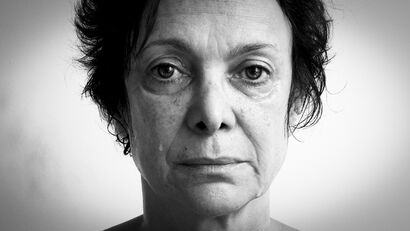
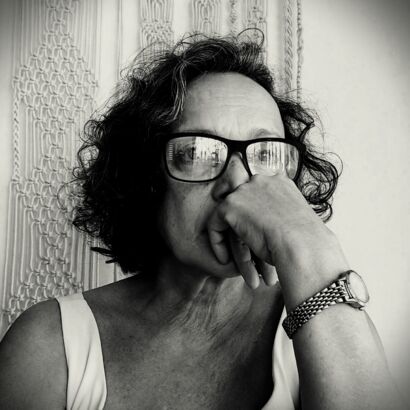
Andrea Penteado is a Brazilian visual artist, researcher, and educator, born in São Paulo. She graduated in Fine Arts in the 1980s, earning a teaching qualification in Visual Arts. In the early 1990s, she specialized in Clinical Psychopedagogy in Madrid, where her studies were shaped by Jungian archetypal psychology, the pioneering work of Nise da Silveira, and the art therapy approaches of Sara Païn and Gladys Jarreau.
Upon returning to São Paulo, she founded the 30th Century Art Studio, inspired by Vladimir Mayakovsky's poem Love. There, she developed research in ceramics, taught drawing and art history, and led mixed-media workshops for young people with cognitive disabilities. During this period, she also became the mother of her first son, Henrique.
In a country where investment in the arts has historically been limited, teaching became both a means of sustaining her artistic practice and a space for fostering creative processes. Between 1996 and 2000, she taught Visual Arts in elementary schools in São Paulo. From 2000 to 2001, she worked with riverside communities in Monte Dourado, in the Brazilian Amazon, an experience that profoundly expanded her understanding of the relationships between territory, culture, and education. After returning to São Paulo, she completed a Master's degree in Education, Art, and Cultural History.
Following the birth of her second son, Eduardo, Penteado moved to Rio de Janeiro in 2003, where she continued teaching Visual Arts in basic education. In 2009, she earned a PhD in Education and was appointed Professor of Visual Arts Didactics at the Federal University of Rio de Janeiro (UFRJ), where she continues to teach and develop artistic and academic research.
Penteado's artistic practice investigates memory as a process of narrative reconfiguration of absence, loss, and death. Moving between autobiographical experiences and collective histories, her work examines the traces left by violence, particularly those affecting the bodies and life trajectories of women and girls who have been subjugated, silenced, disrespected, and abused.
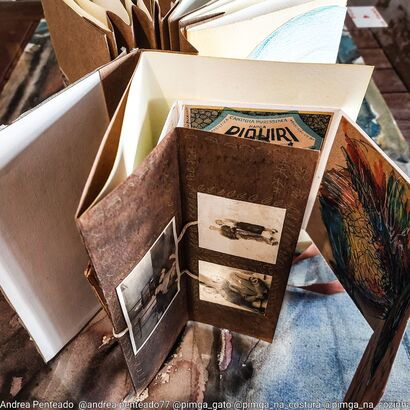
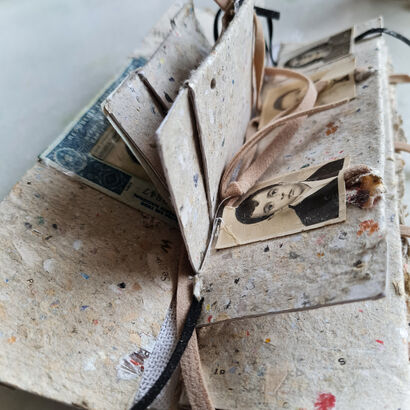
Working across photography, artist's books, video art, painting, drawing, and symbolic objects, she employs images, oracular systems, and ritual practices as devices for symbolic elaboration and visibility. Rather than documenting trauma, her work creates spaces in which memory can be transformed, shared, and continually reimagined, turning experiences of loss into possibilities for reflection, encounter, and reinvention.