DEBORAH KRUGER - ARTIST BIOGRAPHY
Wallpaper design and patterning have influenced Kruger’s work since her training in textile design at the Fashion Institute of Technology in New York City. She has taught, lectured and exhibited her artwork in museums, galleries and universities throughout the US, Mexico, Europe, Asia and Australia since the 1980s.
Recent career highlights: Coined in the South:2024 Biennial at the Mint Museum, Charlotte, North Carolina; and La II Biennale Internazionale di Fiber Art Contemporánea at the Museo del Ricamo e del Tessile, Valtopina, Italy. One of her large-scale environmental murals is on loan to the U.S. Embassy in Turkmenistan as part of the Art in Embassies Program.
In 2024 – 2025 her solo exhibition Turbulence: Birds, Beauty, Language & Loss will be on view at the Block Gallery in Raleigh, North Carolina.
Two of Kruger’s large-scale environmental artworks have been acquired by the Museum of Arts and Design (MAD) in New York City and will be on view in 2025 in their upcoming exhibition Recent Acquisitions of Monumental Artwork.
Kruger has attended residencies at the Millay Colony for the Arts, Austerlitz, NY (1991); La Porte Peinte Centre, Noyers-sur-Serein, France (2016); Hypatia-in-the-Woods, Shelton, Washington (2022); and the Icelandic Textile Center in Blönduós, Iceland (2024).
Her art practice balances making objects of beauty that convey layered meaning about human induced climate change, habitat fragmentation, bird migration, species extinction and loss of indigenous languages.
DEBORAH KRUGER - ARTIST STATEMENT
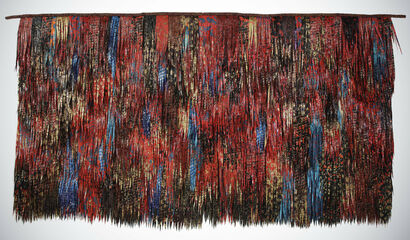
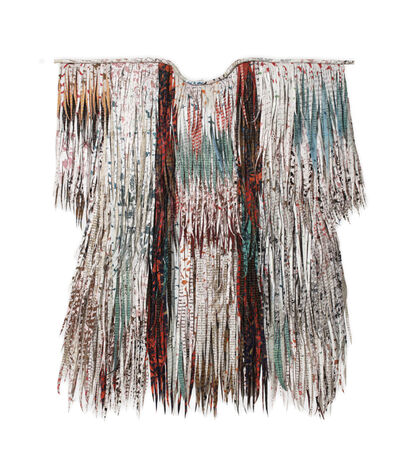
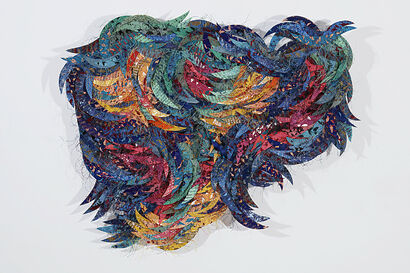
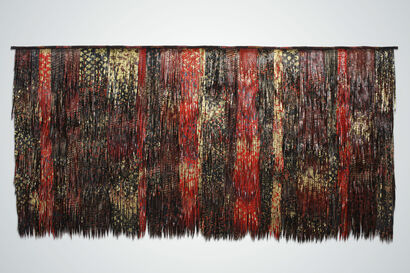
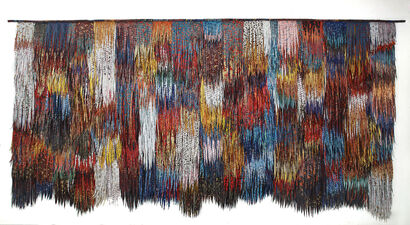
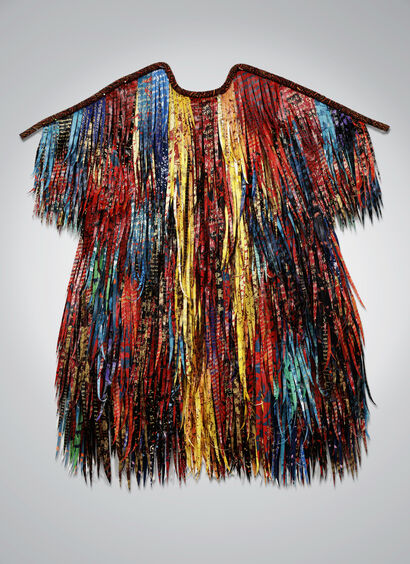
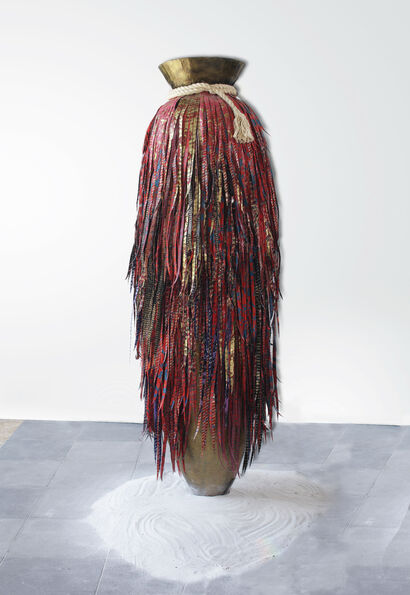
My latest environmental textile art focuses on the tragic losses of the 21st century, specifically the impacts of human-induced climate change and habitat fragmentation on bird extinction and culture.
Relentless colonial expansion has systematically dismantled ecosystems around the world, leading to the fragmentation of habitats essential for both wildlife and human communities. We must remember that our survival is intertwined with the fate of all species.
My artwork is intentionally made with recycled materials meant to spur dialogue about how we can preserve wild spaces, vulnerable birds, and protect habitat for all species. Each piece serves as a call to action, inviting reflection on our role in fostering sustainability and resilience for future generations.
I have worked with textiles since childhood, which led me to study Textile Design at the Fashion Institute of Technology in New York. My textile artworks all feature recycled plastic feathers made using complex hand processes. By incorporating plastic into my artwork, I interweave natural textiles with synthetic materials and embrace the duality of our complex relationship with nature and consumption.
Birds are emblematic of all the species that are now at risk, including humans, as a direct result of greed-centered economic policies.
The most egregious example of habitat loss is rainforest clearcuts. For thousands of years, indigenous tribes dwelled in the rainforest and their lives revolved around stewardship of the forest, which is the heartbeat of their culture.
Preserving land is intrinsically linked to safeguarding indigenous cultures and all vulnerable species. My textile artwork serves as a reminder that protecting natural habitats is vital for maintaining the languages, traditions, and wisdom of indigenous peoples who possess profound insights into sustainable living that modern society has largely overlooked.
When I was a child, Tikkun Olam/Repairing the World, was a central concept in our Jewish family. Healing the world through art is not only the focus of my artwork, it is a cultural imperative.
Making textile art from recycled materials prompts viewers to remember how art, nature and culture have the power to inspire creativity, sustainability, and hopefully action.