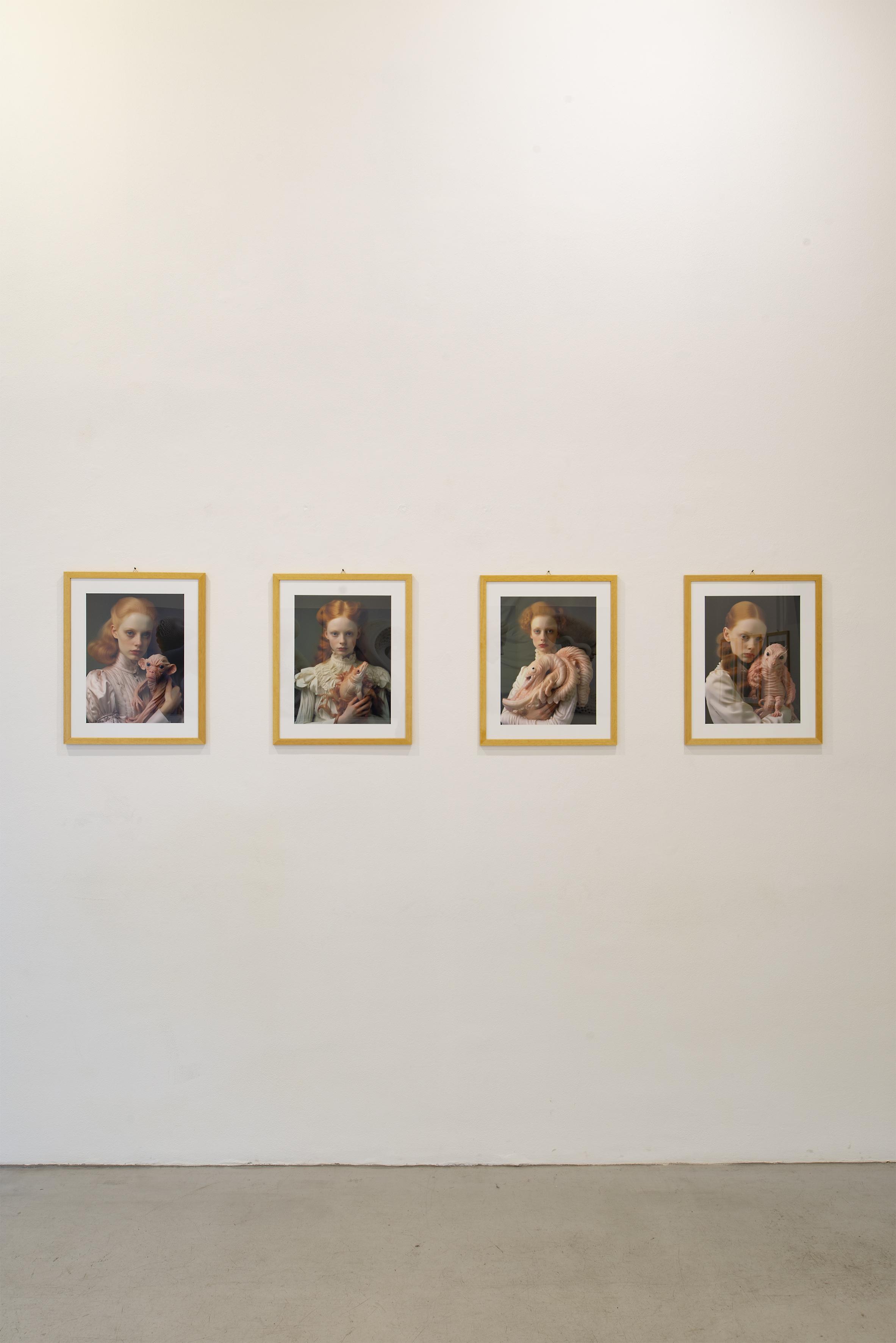
Reflecting on contemporary aesthetic imagery allows us to consider the possibility of turning our gaze towards images generated by artificial intelligence; a phenomenon often stigmatized by many categories of creative industry professionals, who claim that such reproductions cannot be considered artworks. This judgment is strictly dependent on an overestimation of AI software, perceived as an autonomous entity capable of completely replacing human creativity. However, research on the relationship between humans and machines in the artistic field makes it evident that these generative models are always based on data provided by humans, from which new visual elaborations can be realized.
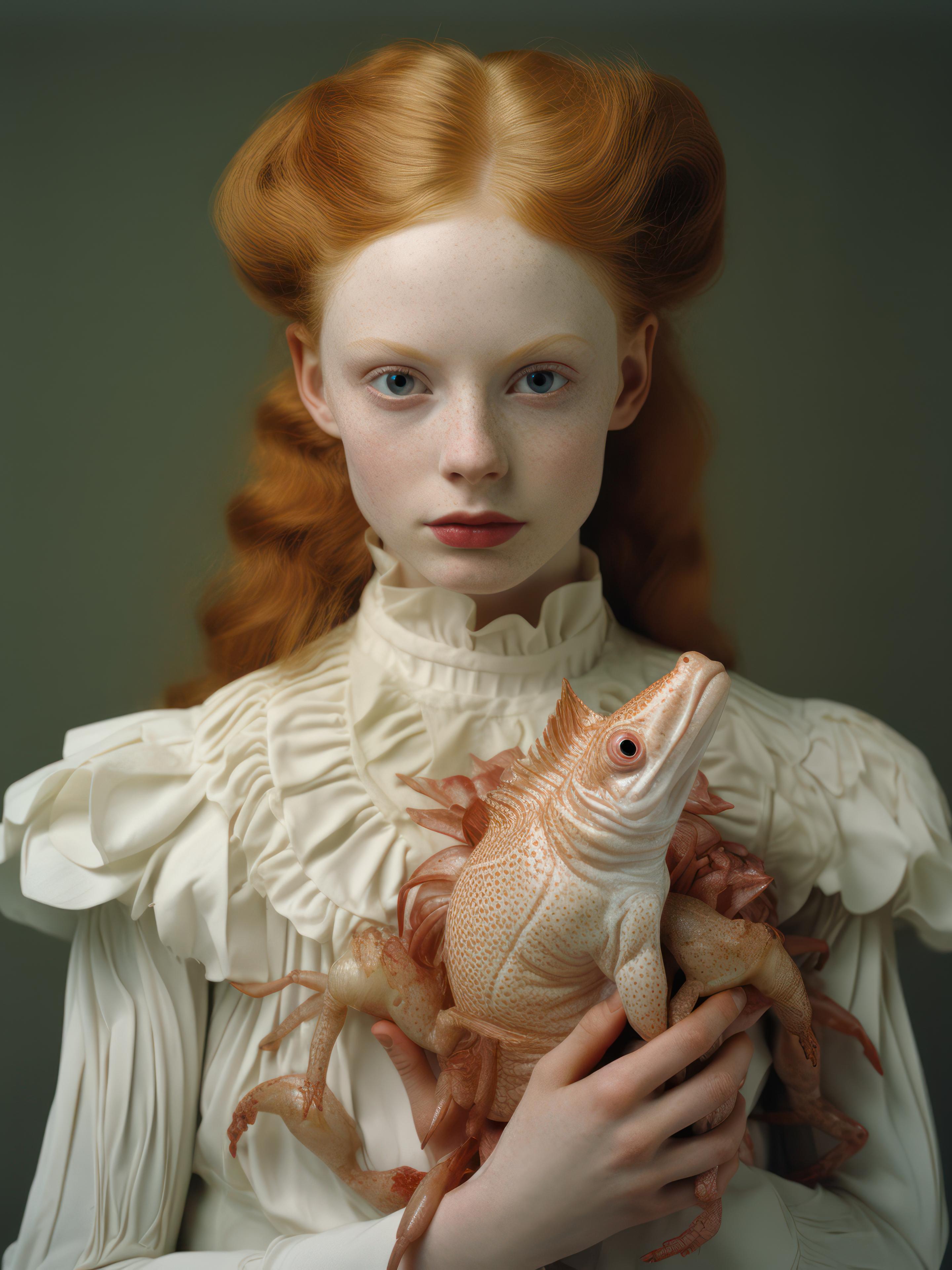
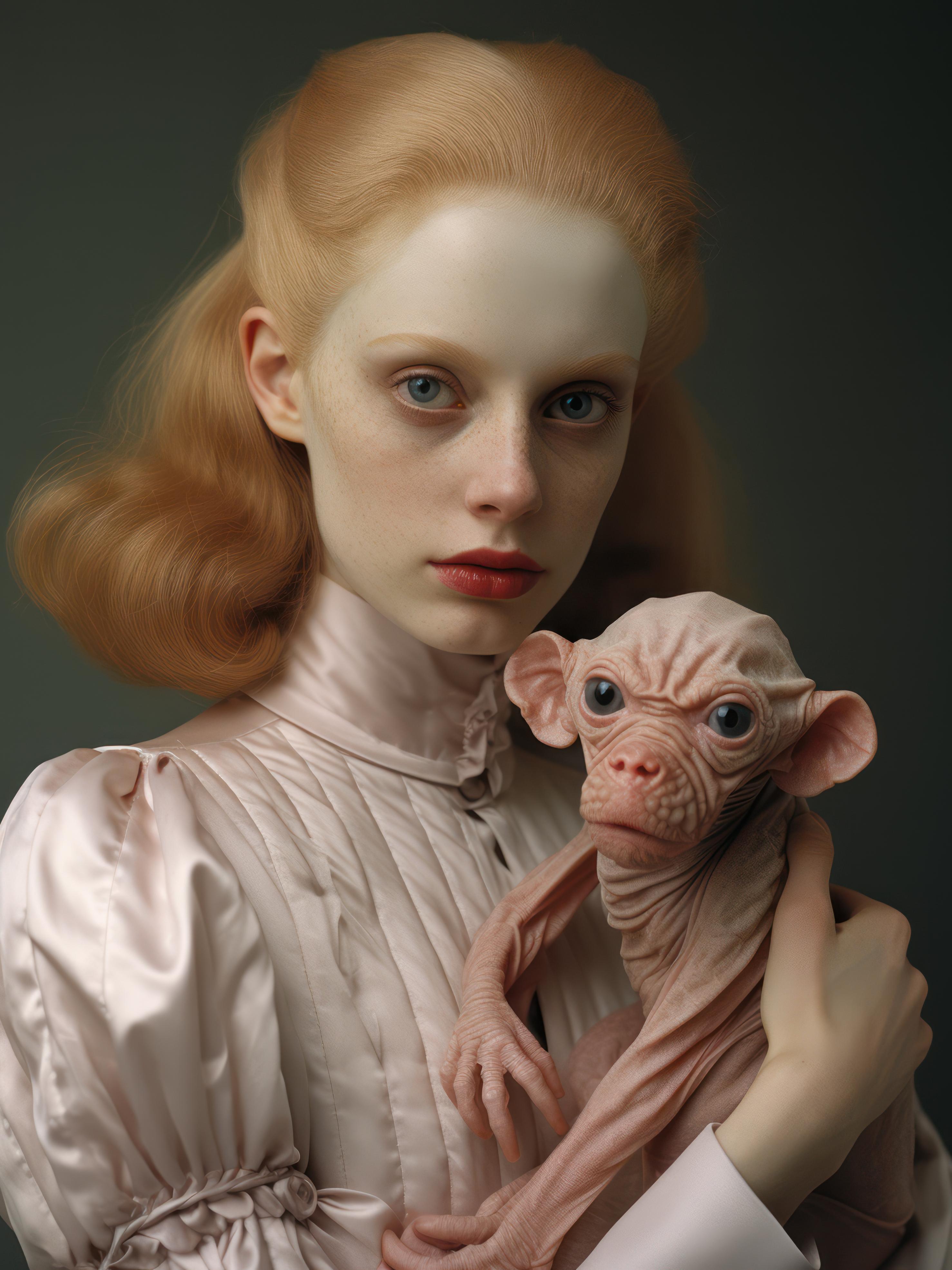
The assembly of these data allows us to understand—perhaps—what the collective psyche is. This intuition is first explicitly demonstrated by Andrea Meregalli who integrates the use of artificial intelligence software into his manual production. Indeed, starting from drawings, sketches on paper notebooks, and photographs stolen from a sleepless daily life, Meregalli generates new images through numerous blending and prompting processes, which, between obsessive control and total randomness, represent the monsters of the psyche, abstract entities that carry hidden truths.
To whom do these monsters belong? Are they attributable only to the artist? Or, given the presence of data from millions of people, can we assert that they are representations attributable to humanity as a whole?
What is beauty? How do we look at an image that partly represents what is universally recognized as an aesthetically pleasing portrait, conforming to codes internalized over time, and therefore attracts us, but at the same time repels us due to the absurdity of what is represented?
6 different subjects available, editions 5 copies
price is for one piece