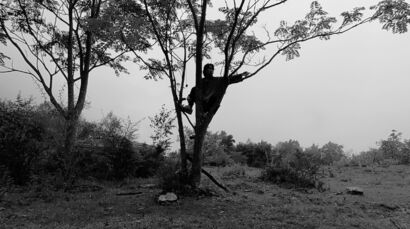
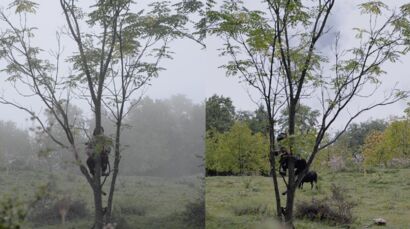
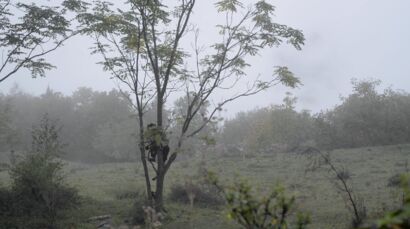
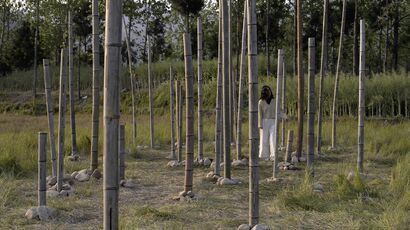
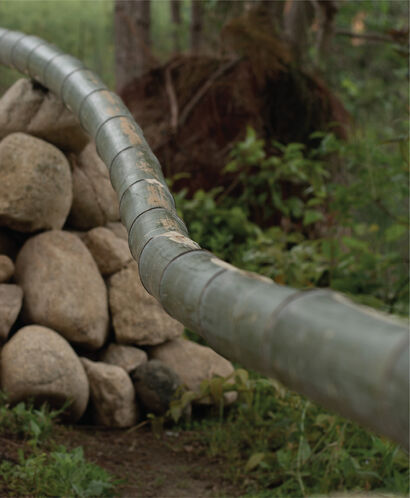
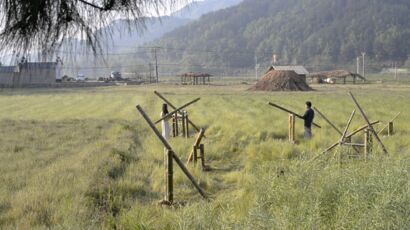
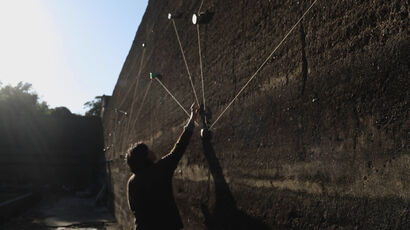
The artist engages in a tactile and rhythmic connection with trees and a lake in this piece. This creates a miniature soundscape where humans, plants, and water come together in an impromptu harmony. Using rhythmic language, the work encourages people to return to the most basic contact form with nature and express abstract emotions. The artist also explores the nuances between nature’s existing sounds and their musical potential. This took place at Thousand Islands Lake in China.
Nature artists do not offer a definitive solution to environmental issues. Instead, they aim for the audience to develop a deep connection with nature through touch and listening. By participating in this vibrant percussion, they may rediscover the ability to perceive natural nuances - from conquering nature to playing with it.
Although the sound of artificial instruments is delightful, the artist does not seek to cut down trees and turn them into instruments to suit his tonal demands. Instead, he allows the trees to be themselves and seeks out each tree's unique character and voice.
Primitive humans gained inspiration for rhythm through the striking of stone tools. Before the invention of instruments, people expressed their musical emotions through tapping plants and water. Even today, the Baka tribe in the rainforests of southeastern Cameroon maintains the habit of playing water drums in the river. In a world where media explode, sounds that have not been tamed by modern music patterns are increasingly rare. This experiment is the artist's way of revisiting the experience of early humans' perception of primitive sounds.
This work is an extension of the Recitative of Tree series. Previously in this series, strings were tied to the trees, and the tension between the branches created sound through plucking, aiming to create a melody. In this piece, there are no artificial elements involved; there is only communication between hands and trees and water, creating rhythm.