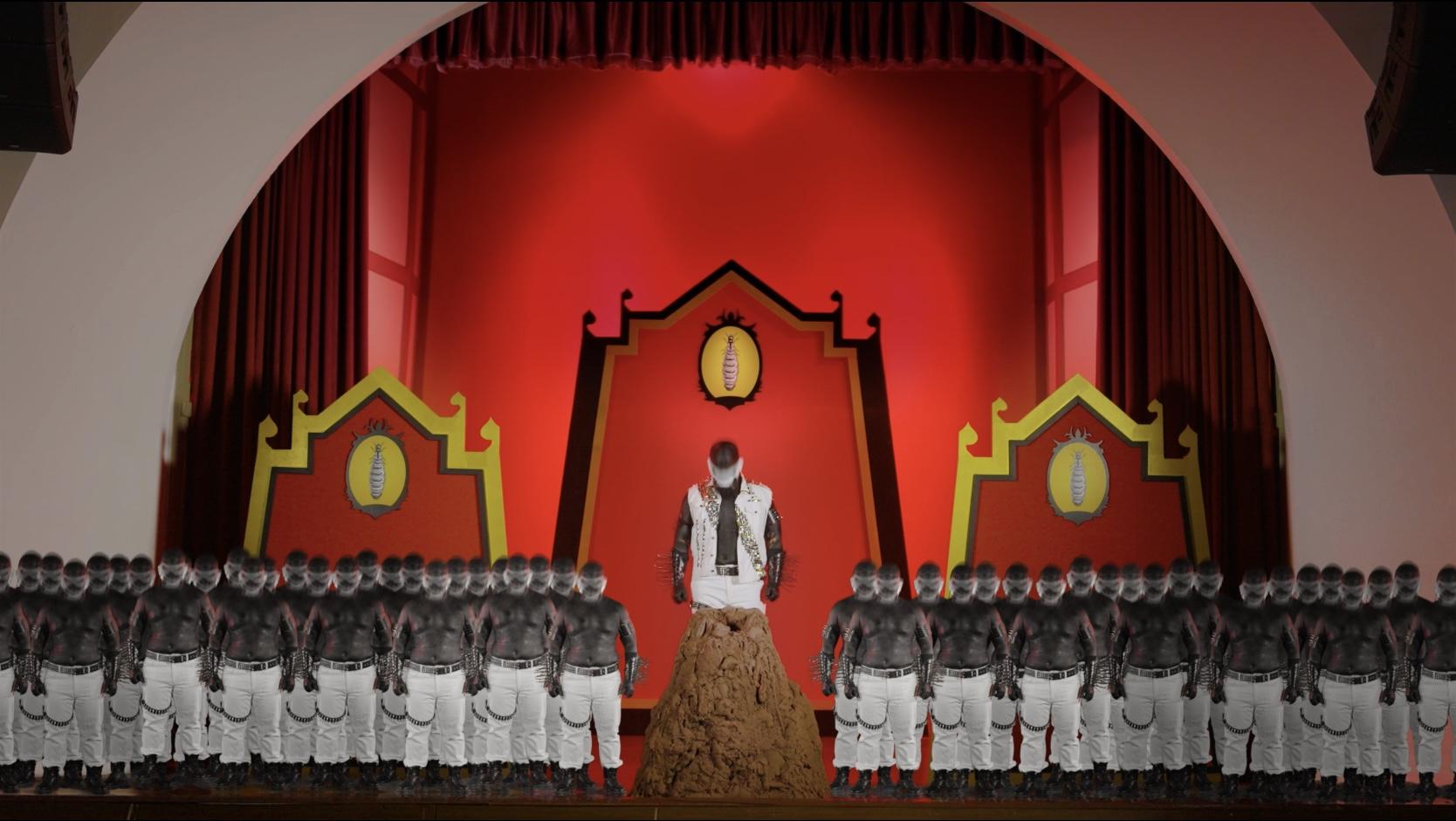
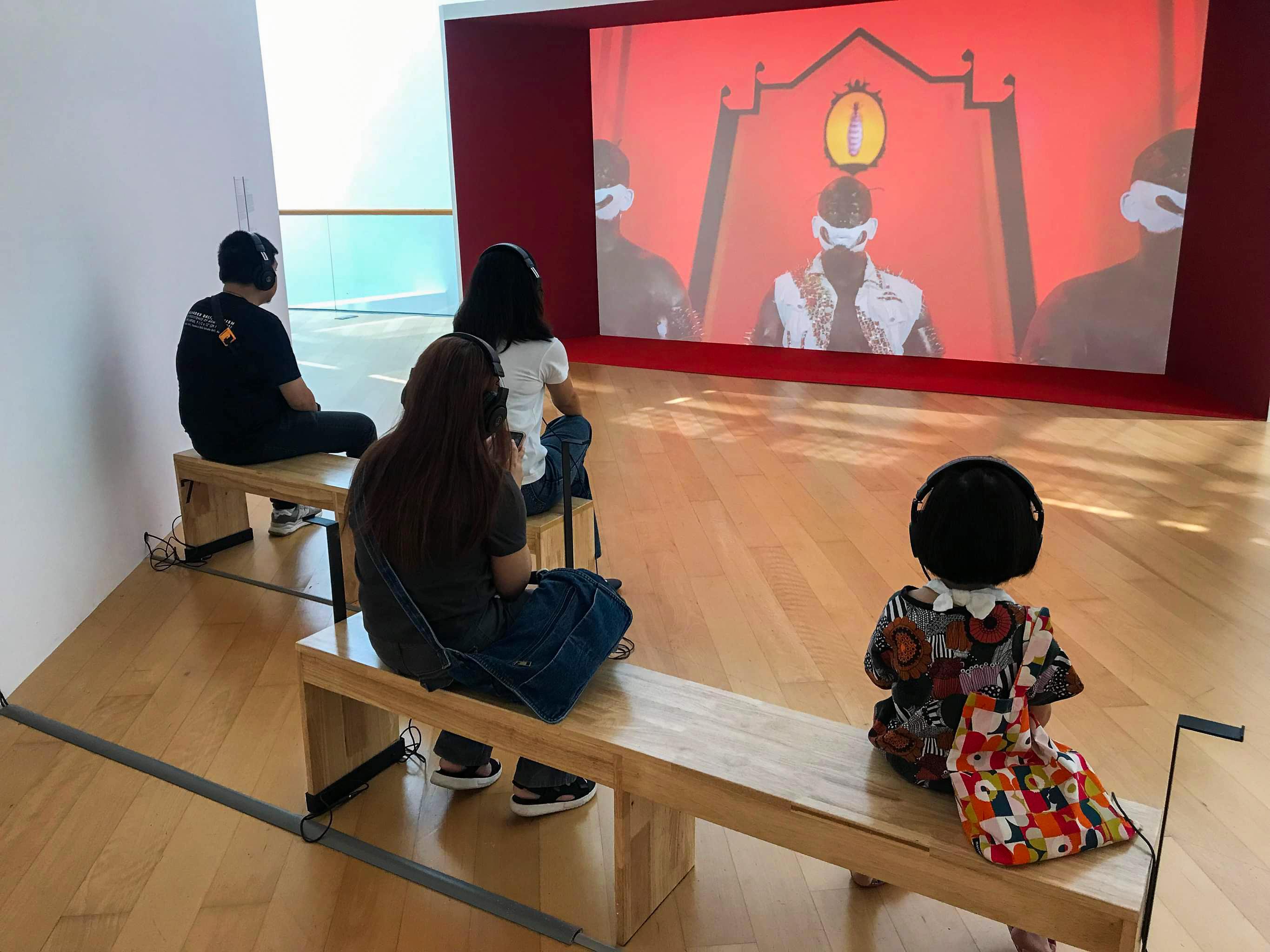
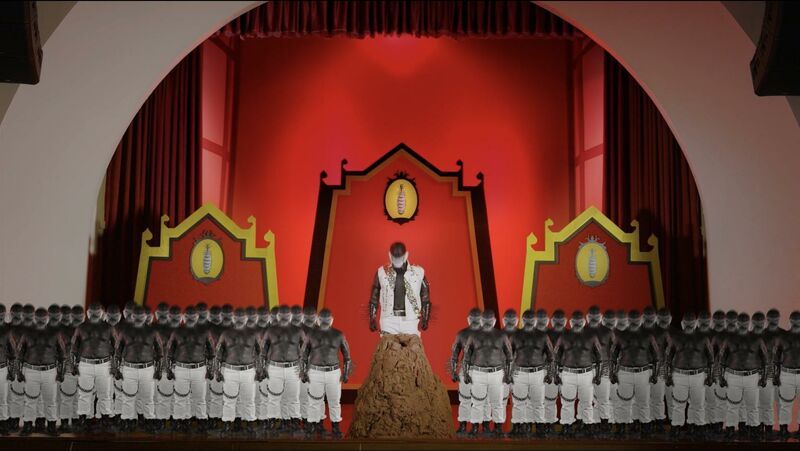
In March of the Termite, Nuttapon Sawasdee probes the intricate social structures of termite colonies, drawing parallels to human society. The work stems from the artist’s extensive research into these ancient social insects, whose survival hinges on a rigid caste system.
His interest was sparked by a termite infestation at his house. Lying sleepless from the noise of the termites, Sawasdee researched historical encounters with the insects, learning that the Quran mentions dabbatul-ard (a creature of the earth) that ate up Prophet Sulayman’s wooden staff, which then revealed his death to the jinns. He also discovered the story of the Hamburg termite infestation, how African termites were introduced to Germany via maritime trade – an ironic kind of colonialist’s karma. From this, Sawasdee started to perceive termites as creatures that reveal truths.
Further studying the biology of termite societies, Sawasdee found his fascination lay with the worker and soldier termites. Blind and living in the dark, their communication is limited to only pheromones and violent rhythmic head-banging within their tunnels.
Combining the research with his background in sound and performance, Sawasdee came up with the idea of using marching band music, which is very structural and physical, to represent the insects. He incorporated the sound of the termites into Worker's March (circa 1956-57), a song composed by Thai leftist activist Chit Phumisak (1930-1966) to commemorate May Day and the Labor Protection Act.
Performing on stage, Sawasdee adorns himself in a subversive, dark, heavy-metal-like costume. With his body painted black and head shaved, he aims to embody a termite, mimicking its head-banging movements. The theatrical set mocks the unfashionable, rigid style of typical state events under dictatorship. The powerful lyrics, which Sawasdee adapted from the original in collaboration with Chachol Ajnakitti, are included quietly as subtitles that he hopes could encourage those fighting oppression to carry on.
This series of works and his performative gesture should not be viewed as a parody, but rather as a critique of our oppressive society burdened with hierarchy and verticality. It asks viewers to confront the absurdity of our own societal structures, and to question the inescapability of traditional class systems, persistent undervaluing of labor, and the struggle for equality.