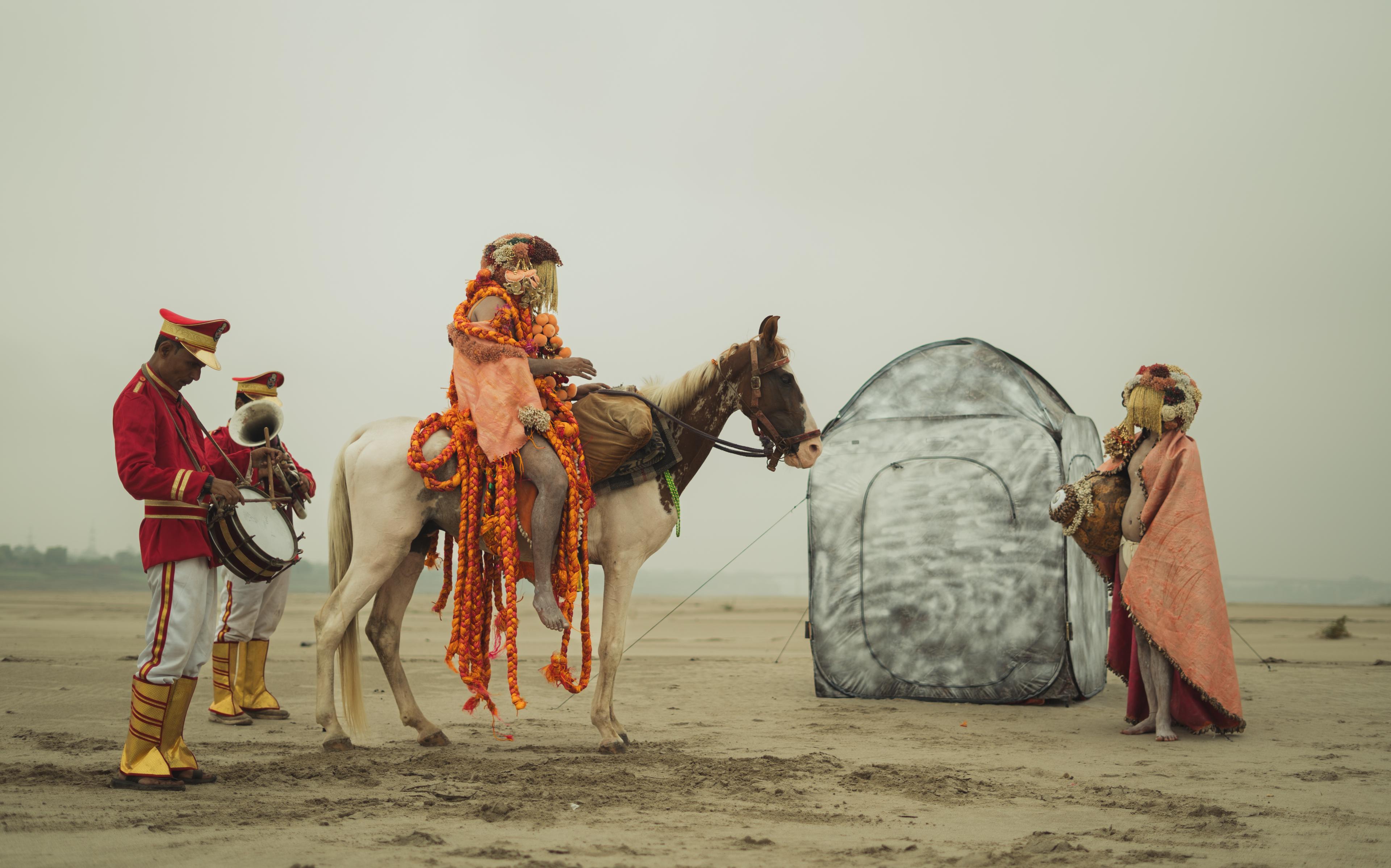
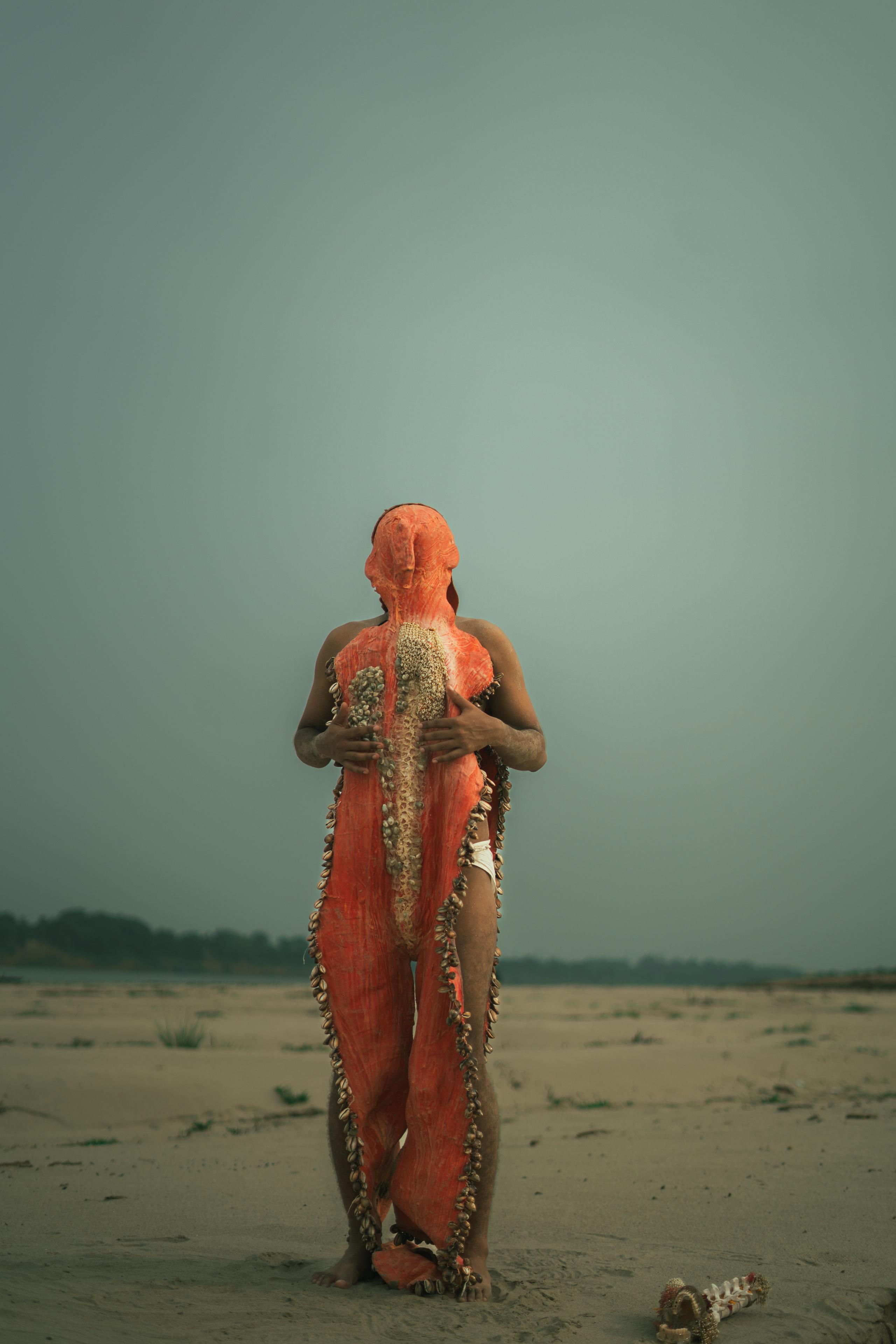
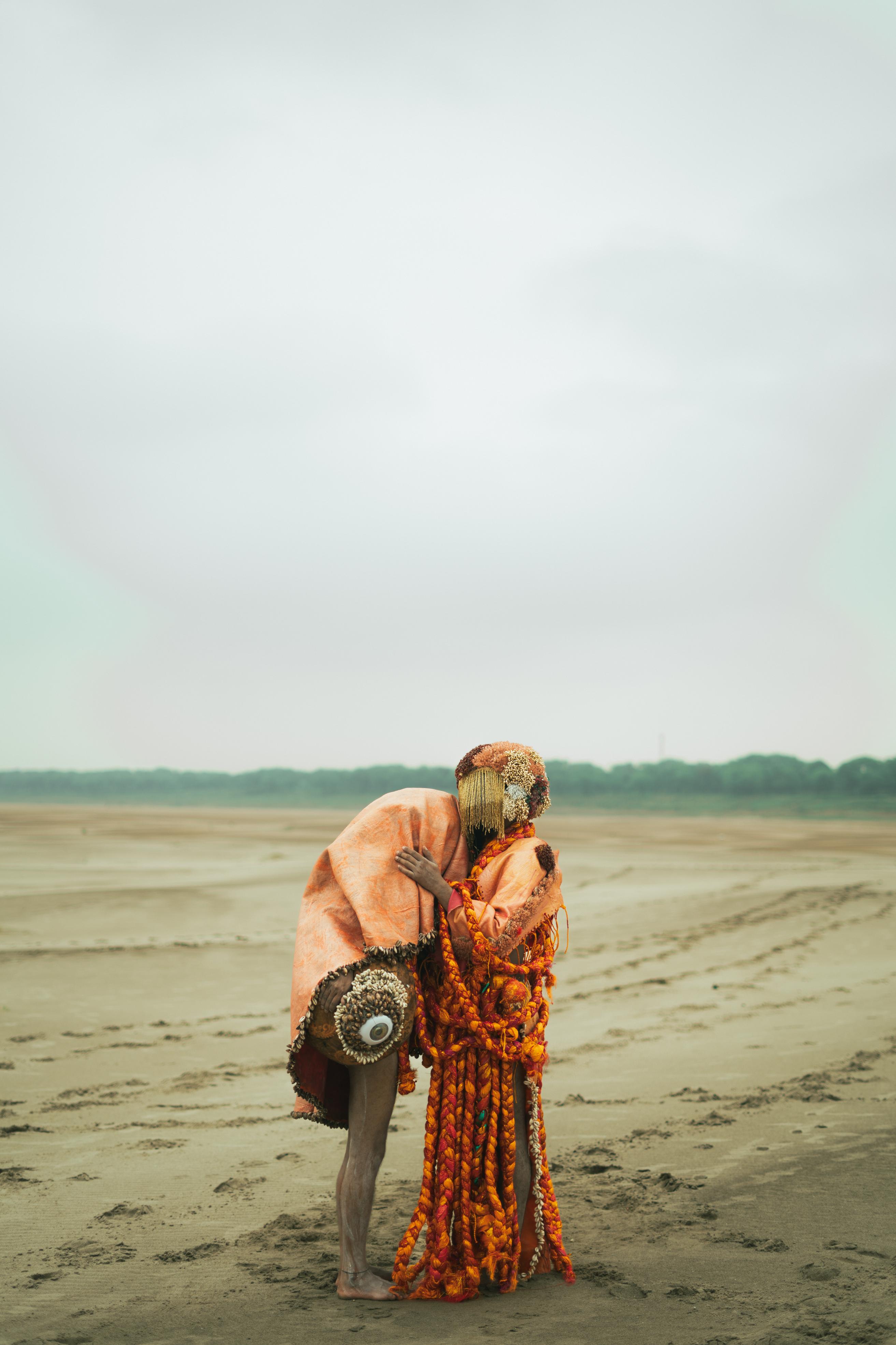
In A Thousand Years of Dreaming, I imagine my body as a carrier of countless unspoken dreams — desires that have floated across generations of queer lives, often silenced, hidden, or denied. These dreams are not just personal; they belong to a collective queer memory that remains fragmented, marginal, and yet resilient.
Set against the sacred and decaying landscape of Varanasi—a city where life, death, and ritual merge—this work embodies the tension between tradition and forbidden desires. I perform within abandoned spaces, ritual sites, and forgotten houses, carrying the weight of histories that refuse to disappear. My body, adorned with sculptural costumes crafted from ritual materials, floats between visibility and erasure, between myth and contemporary queer longing.
The performance draws from the philosophical depths of Indian mythology, where transformation, fluidity, and desire often transcend binary norms. Just as Hindu myths speak of beings who shift forms, genders, and bodies, I see the queer body as a living myth — fluid, unclaimed, and constantly evolving.
Through slow, meditative gestures, I traverse spaces marked by abandonment — ruins, empty homes, ghats — allowing my body to become a vessel where the personal, the mythological, and the political intersect.
A Thousand Years of Dreaming becomes a ritual of remembrance, mourning, and reclamation. A dream that carries within it the ache of desire, the weight of resistance, and the gentle hope for a world where queer bodies are no longer exiled from memory or belonging.