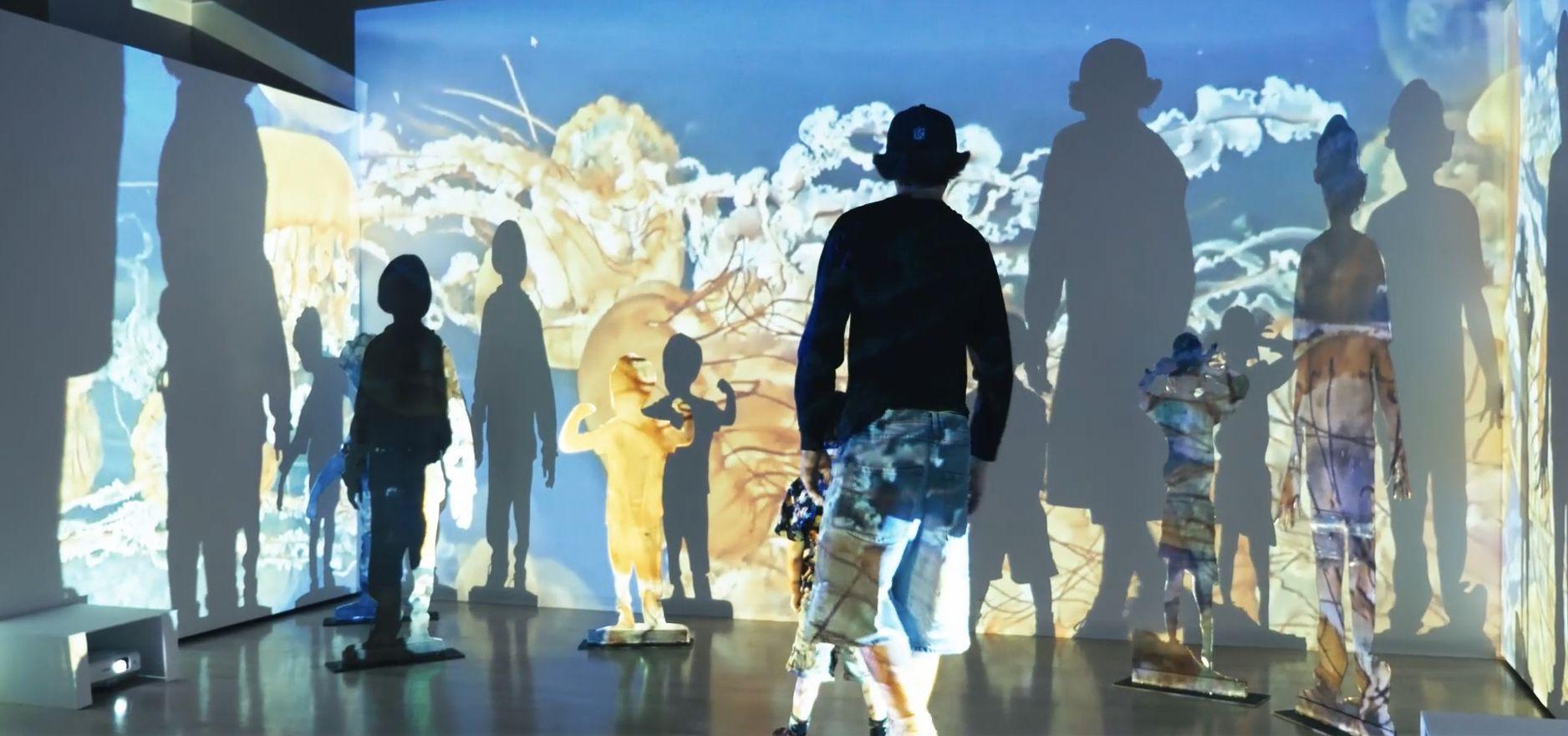
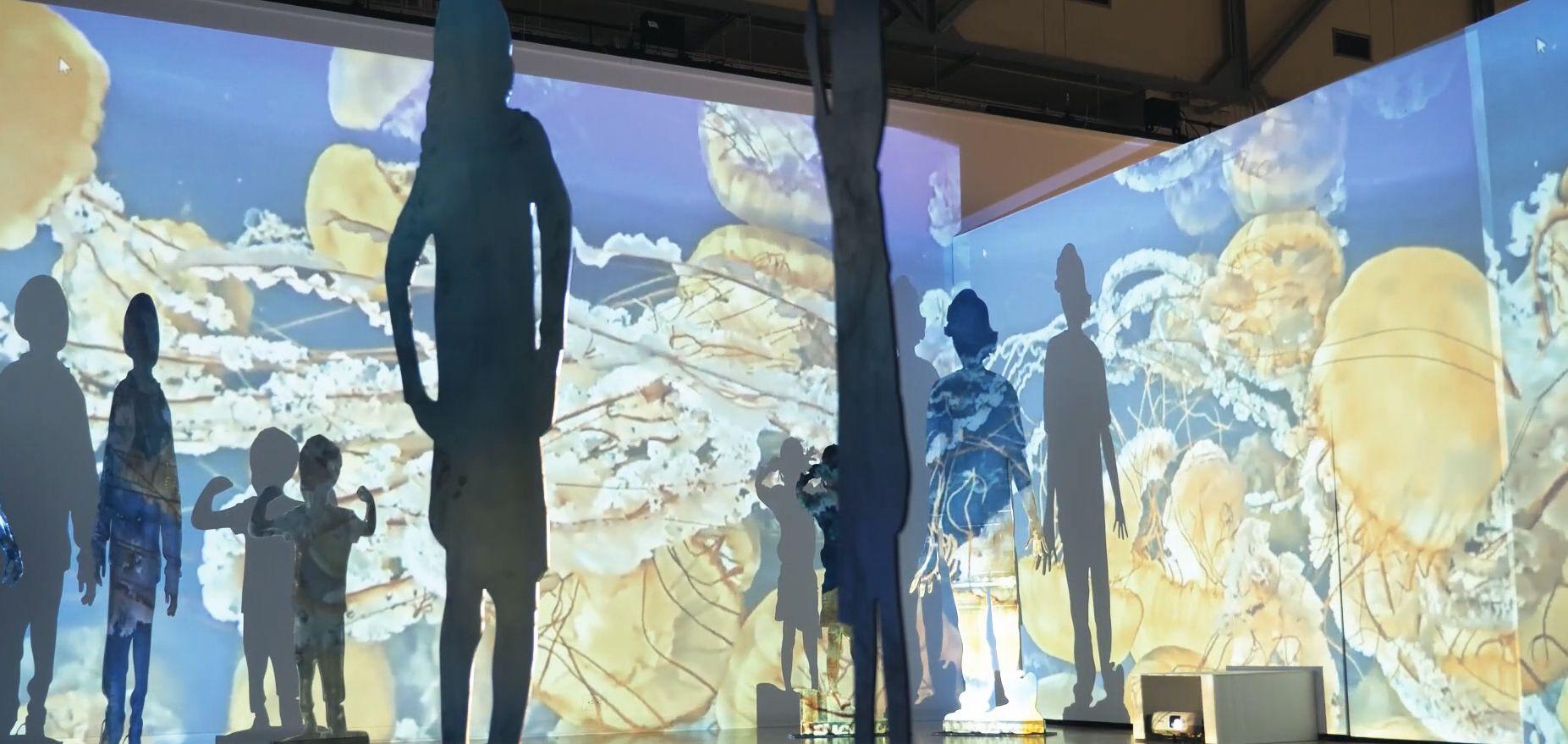
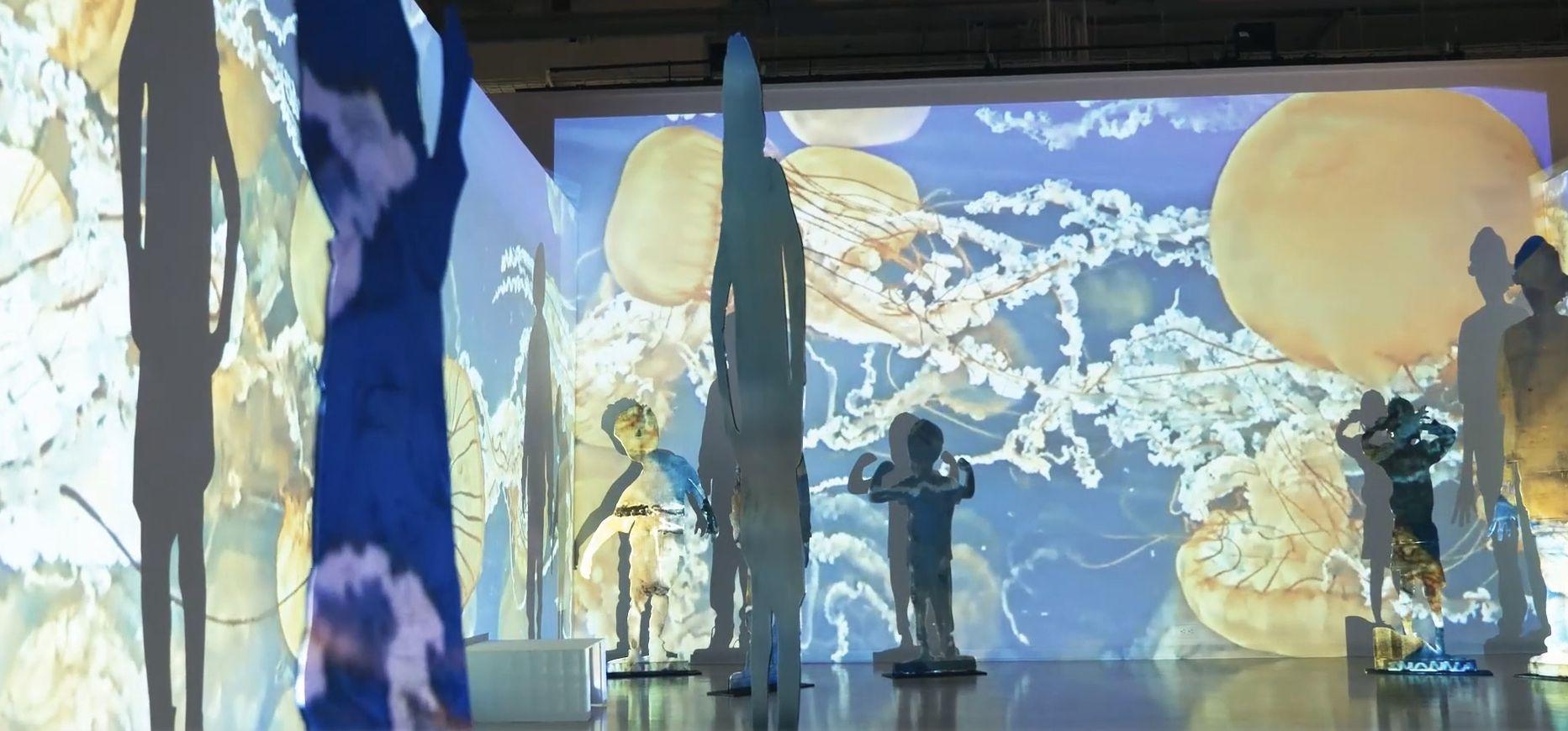
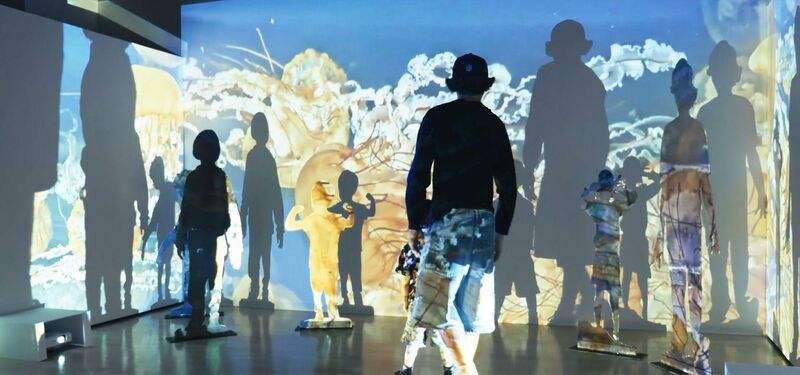
Sea Jellies: Next Generation is an interactive, fully accessible gallery installation into which anyone of
any age, any ability, any heritage can walk into and be absorbed through feeling part of another
species. Sea Jellies: NG comprises:
• Sea jelly video footage (Vancouver Aquarium) projected on two adjacent walls and the
gallery floor. https://www.youtube.com/watch?v=hPwgE4onLWo. (Letter of permission in
separate attachment).
• Video is interfaced with steel figures of children (in both positive and negative laser-cut-out forms)
that create static shadows, as well as live, moving viewer participants humans create moving shadows.
• These visuals interact with an original soundscape response created by violinists Chris
Whitley and Kumiko Sakamoto
Award-winning Canadian artist Kumiko Sakamoto (she/her/hers) has thrilled audiences across North America, Europe, and China, including performances at Carnegie Hall, the Kennedy Center, Massey Hall, and Teatro la Fenice in Venice. A celebrated violinist, vocalist, and dancer, Kumiko uses her wide range of artistic talents to impact audiences of all ages through the power of music, story-telling, and human connection.
Kumiko received a Doctor of Musical Arts degree from the University of Maryland.
Chris Whitley
Praised for his “quicksilver brilliance” (Chicago Tribune) and described as “a stunningly versatile performer” (The Whole Note), Canadian violinist Christopher Whitley maintains an active career as a chamber musician, solo artist, orchestral violinist and pedagogue. Inspired by a deeply held sense of musical curiosity, Christopher is committed to exploring and performing music of all styles. He received his Doctor of Musical Arts degree at the University of Maryland, studying with David Salness. Other principal mentors include Kelly Parkins-Lindstrom, Daniel Ching, and William Fedkenheuer.
Sadly, with human exceptionality at the forefront, we humans often seek solutions for human created problems; we seek to control. 500,000,000 to 700,000,000 year old Sea Jellies are flourishing to the point at which they are interfering with human
activities - specifically those of trade and transportation of goods by sea. What if we have much to learn from Sea Jellies? They are probably the oldest known species flourishing on the planet
because they, and their distributed nervous systems, constantly change, modify, adapt to new conditions.
Working toward solutions for the challenges of the 21st century will require nimble and responsive creative problem
solving, never-before seen on earth - if our species is going to survive. The big question is how can we share the
planet with other species rather than simply try to dominate it? How can we learn from other species, rather than
learning about them? How can we coexist with other species in way that honours the integrity of each? That honours reciprocity? Sea Jellies; NG allows viewer/participants to enter the world of sea jellies and be immersed.
A Canadian second-generation settler descendant, Forbes has become increasingly interested in Indigenous Ways of
knowing and works to be an ally in Truth and Reconciliation. Forbes has come to see that seen/unseen, and circularity have
been strongly present in her work since the 1990s. In frequent discussion with local Indigenous Consultants, Forbes seeks to explore what aspects of Indigenous
Worldview can be respectfully located and incorporated into the work. These are very engaging discussions that can extend globally.