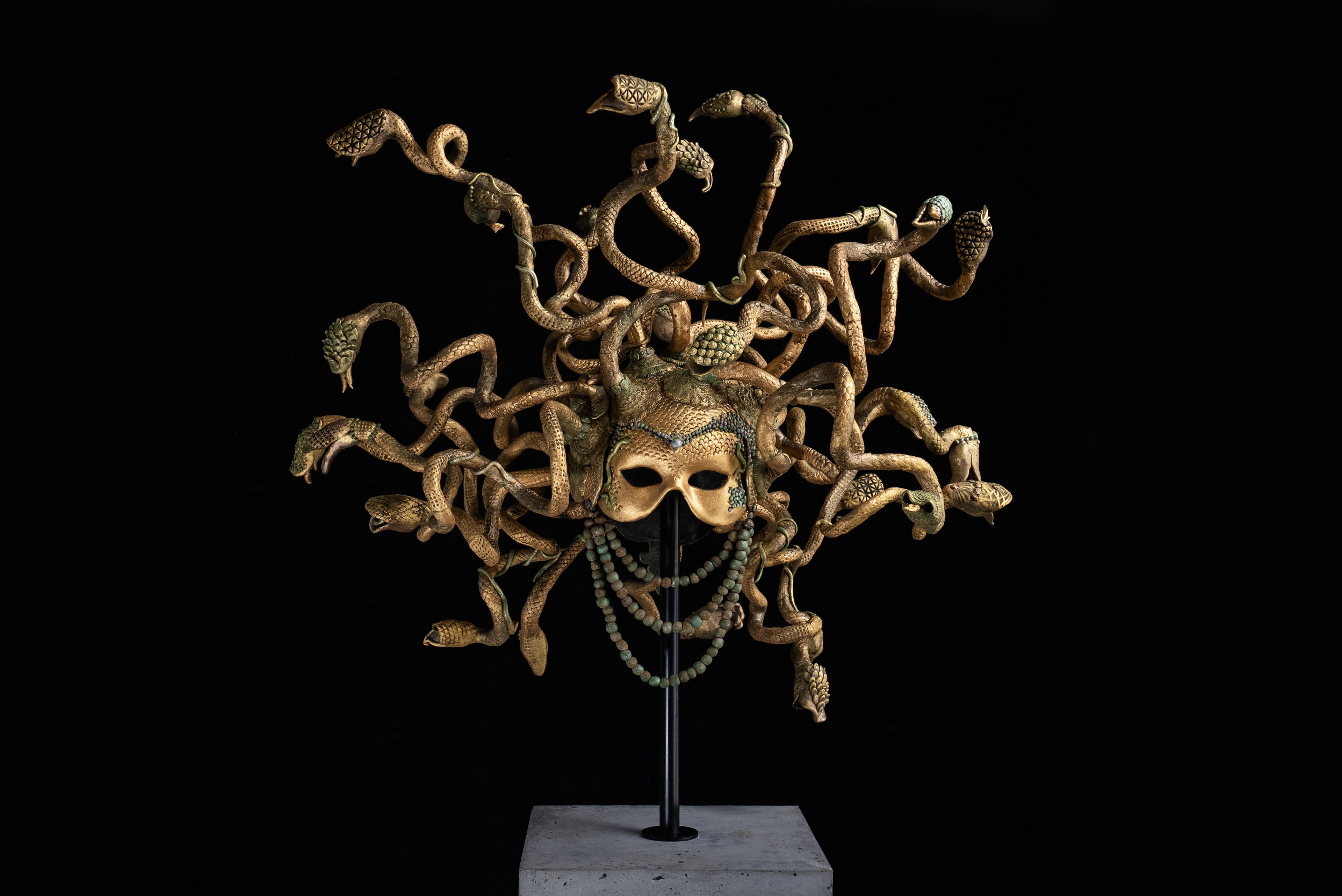
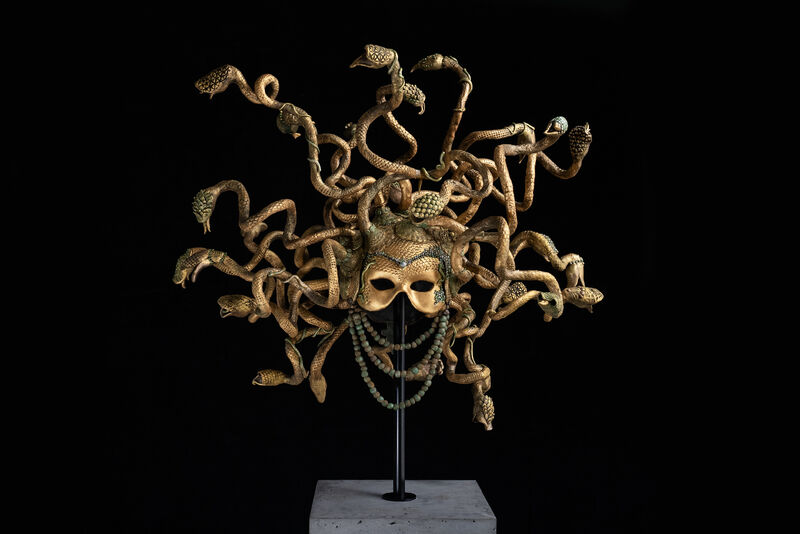
The snake-haired Gorgon Medusa is not merely a monster who petrifies with her gaze; she is also an allegory of power, vision, and transformation. From her blood sprang Pegasus, a mythological emblem of the passage between destruction and rebirth. This work carries the multilayered symbolism of Medusa into an edible form, transforming myth into a sensory experience.
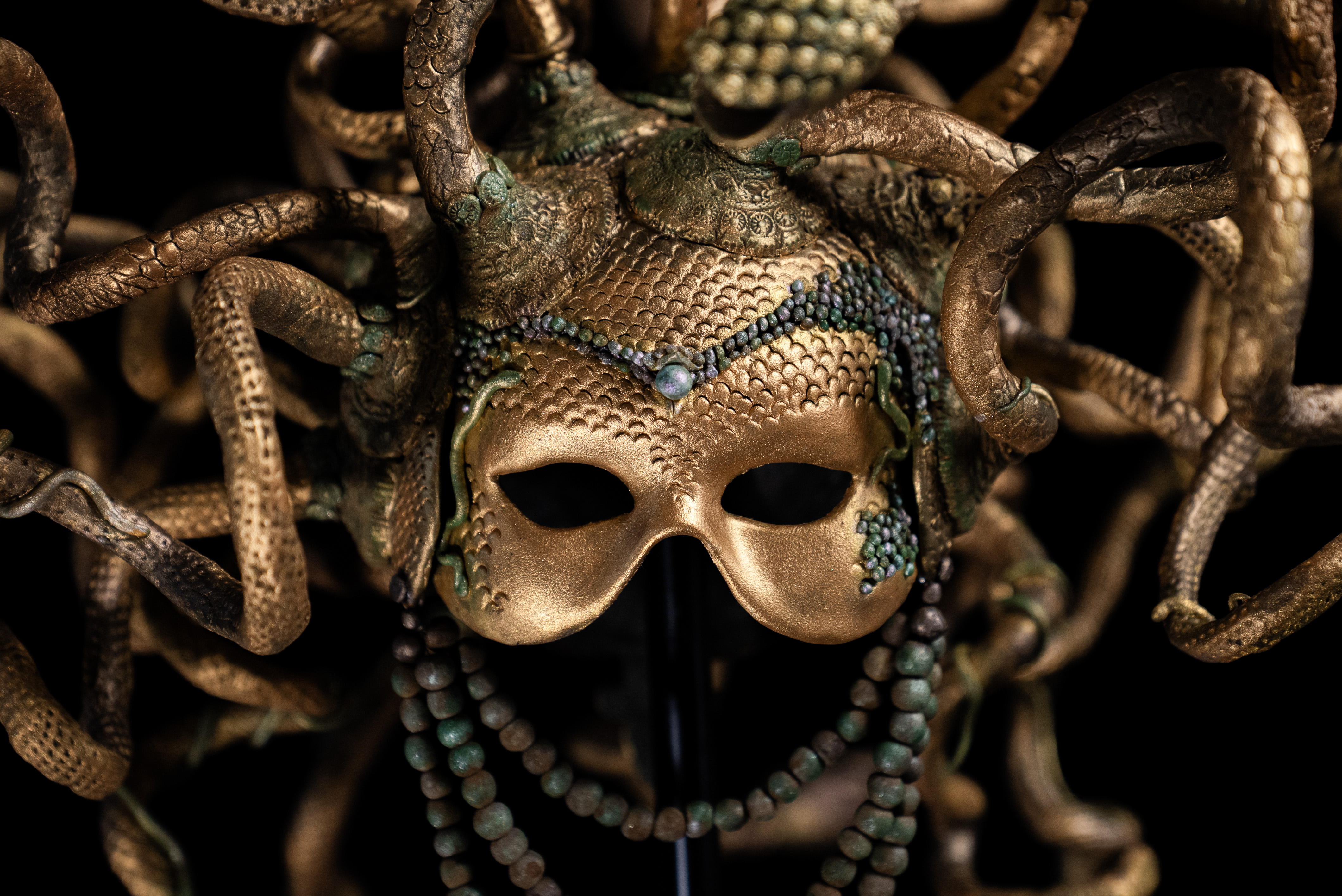
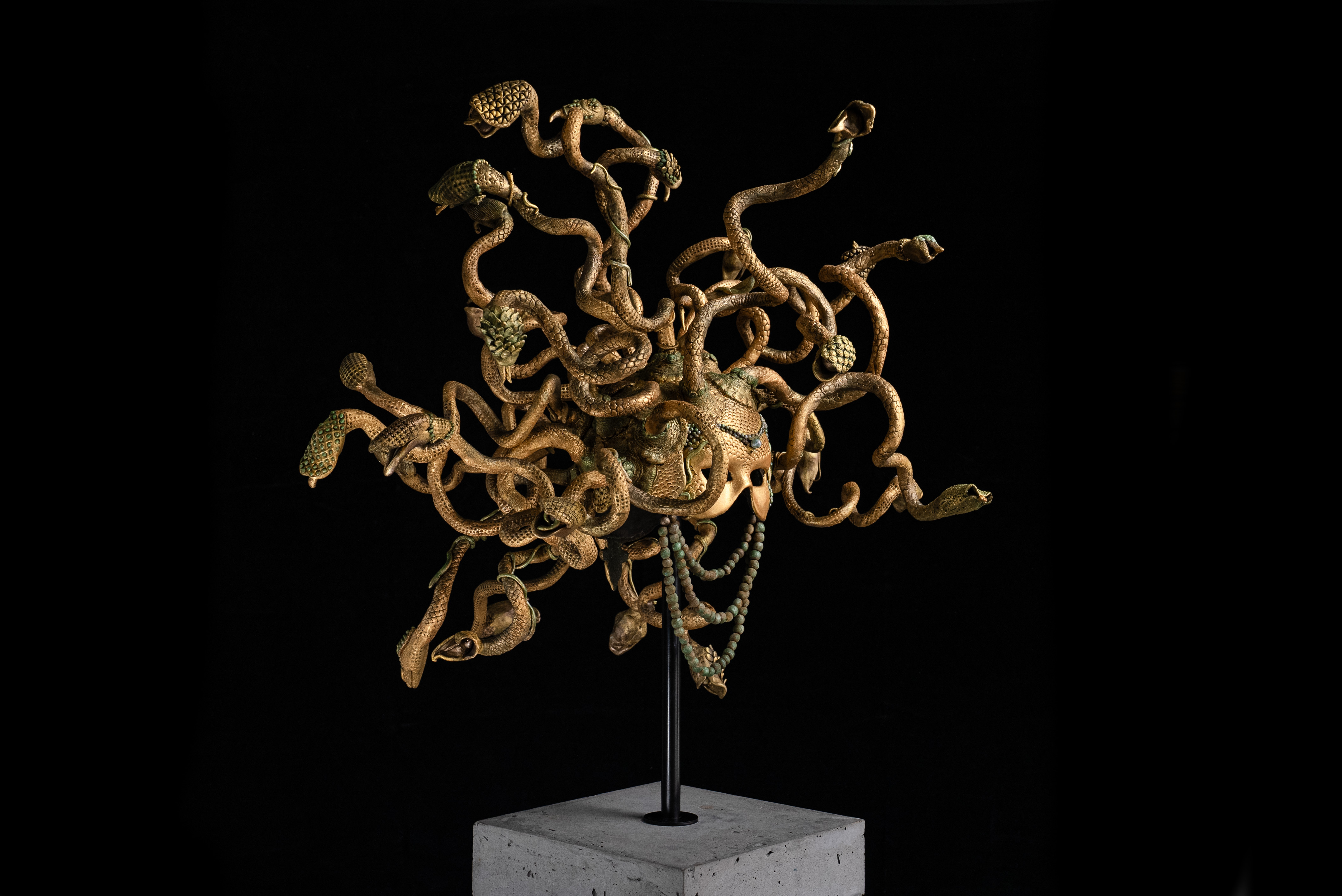
The sculpture is constructed from sugar paste, edible gold leaf, and natural pigments over a light polyester aluminum armature. Composed of thirty curving heads and arms in distinct forms, it translates Medusa’s many-headed energy into a contemporary language. Techniques drawn from jewelry-making and gastronomy render this mythological figure fragile yet desirable. The scent of sugar and vanilla expands the encounter beyond vision, turning the sculpture into a multisensory presence. Stylized serpentine forms reinterpret the archetype of protection and transformation within a modern aesthetic.
In the form of a mask, the work evokes the carnival tradition in which identities are suspended, inverting Medusa’s petrifying power. It invites the viewer to experience confrontation, concealment, and transformation simultaneously, both visually and sensorially. In this way, the sculpture merges the ritual and performative role of the mask with the philosophical layers of the myth, offering an experience where permanence and impermanence, fear and desire, blur into one another.
Here, the viewer does not face a gaze that turns them to stone, but a form that can be touched, dissolved, and even inhaled. Through the edible nature of its material, the petrified symbol of myth is overturned; the sculpture allows the audience to encounter both the bodily and philosophical dimensions of Medusa through the language of contemporary art.