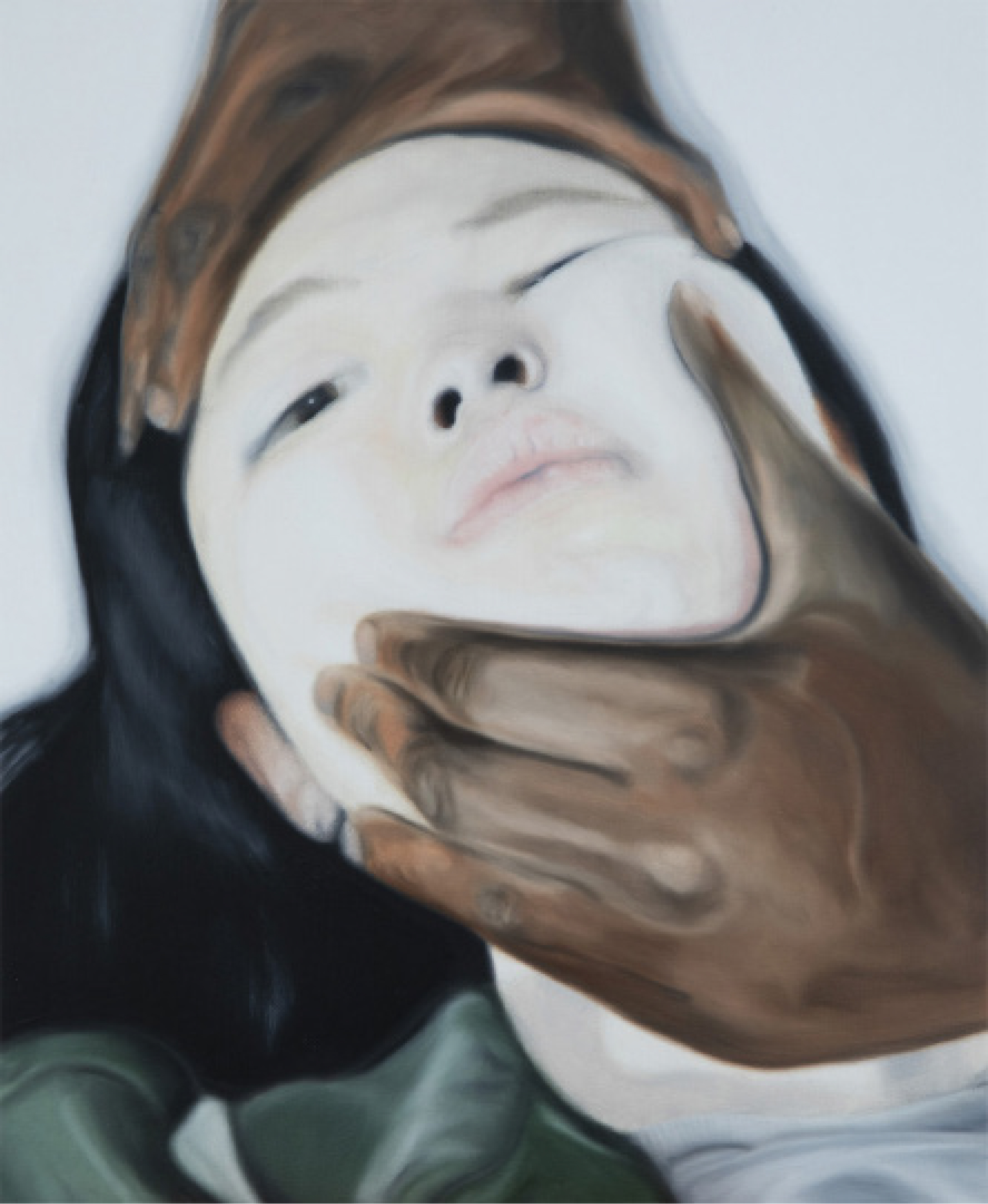
Why do humans travel, and who is allowed to move? Movements driven by increasingly frequent economic, climatic, political, and environmental crises are challenging the concept of the State as we have known it until now.
For political scientist Parag Khanna, mass migration is inevitable and necessary. We can no longer assume a stable relationship between the levels of nature (i.e., where water, energy, mineral, and food resources are located), politics (i.e., where territorial borders that define states are located), and economics (where infrastructure and industries are located). We are talking about the main forces that have shaped human geography over the past several thousand years. In the coming decades, entire overpopulated regions will be abandoned, while many sparsely populated territories (such as Canada and Russia) will fill with people. Politically, we are not prepared for this mass movement.
By 2045, half of the U.S. population will be made up of Black and Hispanic people. What will the dialogue be between those who want to pursue nationalist policies and those who instead wish to feel borderless?
What is the role of the State now that borders are more physical than mental? What are we willing to tolerate in the “other”?
Philosopher Umberto Galimberti recommends beginning to think in terms of a planetary ethics, considering all living beings in the biosphere equally, including animals and plants.
Since 2008, the urban population has surpassed the rural population. On the one hand, physical distances between individuals are shrinking; on the other, new cultural conflicts are emerging due to unresolved colonial issues and opposing everyday ethics.
The more we grow demographically, the more diversity will increase and new political and social problems will arise. How can we all live together peacefully on a single Earth? What are the limits of large metropolises?
For Plato, the limit of the city was reached when growth compromised unity. Expand up to that point, but no further. Biologist Mark W. Moffett describes how humans are able to coexist with strangers, whereas their ancestor, the chimpanzee, must personally know every single member of the group in order to avoid a true bloodbath.
When did what was familiar and safe become foreign and dangerous? When did inequality and racism arise, first in primates and then in humans? Around 50,000 years ago, tribes began using natural markers to distinguish themselves; they painted and decorated their bodies to be recognized by their own kind and avoid traps. In doing so, they created the first categories and the first prejudices of inequality. Markers (clothing, supporting a sports team, religion, language) still today make groups feel united.
How did we move from egalitarian, peaceful tribes with no leaders to complex societies with centralized states and armed armies?
Epidemiologists Richard Wilkinson and Kate Pickett write that more unequal societies have more social and political problems. They have higher rates of teenage pregnancy, mental illness, drug-related problems, higher school dropout rates, and lower trust in government. Meanwhile, more egalitarian societies—whether rich or poor—are healthier and happier.
How and why did we become the dominant species with a single worldview, the Western one? When will we “de-Westernize”? Why must we choose between an individualistic society, the Western one based solely on the “I,” and a society based on the “we,” where the “I” is subordinated to the “we”?
Evolutionary biologist Joseph Henrich explains that the more you live in an educated, democratic, wealthy, technological, industrialized society (America and Europe), the more individualistic you become. Conversely, the more you grow up in a non-industrialized, poor, and non-democratic country (such as the Samburu in Africa), the more your sense of self is subordinated and you tend to emphasize family ties, prioritizing responsibilities and relationships with others. He notes that when asked “Who am I?”, people in the first type of societies focus intensely on their personal attributes, achievements, and personality. In contrast, in the second type of societies, individuals speak more about their social roles and responsibilities. American university students, in particular, appear quite self-centered—more “I” than “we.”