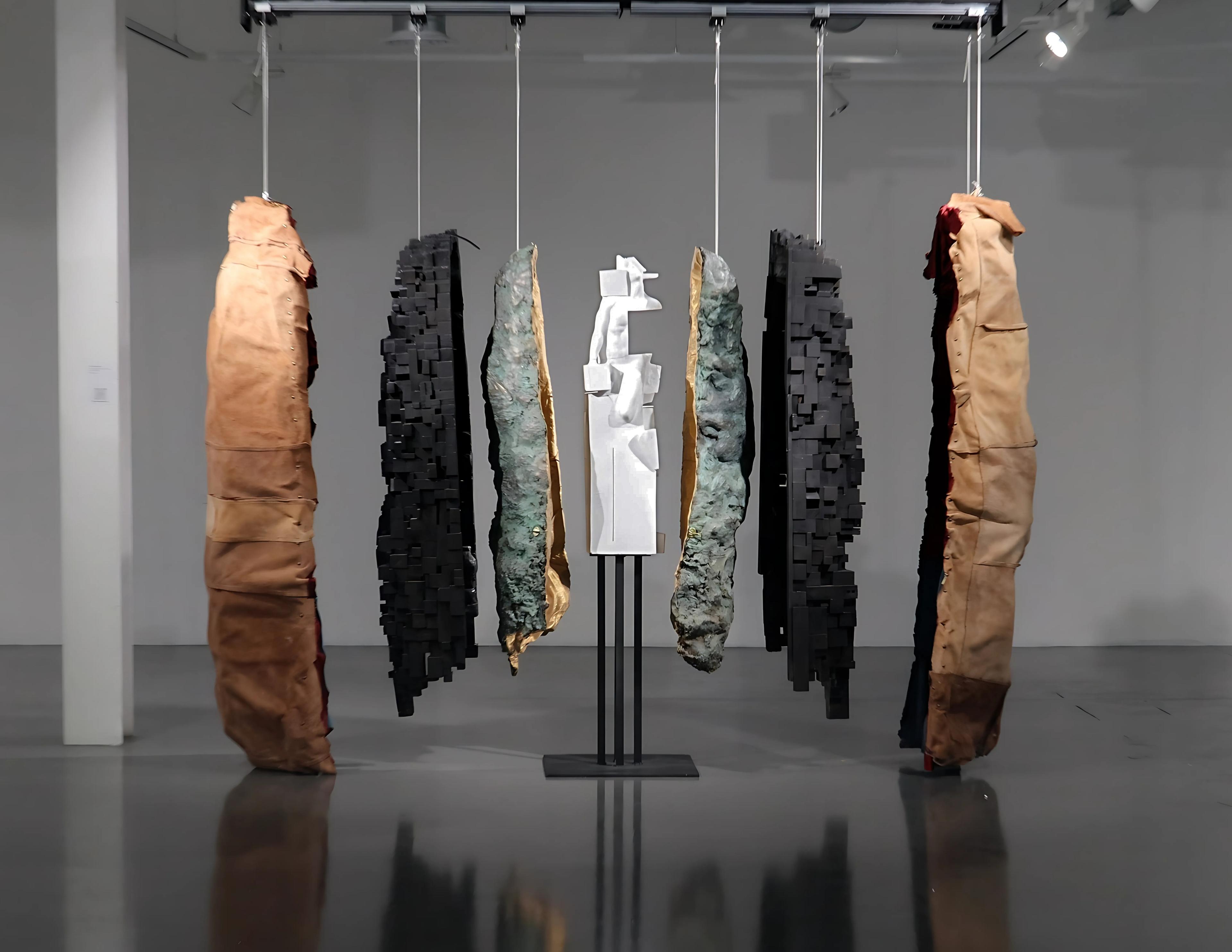
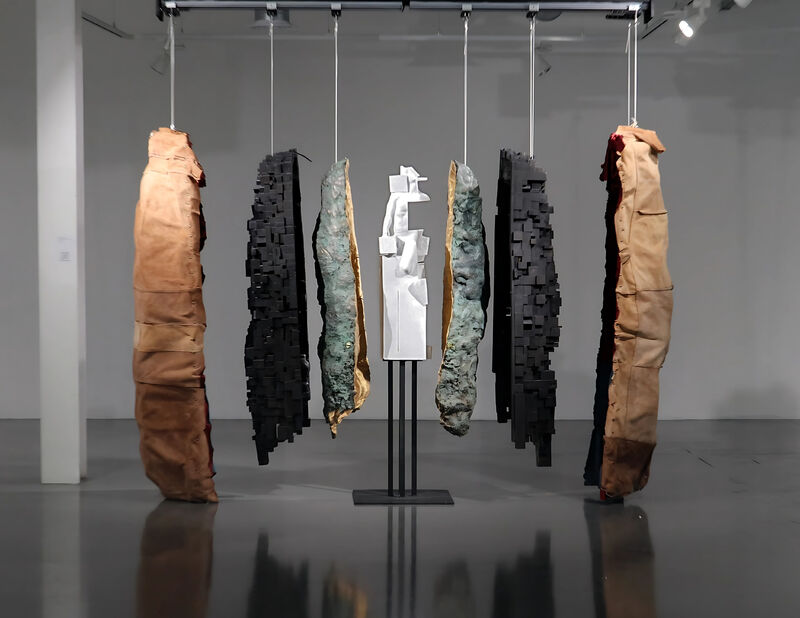
Cocoon to Alda Merini is a sculptural installation dedicated to the Italian poet Alda Merini and her vision of wounds, fragility, and transcendence. Conceived as a dynamic body, the work is composed of concentric layers that can be opened and closed through a sliding mechanism. This mobility transforms the sculpture into a moving ritual, where concealment and revelation shift like breath, enacting a choreography of silence and disclosure.
Technical Aspects
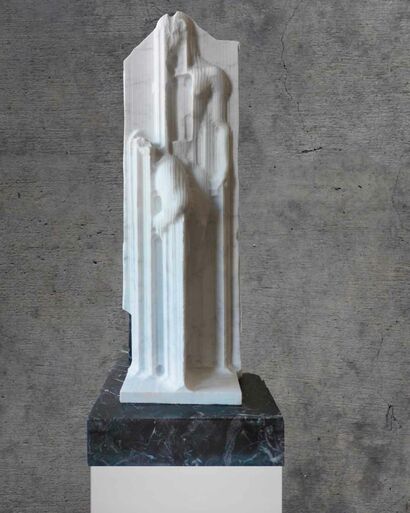
At its core lies a marble body inscribed with words written in pencil, pen, and engraved into the stone. Each technique represents a different temporality: pencil fades, ink resists, engraving persists to be revealed by time. Around this nucleus unfold successive shells: bronze resin with silk, recalling crystallised memory and intimacy; wood, embodying grounding and structure; and leather as the outer skin, symbolising the mask of identity. The sliding system allows the layers to expand or contract, making the work both architectural and performative. The combination of noble and organic materials—marble, bronze, leather, wood, silk—reflects Muratore’s hybrid practice, merging traditional carving with experimental processes.
Concept and Symbolism
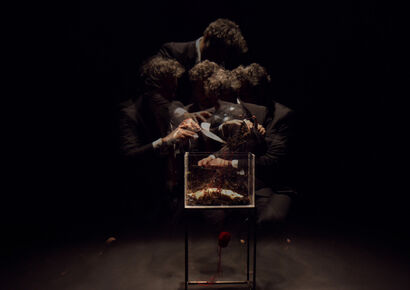
The work reflects on how individuals and societies conceal wounds or protect themselves, layering fragility with resilience. Words that fade, endure, or emerge echo Merini’s poetry, where trauma becomes both hidden and luminous. By subverting marble’s classical permanence with vulnerable materials, Cocoon desecrates in reverence, aligning with Joseph Beuys’ ritual use of matter, Doris Salcedo’s reflections on trauma, and Arte Povera’s desacralisation of the monumental. Its mobility recalls Pina Bausch’s theatre of gesture, turning the sculpture into a body that conceals and reveals, involving the viewer in its transformation.
Exhibitions
Since its creation, Cocoon to Alda Merini has been presented at the Royal College of Art (London), the University of East London, and The Bomb Factory Art Foundation. In each of these contexts, the sculpture has acted as both monument and anti-monument: a living altar of vulnerability, a threshold in perpetual movement between what is hidden and what is revealed. Its mobile, layered structure makes the work highly adaptable to diverse spaces, enabling it to resonate equally in sacred, institutional, and contemporary settings. This capacity for transformation ensures that the installation can enter into dialogue with monumental venues such as the Arsenale of Venice, where its scale, symbolism, and performative qualities can be fully experienced.