"What is essential in memories and recollections? That which will be captured and relived by those who were not there," wrote Lalla Romano. This great writer always told stories about herself, her personal experiences, her family environment, and the people she cared about. However, she did not like to be defined as an "autobiographical author." Lalla Romano starts from herself, from her own domestic world, because these are the dimensions each of us can know more deeply. But the ultimate goal of her literary work is the search for general truths that concern everyone and in which each person can find something of themselves.
I find this conception of art, which, by investigating and nurturing the particular, goes beyond it, very congenial. It transcends it. To reach the universal.
In the presentation of "Nei mari estremi," with that brevity full of meaning that characterizes her writing, Lalla Romano reflects on the craft of writing: "For me, writing has always been about capturing, from the dense and complex fabric of life, some image, from the noise of the world, some note, and surrounding them with silence." This passage struck me. It helped me better understand my own work. It made me more aware of what I do when I photograph. In the end, I, too, do nothing but isolate, from the complex fabric of the world, some particulars, and then surround them with empty spaces. With silences.
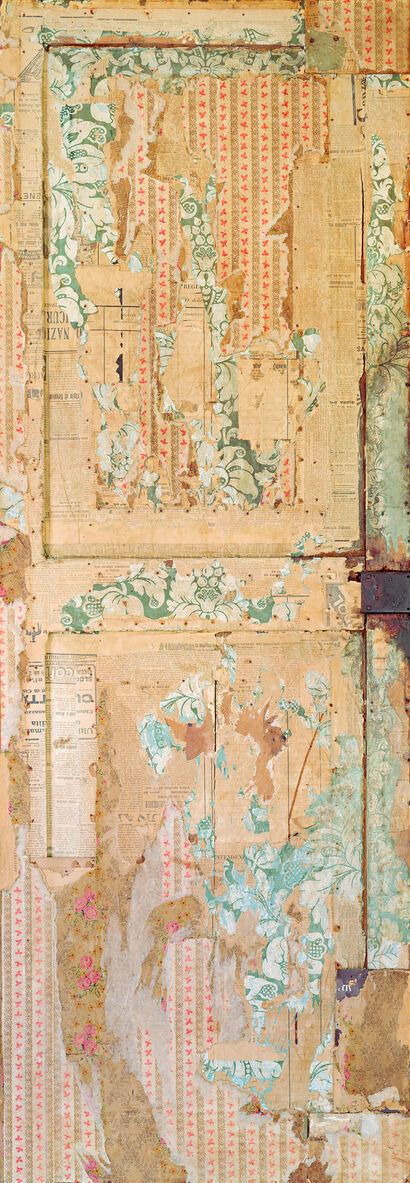
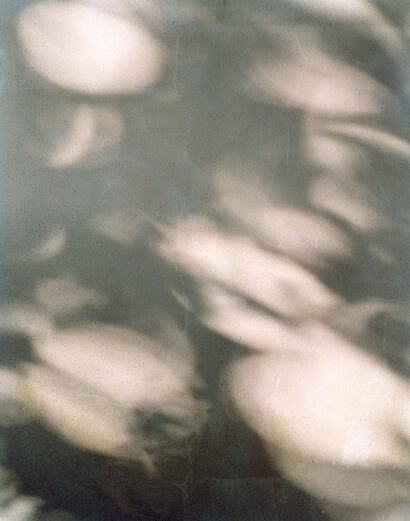
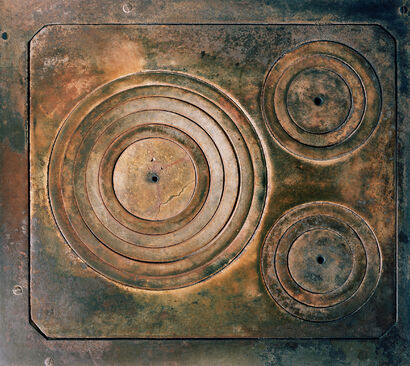
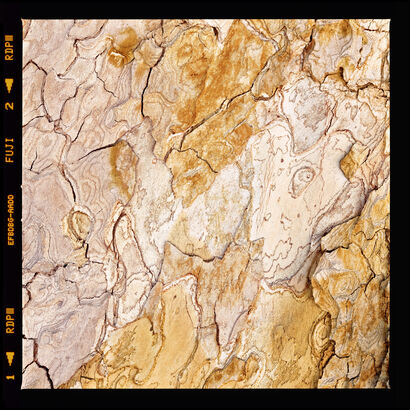
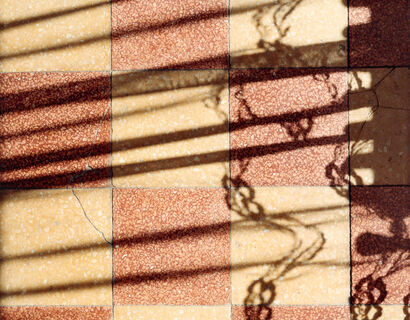
Dominant themes of this photographic research are time and memory. The time that settles on domestic walls and within us; the time of the gaze and memory; the time of oblivion. Immaterial dimensions of experience that manifest through material, tangible traces, which photographic representation transfigures, transforming them into signs.
The images in this work photographically reproduce some portions of Lalla Romano's house, left intact after her death. But space, the element in which one acts and lives, is almost excluded from the representation. To emphasize the absence. And at the same time, focusing all attention on some presences (imprints, old photographs, postcards, domestic utensils, wooden objects made by her son or grandson, etc.). And it is precisely the presence of these traces that makes the absence more manifest (and poignant).
After all, presence and absence intertwine indissolubly. This is precisely the heart of photography: the attestation of reality, but as the past; the affirmation of a presence, but as what has been. The maximum concreteness and proximity with the maximum impalpability and distance, in short. Things that Lalla Romano knew well, so much so that she tightly linked in her work the evocation through writing with that through photographic images, drawing both from the noise of the world to surround them with silence (Reading an Image, Novel of Figures, New Novel of Figures).
But "Landscapes of Absence" does not want to be a funeral song. I intended to dwell not so much on the loss, but on the vitality of what Lalla Romano has left, in terms of affection, culture, morals.
I work with traditional techniques and tools. I photograph with a large format camera, which allows for a fine rendering of details and fosters a reflective state of mind. But the very tension towards a faithful photographic reproduction of some fragments of reality, isolated from their context, transfigures reality itself. It subjects it to a process of estrangement. The portions of reality photographically reproduced appear as something new and almost unexpected. And it is precisely this different and renewed vision of what is familiar and known that represents, I believe, one of the peculiar characteristics (and richest in expressive potential) of photography.
Alessandro Vicario