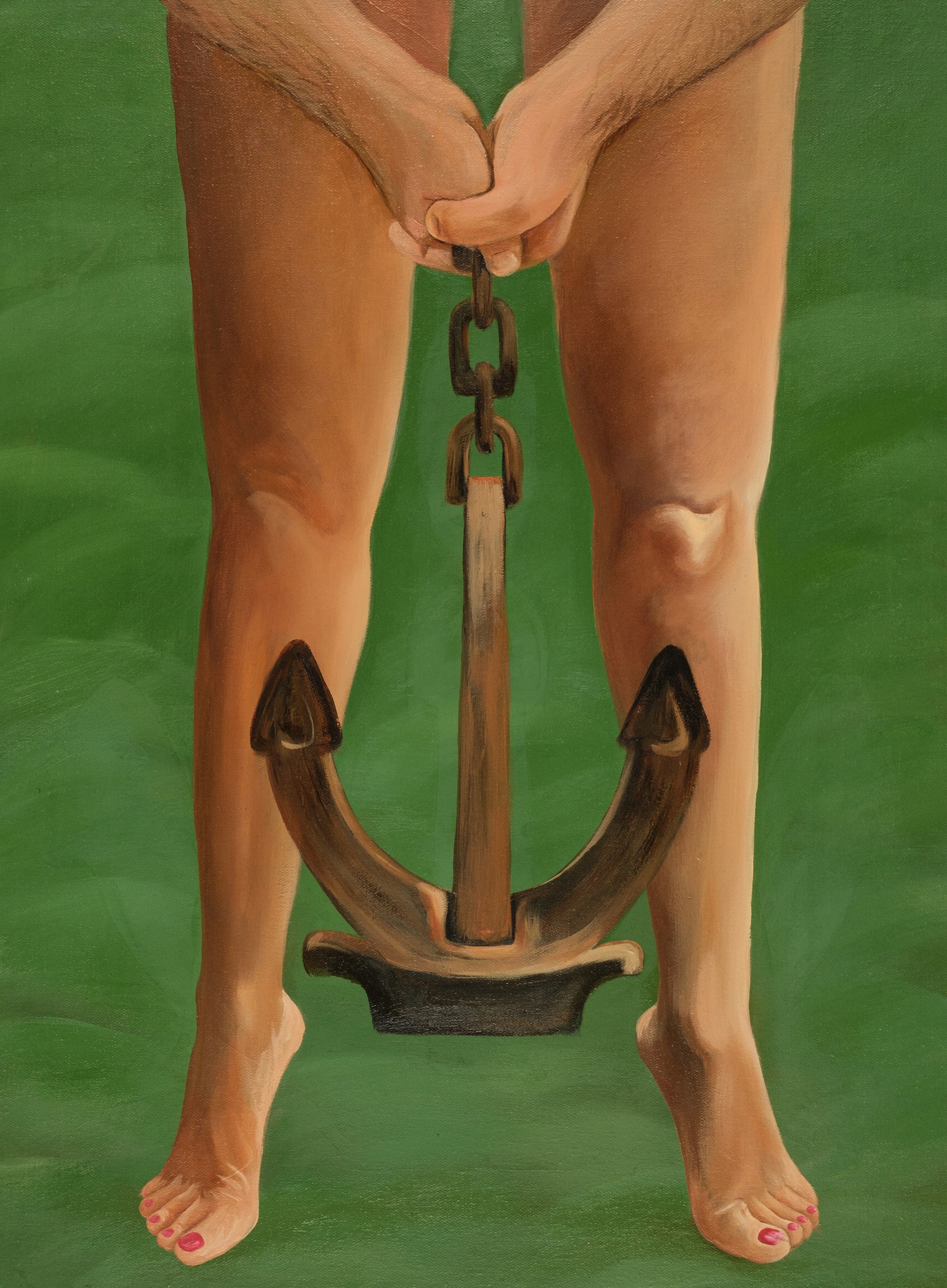
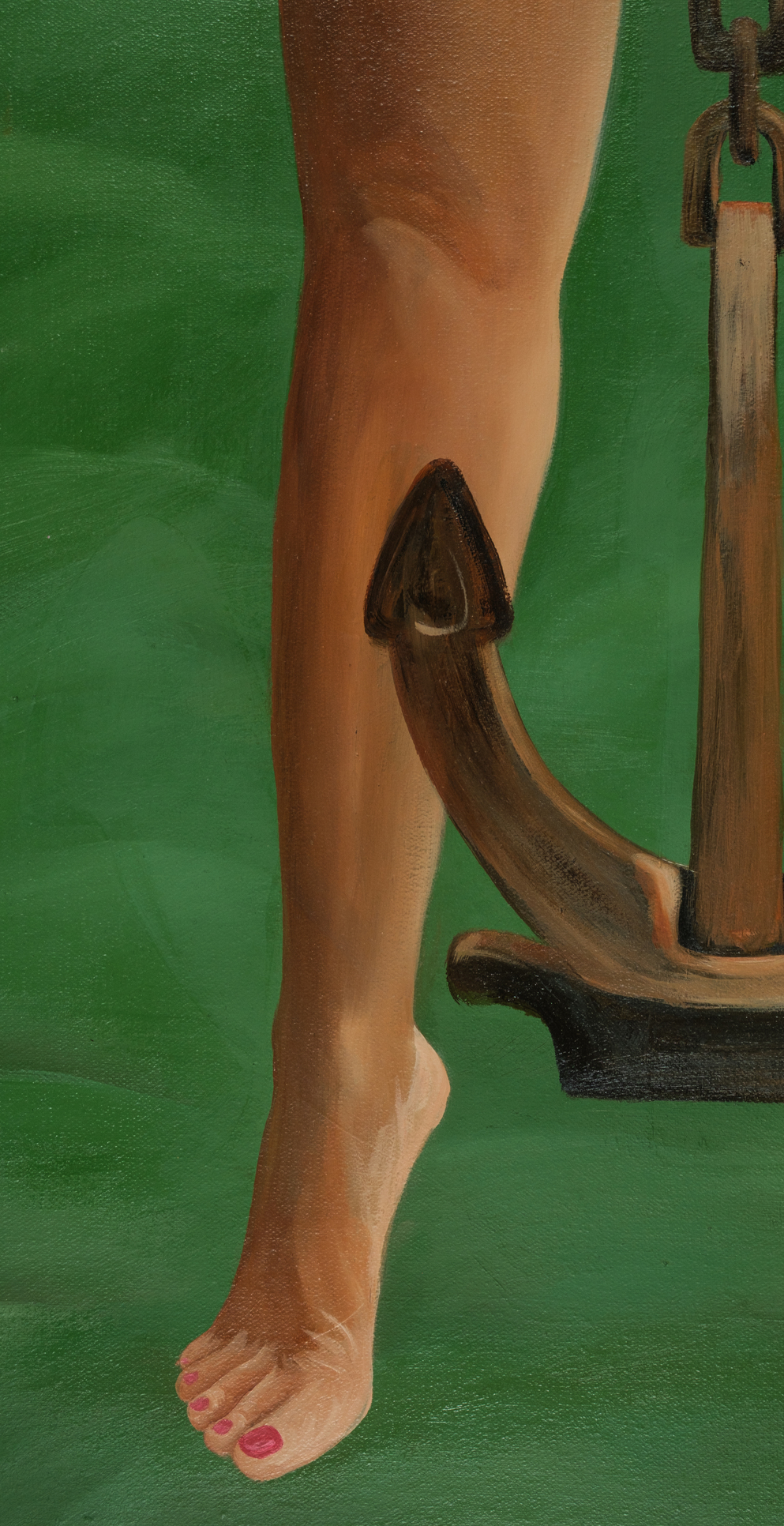
The Roadstead of Life explores the idea of temporary stability in human existence through a metaphor taken from maritime language. A roadstead is a place where a ship stops for a short time without reaching a final harbor. In the painting, a woman stands on her toes as if trying to rise or move forward, while behind her a man holds a heavy anchor connected by a chain. The anchor becomes the central symbol of attachment, responsibility, and the forces that keep a person from complete freedom.
The raised posture of the woman suggests the human desire for growth, change, and independence. At the same time, the anchor held by another figure shows that life is never entirely self-determined. Every individual is connected to others through emotional, moral, or existential bonds that can both support and restrain.
The anchor refers to the state of waiting that often defines human life — a moment between movement and destination, between decision and consequence. Relationships, duties, and personal choices become the anchors that determine where we remain and how far we can go.
Within my conceptual direction SurIndividualism, the work reflects the paradox that individuality exists only in relation to others. A person may feel independent, yet their position in life is always shaped by the presence of other people and the circumstances they create together. The painting remains open to interpretation, allowing the viewer to see support, burden, love, or limitation, depending on their own experience.