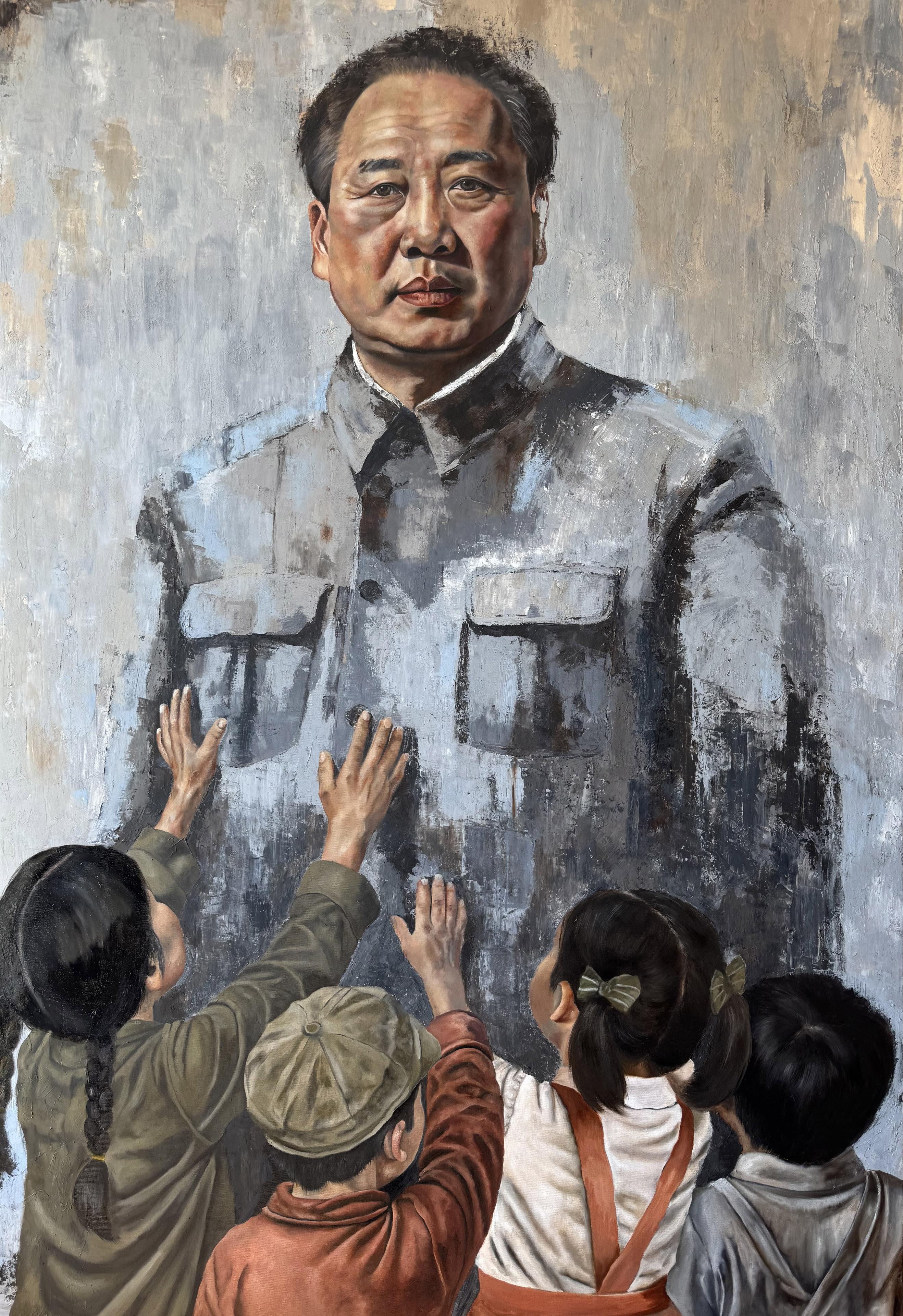
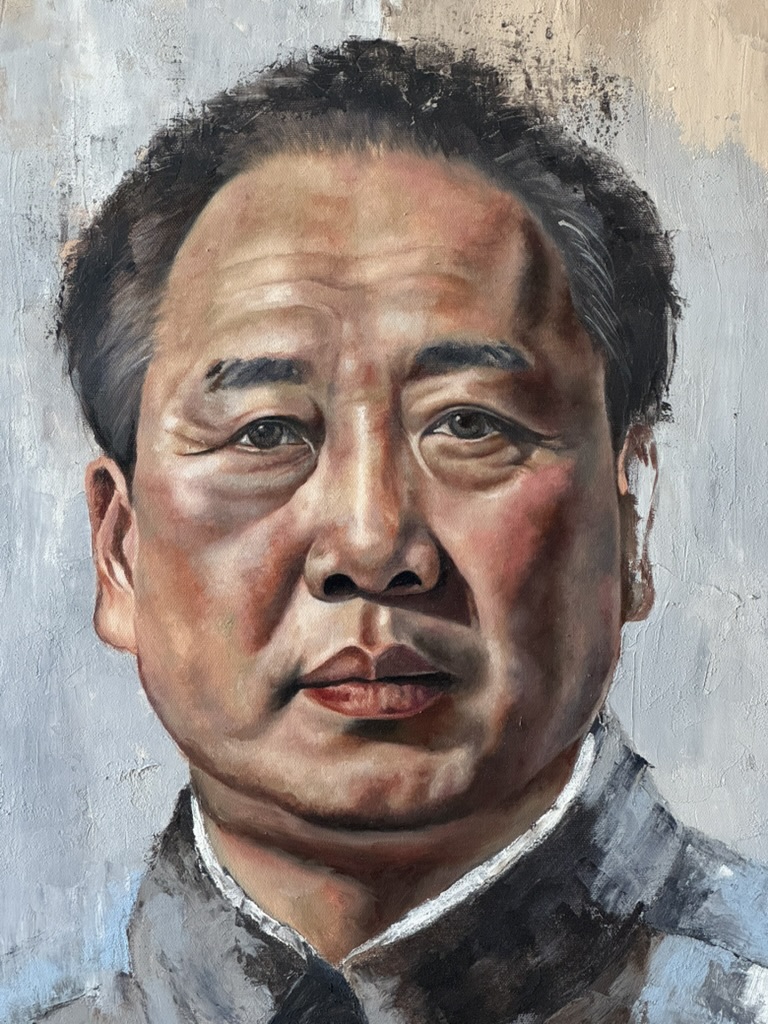
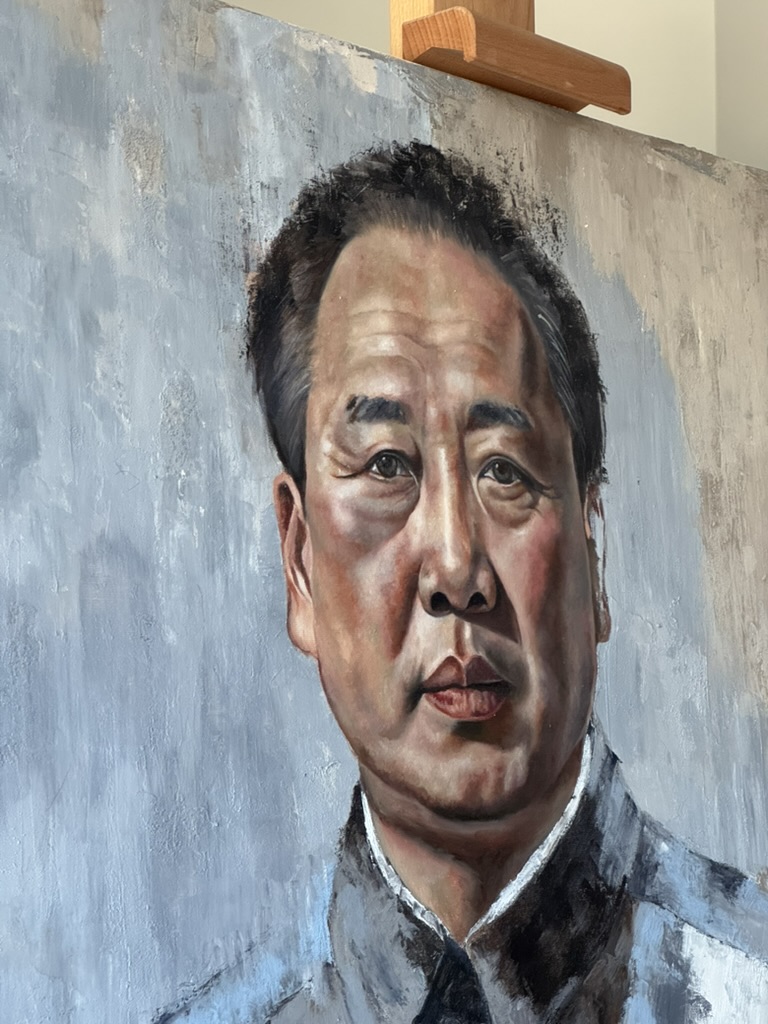
This painting confronts the mythologized image of Mao Zedong and the deep contradictions embedded within the cult of personality that surrounded him. Titled The Father, the work evokes a figure meant to symbolize authority, protection, and wisdom—an embodiment of ideological purity and paternal guidance. However, this reverence is challenged by the reality of disillusionment and distortion behind the ideal.
At the heart of the composition stands an enormous, almost sacred portrayal of Mao, rendered with the gravity and permanence of a monument. Surrounding him are young children—symbolizing innocence, future generations, and blind trust—reaching upward, not toward the man himself, but toward an abstraction of power. Their gaze, filled with hope and awe, contrasts with the distant, impassive expression of Mao, highlighting the one-sided nature of this constructed relationship.
The work explores how authoritarian regimes manufacture idealized images of leadership to secure loyalty and devotion. In this case, Mao is elevated beyond human scale—fatherly and instructive in theory, yet unreachable, silent, and indifferent in practice. The textured, deteriorating surface of the portrait suggests erosion—of belief, of truth, of individuality swallowed by propaganda.
This painting asks the viewer to question the cost of idealizing a figure to the point of divinity. What happens when faith in leadership becomes compulsory? When devotion is inherited, not chosen? The children’s outstretched hands do not receive warmth—they reach for a myth, not a man.
Through this work, I explore the painful gap between ideology and lived experience, between the promises of the "father" and the realities endured by the "children."