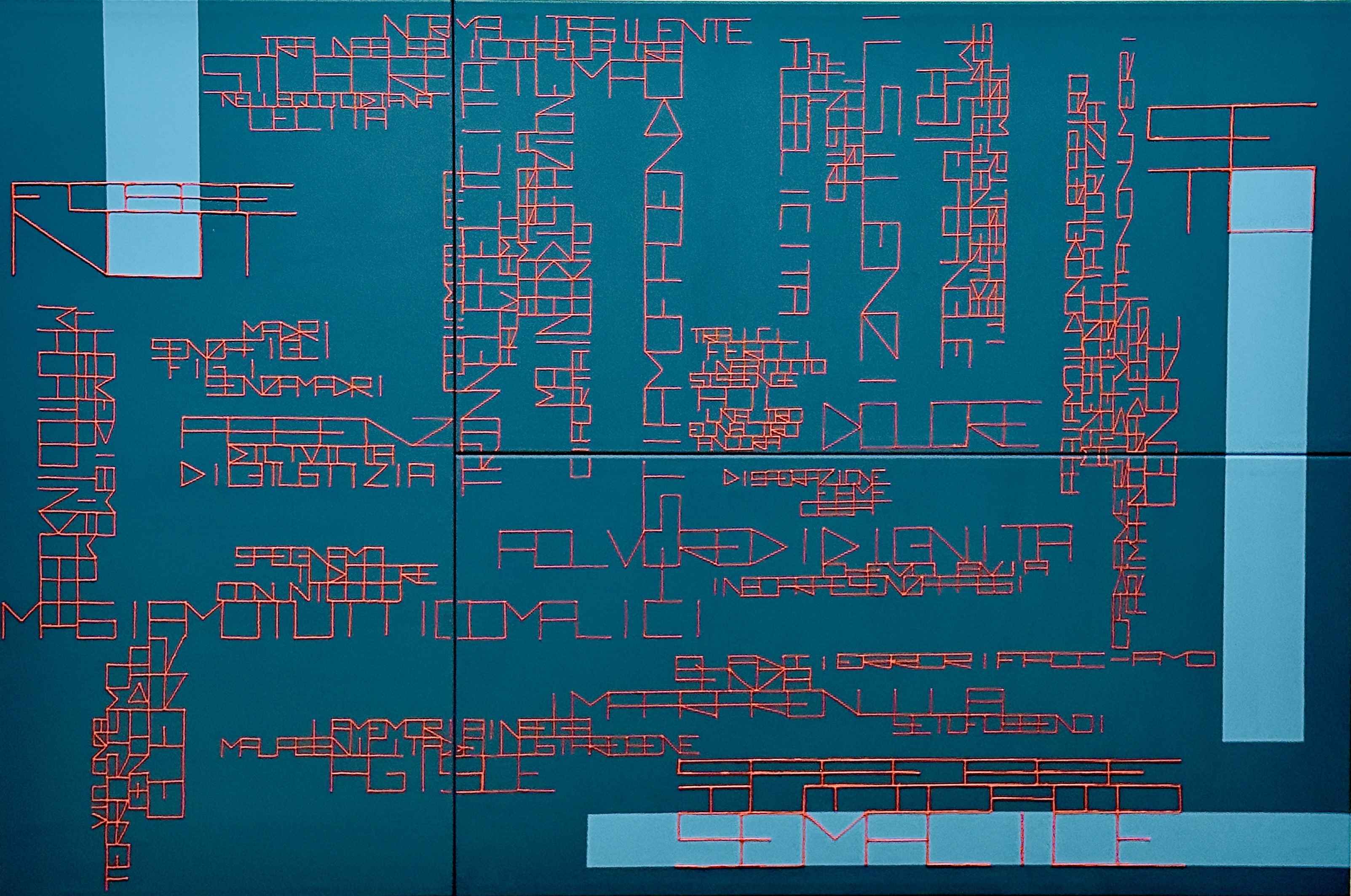
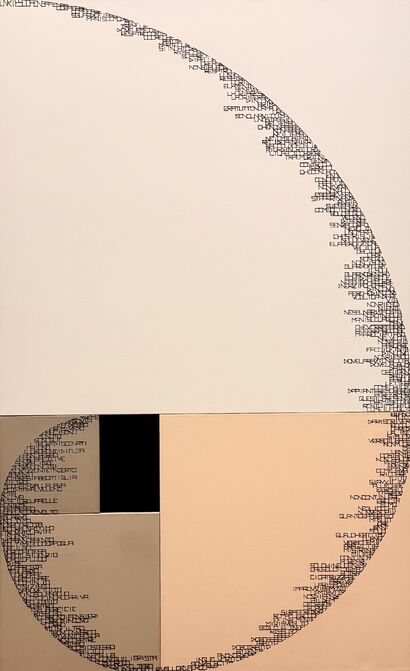
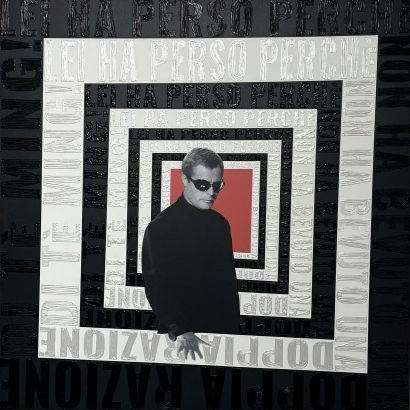
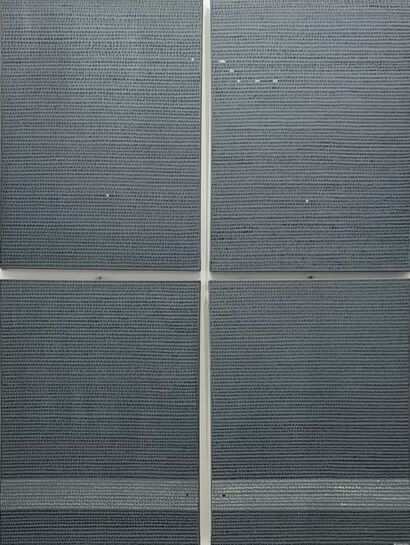
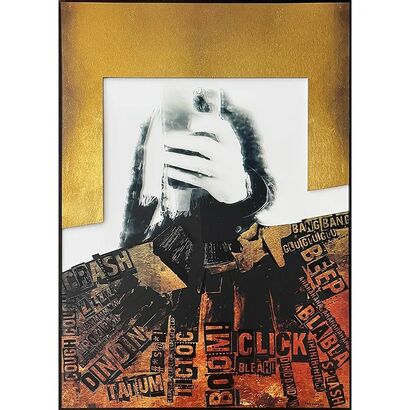
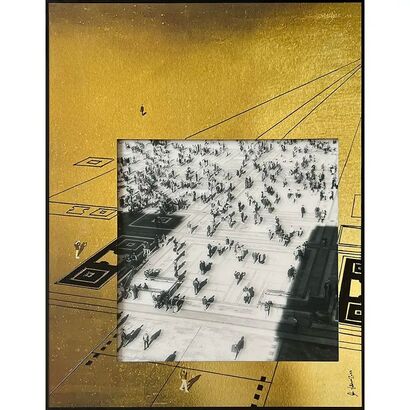
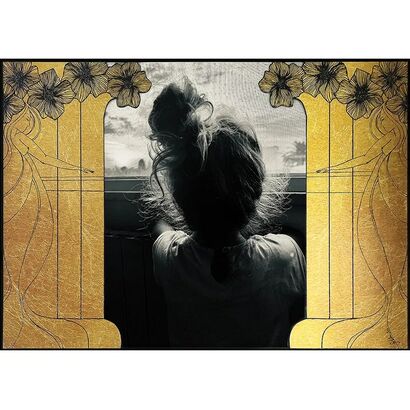
In N’io, the word is not a mere support to visual language,
but becomes its very backbone — the scars that humanity refuses to see.
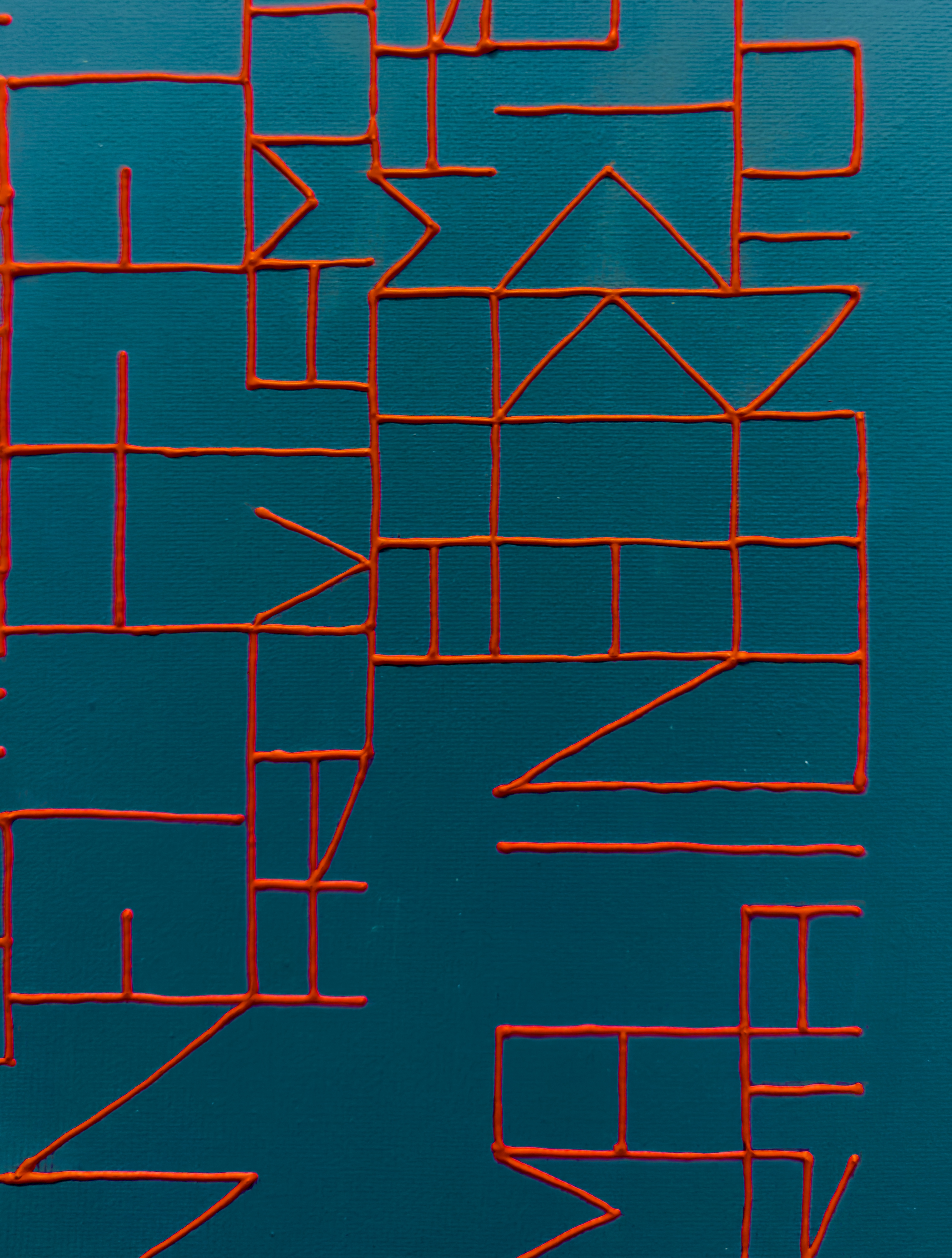
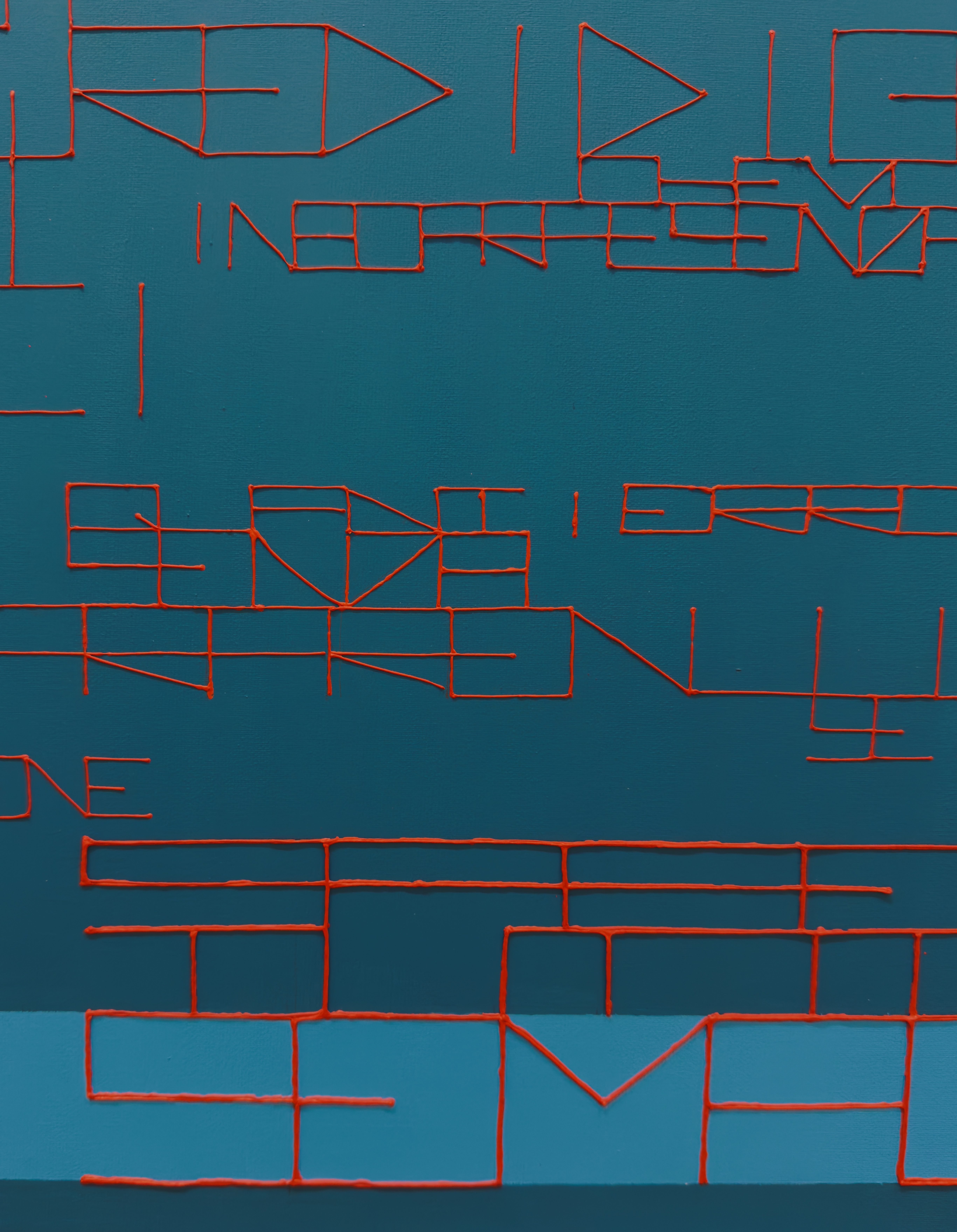
The verses scattered across the surface form a semantic battlefield.
They follow no order, offer no linear reading;
they compel the viewer to reconstruct, to get lost, to stumble among the fractures of meaning.
The poetry inscribed on the work is both denunciation and confession.
It speaks of a humanity that has everything yet cannot be happy,
because the factory of consumption keeps creating new, nonexistent needs.
Each word is embroidery — a call toward what happens elsewhere,
but inevitably concerns us all.
The work lays bare the schizophrenia of our time:
on one side, violence and death; on the other, advertising and consumption.
“What are we doing?” — the question that breaks the poetic flow
and strikes like a mirror turned upon ourselves.
The text does not allow for neutral spectators; it forces us to recognize our complicity.
The work invites us not to become numb,
not to switch off pain with a touch,
but to transform it into active awareness.
Because if the “I” became “we,”
history — and with it, the society we live in — could change direction.
In this weaving of painting and poetry, N’io stands as a manifesto:
against oblivion, against the trivialization of suffering,
against the apathy of those who take refuge in “feeling fine” while forgetting the rest.
It speaks not only of what happens outside of us,
but also illuminates what happens within:
the ceaseless struggle between indifference and awareness,
between I and we.
Text appearing on the artwork
Silent normality
between one commercial and another,
scheduled amazement,
in daily blindness.
We have everything,
except happiness.
We try to buy it,
but dissatisfaction
hands us the bill.
What are we doing?
Among fierce lights
a heartbeat fades,
then another,
and another still:
pain.
We see it,
we hear it,
but who wears it?
We have the gift of breath,
yet no one authorizes us to take it away.
Corpses turn into numbers
before they even become ashes.
Despair.
Hunger.
Bones.
Dust of dignity
that drifts away
in shoes without steps.
Mothers without children,
children without mothers:
absence
of civilization,
of justice.
Among perforated walls
echo cries mixed with blood.
Then
silence.
Theirs.
Ours.
Then
advertising.
We turn off pain
with a touch,
yet we are all accomplices.
Violence.
Terrorism.
Genocide.
War.
How many mistakes we make
without learning a thing.
Memory teaches,
but the senility of feeling fine
acts instead.
If “I” became “we,”
everything would be simpler.