Here's the text translated into English, keeping in mind it's an art piece description:
1.618 Breaths
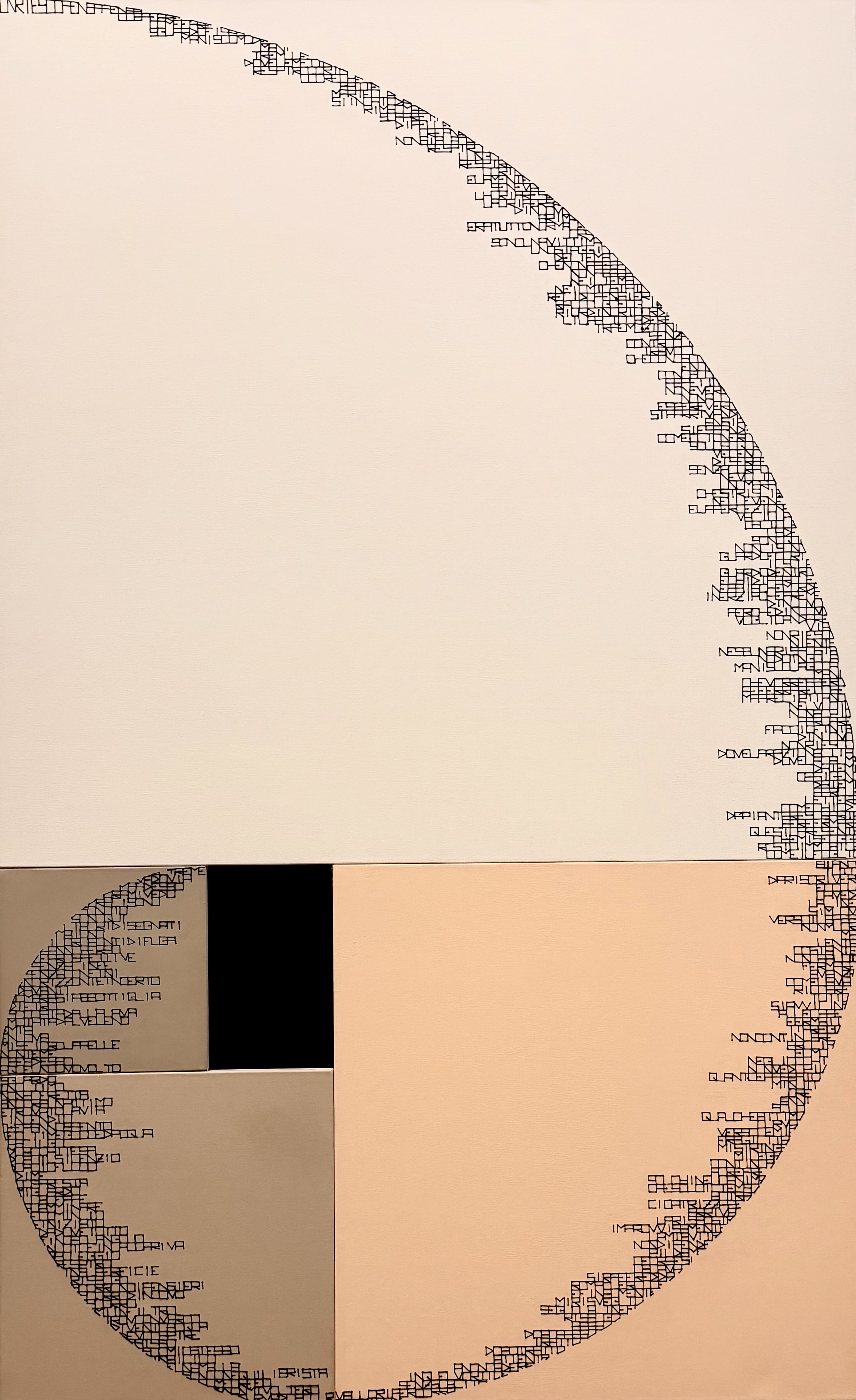
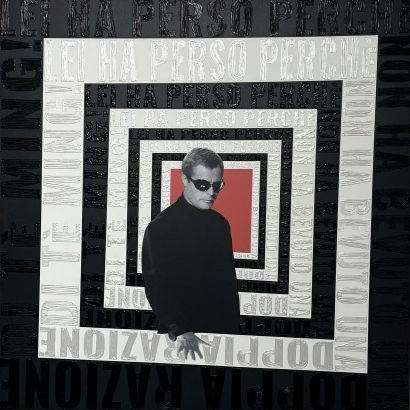
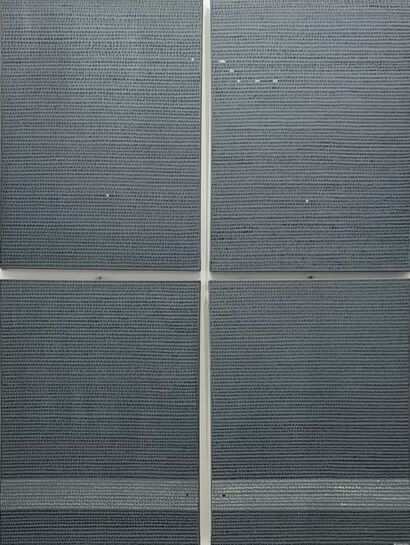
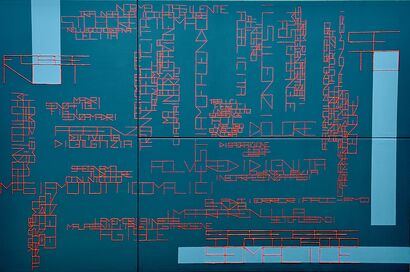
"1.618 Breaths" isn't just a work to be looked at, but to be read, followed, and listened to/undertaken. It unfolds across four square canvases, which emphasize the constructive geometric forms of the golden spiral. This harmony and beauty of an ancient symbol become a metaphor for how appearance can be misleading. Here, the spiral transforms into a vortex. It's a movement that pushes and urges, tightening its grip on the observer who chooses to resonate in unison with the "1.618 Breaths" of the verses' rhythm, in an emotional or conceptual harmony.
The phrases unravel into verses that design the vortex, a volute of thought that coils in on itself, like anxiety silently growing until it explodes. This work is an act of self-preservation, a plea for oxygen.
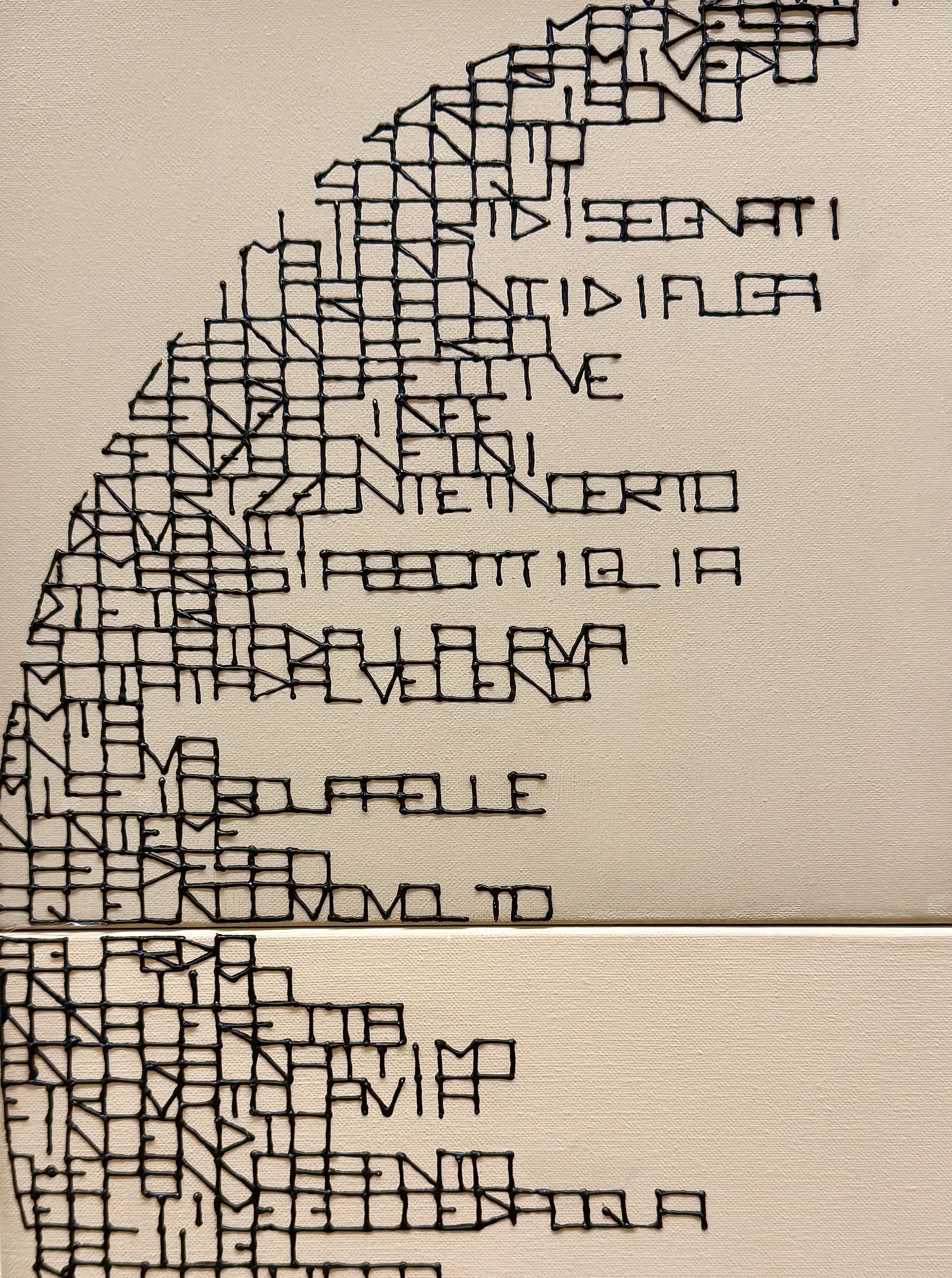
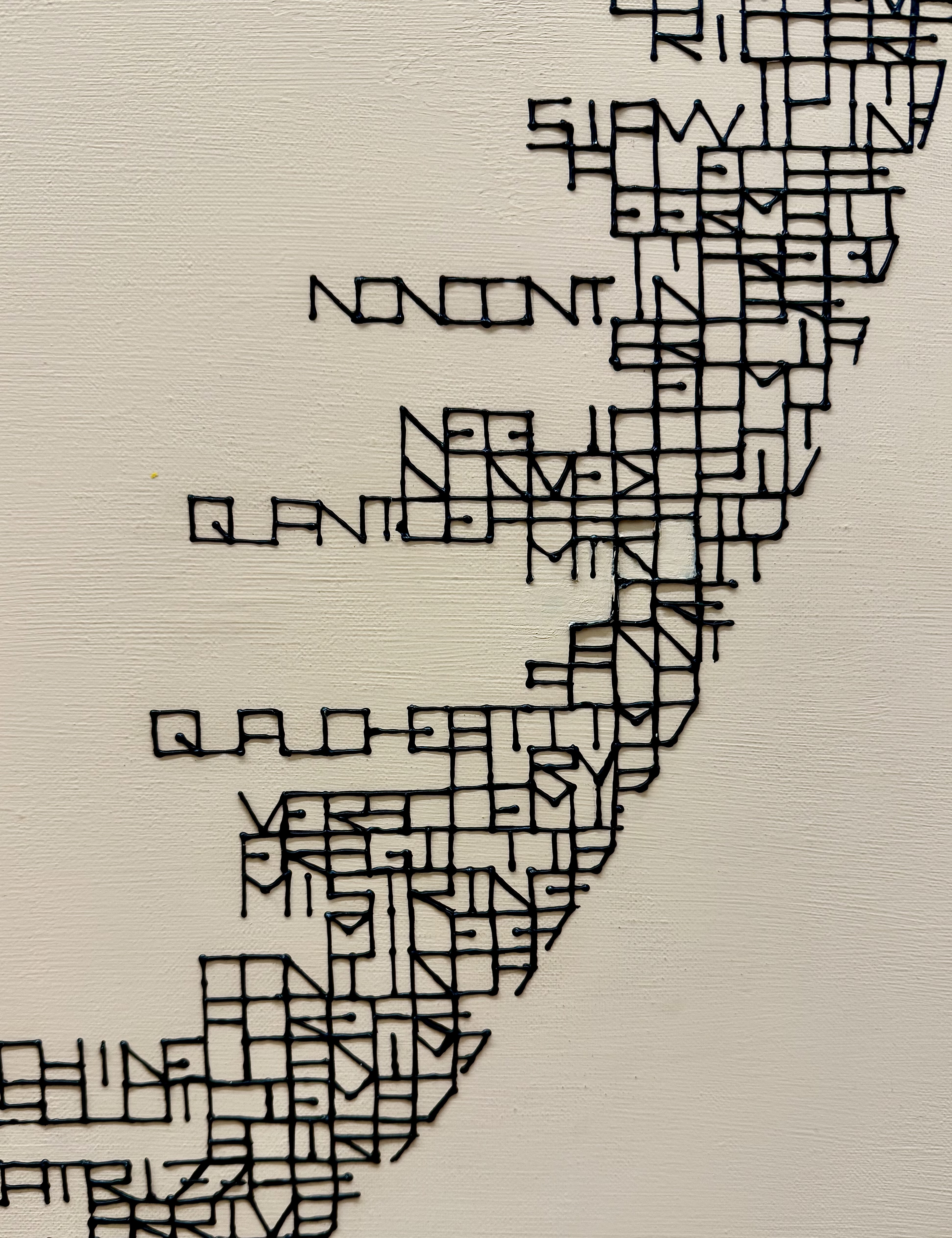
In moments when anxiety overwhelms, the mind blurs and nothing seems comprehensible. This is mirrored in the work's verses, where the letters, in their new form, lose the coding that allows their meaning to be clearly deciphered, creating a visual disorientation that reflects inner bewilderment. The letters are close-set, black, textured, and dense, like the weight of thoughts compressed in the mind, pressing on the temples.
Just as in reality, there's initial chaos, then paralysis, then breathlessness. Every line is a confession. Every curve, a scar. Every white space, a silence that weighs like a held-back scream. "I CANNOT" is the verse that opens the narration. Then, slowly, something shifts. Breath returns: short, long, interrupted. The possibility of moving forward, of proceeding through fullness and emptiness, returns. "BEYOND ME" is the epilogue. It's an invitation from the artist to draw closer, not to stop, to move further, towards the final conclusion. What truly remains after the vertigo, after the darkness, after the silence: one's own reflection in a black mirror.
"1.618 Breaths" is a work that narrates descent, disorientation, and the fight against the invisible, but also the ascent—a darkness that can dissipate.