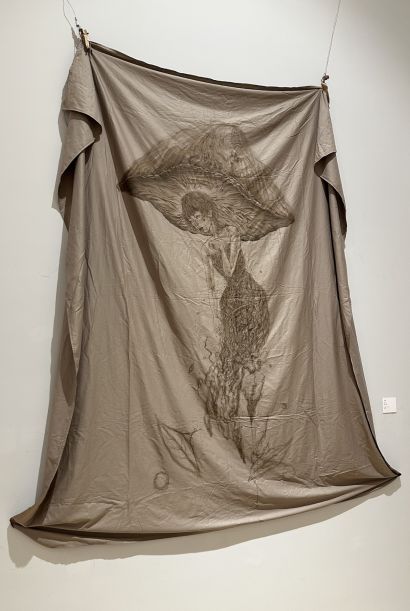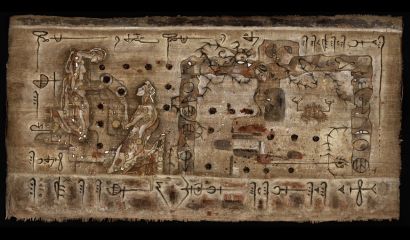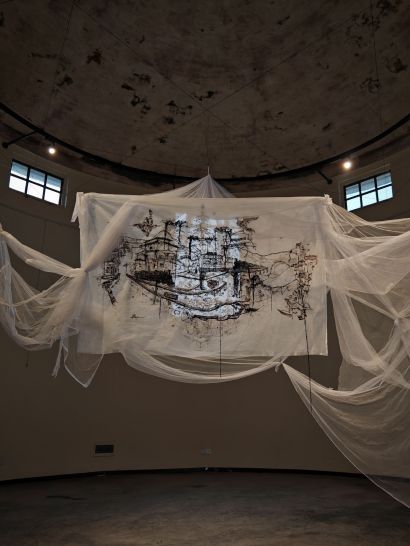
Material: Canvas,Soft (Yarn,Cotton,Fabric),B&W Paper
The compositional logic of Eastern silk paintings and Western medieval triptychs reveals a cross-civilizational structural affinity. Both place the human... Read More
The compositional logic of Eastern silk paintings and Western medieval triptychs reveals a cross-civilizational structural affinity. Both place the human world at the center of narration, extending either vertically or horizontally into expansive imaginative visions of totality. Gods and the four emissaries of fire, water, air, and wood look down upon the earthly realm, while civilization appears as humanity’s heavy yet immense pair of wings, bearing and propelling the passage of history. The ouroboros evokes cyclical time, recursive order, and the fate of return, ultimately drawing attention back to the individual. Behind the queen of the underworld, the mountain form appears as a chalice in positive shape, and as two figures in dialogue in its negative space. Around them, colossal female faces, spanning the archaic, the future, antiquity, and the modern era, silently observe the paradise veiled beneath the shadow of the divine wings, while the abyss, in turn, gazes back through paradise toward the sovereign height of the gods.