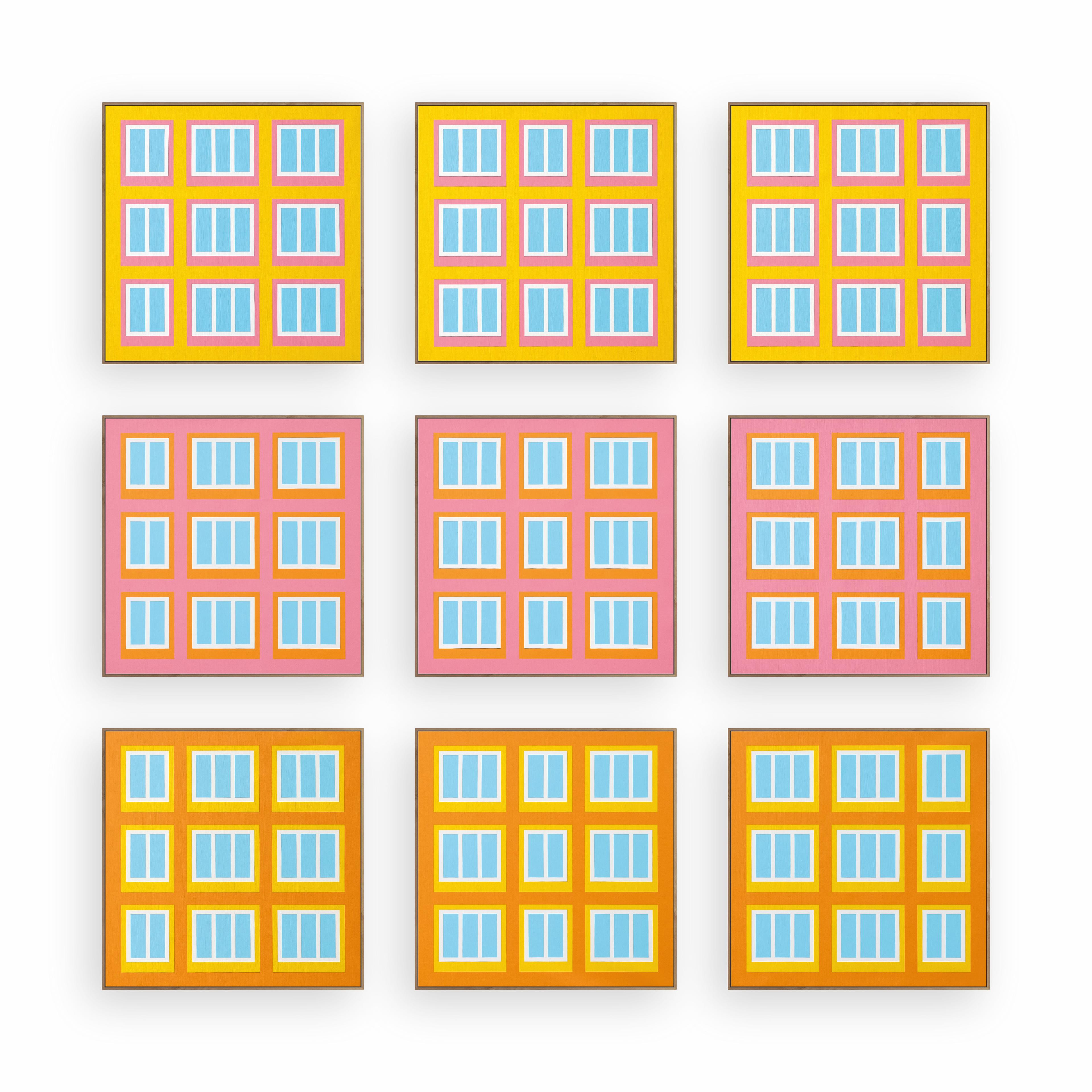
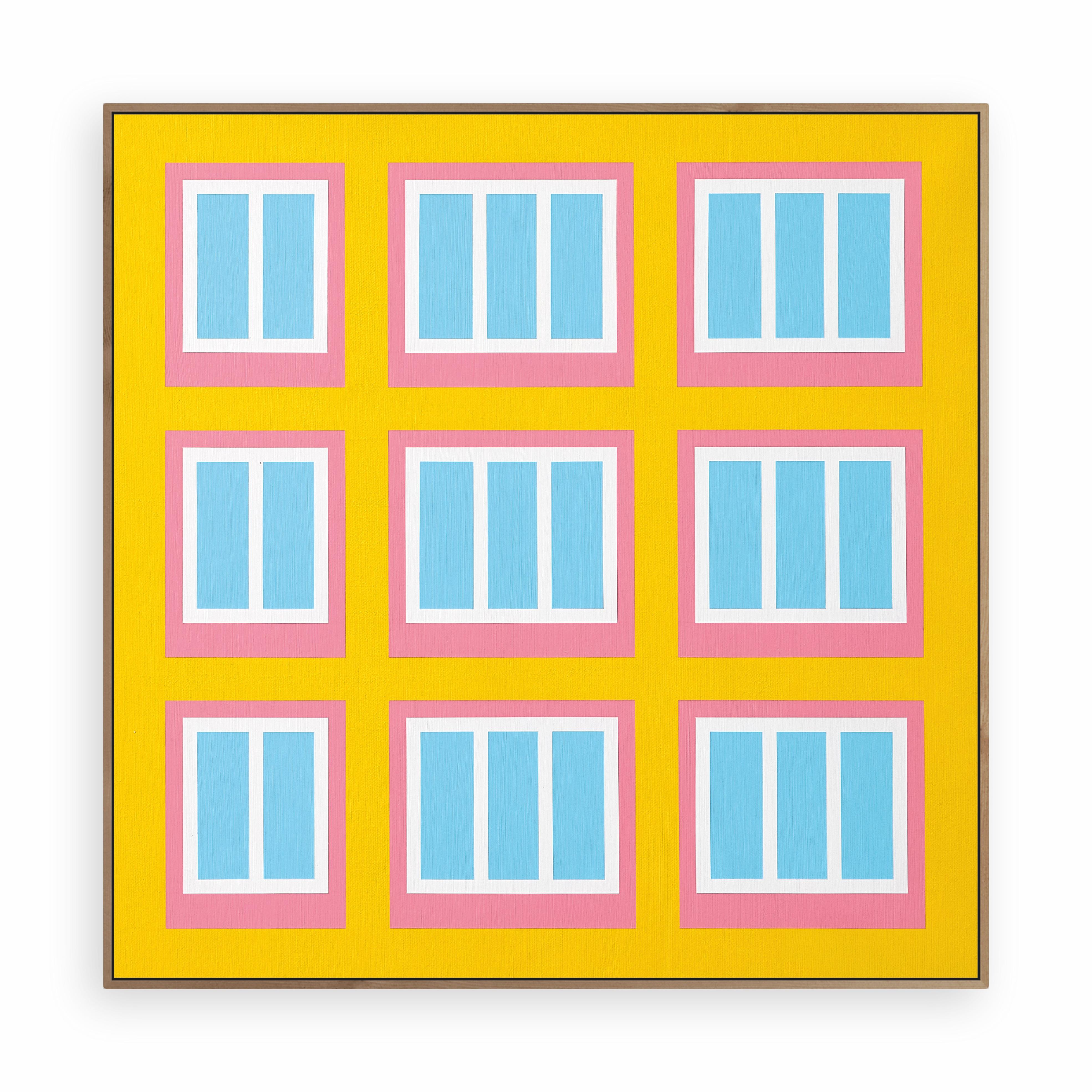
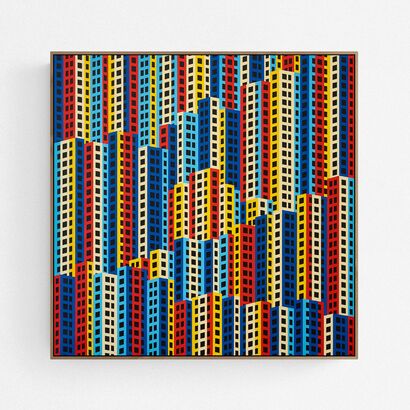
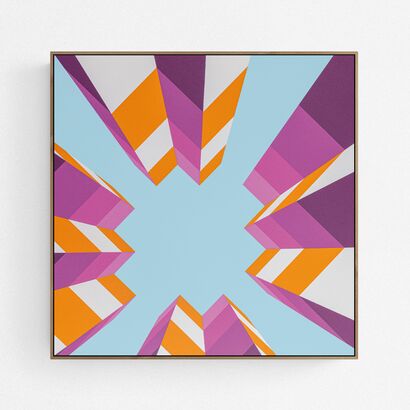
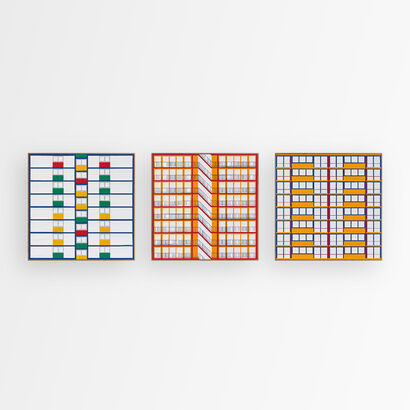
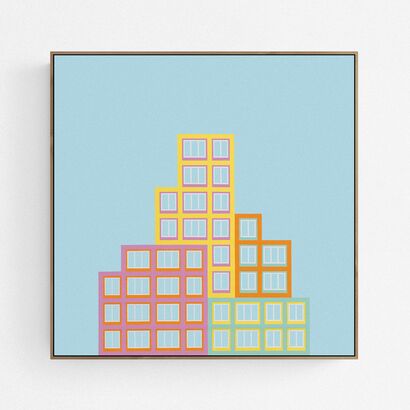
Rooted in a visual investigation of architectural fragments, the Moduli series transforms a pastel-colored window in Kathmandu into a system of geometric units that repeat, shift, and stack like construction elements or video game blocks. Each piece explores how simple forms can generate complex rhythms through modularity.
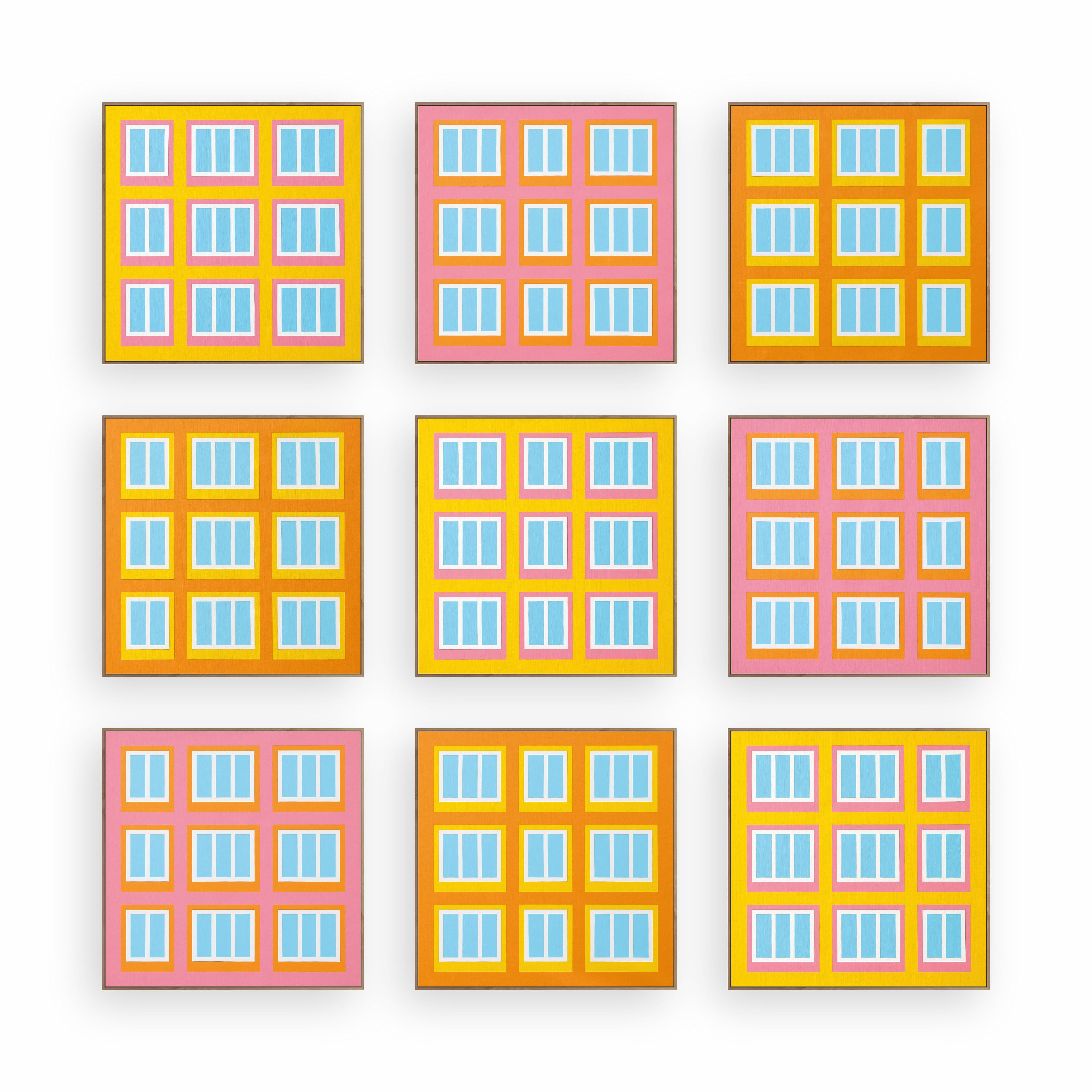
9 Moduli builds upon this foundation by introducing a dynamic, mutable structure. Composed of nine square canvases (50×50 cm each), this polyptych can be rearranged in all 362,880 possible configurations.
The work invites the viewer to engage with modularity not as fixed repetition, but as a living system. Each new arrangement reveals fresh relationships between forms, colors, and rhythms, evoking the playful spirit of construction sets or sliding puzzles.
Using the meticulous process involving acrylics, precise masking and soft pastel tones, 9 Moduli extends the idea of architectural fragments into a participatory experience. It becomes a visual organism that shifts with time, space, and taste.
Rather than prescribing a single narrative, the work celebrates variation within structure. It underscores how meaning, like memory or identity, can be reshaped through reordering, maintaining coherence while allowing for change.