Nina Vandeweghe (1988°), also known as Nina Non Grata, weaves pop culture, personal narrative, and feminist theory into a practice that explores the tensions between intimacy and the public sphere. Working with painting, ceramics, sculpture, text, and found objects, she...
Read More
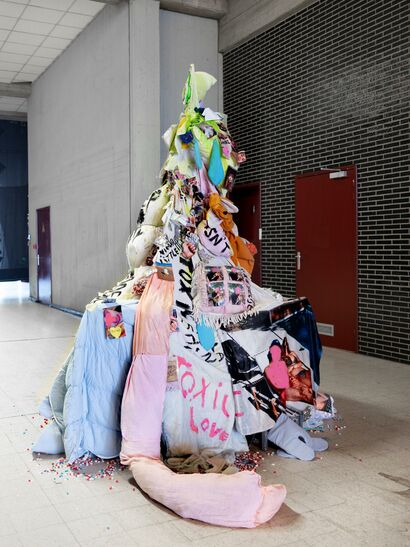
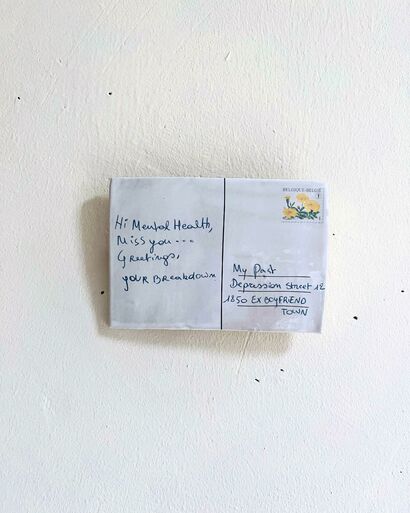
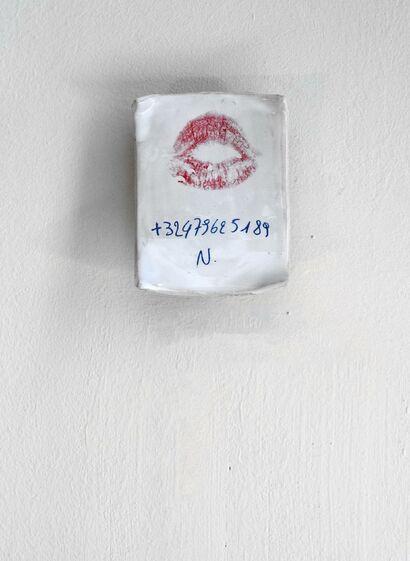
Nina Vandeweghe (1988°), also known as Nina Non Grata, weaves pop culture, personal narrative, and feminist theory into a practice that explores the tensions between intimacy and the public sphere. Working with painting, ceramics, sculpture, text, and found objects, she investigates how power, gender, and identity are constructed and contested, often through autofiction and autotheory.
Her work is shaped by the contrast between the immediacy of digital culture and the slowness of traditional making. In a world of constant online reactions and cycles of outrage, her studio practice becomes a deliberate slowing-down, a filter for raw emotions. Processes such as painting or sculpting allow her to transform fleeting reactions into enduring reflections.
Much of her work begins with lived experience, especially the often-unspoken struggles of womanhood: heartbreak, fertility, exhaustion, and the subtle and overt violence of societal and romantic expectations. Defiant yet vulnerable, her practice reframes anger as a generative force. Drawing from Martha Nussbaum’s idea of “transitional anger,” Vandeweghe uses this emotion not only as personal expression but also as a catalyst for resistance and change.
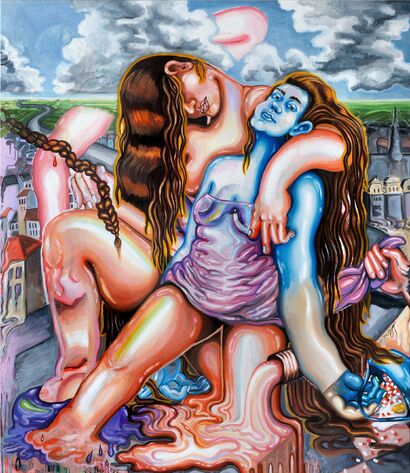
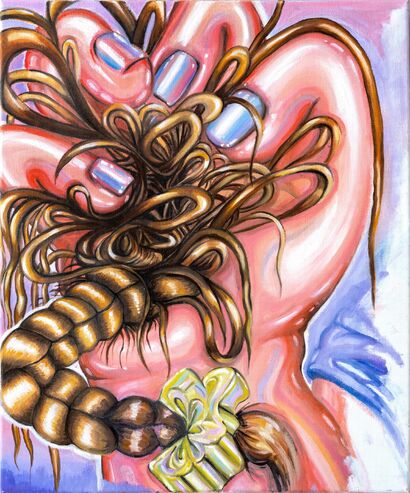
Recurring symbols—heels, braids, purses—function as both critique and celebration of femininity. They point to reductive roles and the persistence of the male gaze, particularly within an art world that has historically objectified women while excluding them as creators. Cartoon-like female figures, rooted in her background in illustration, embody disempowerment while exaggerating emotional intensity, using humor and irony to complicate stereotypes.
Her practice is grounded in postmodern feminist critique. Thinkers like Griselda Pollock and Simone de Beauvoir inform her exploration of how women are cast as “the Other,” trapped between contradictory demands: to be strong yet soft, beautiful yet modest, ambitious yet unthreatening. The “schizo gaze” in her work exposes these pressures while also destabilizing them, offering space for ambivalence and resistance.
Glossy, seductive surfaces—whether in oil paint or ceramics—mask underlying dissonance, subverting capitalist ideals of sanitized beauty and “happy culture.” Beneath their sheen, her works unsettle, resist, and question. With humor, eroticism, and vibrant color, Vandeweghe creates a space where representation remains fluid, unsettled, and always up for negotiation.