Francesco Felici (1986) lives and works in Cortona (AR). After studying agriculture and a brief experience in London, he decides to follow his interest in music and Italian singer-songwriters. In 2010 he graduated as a lyricist at CET music directed... Read More
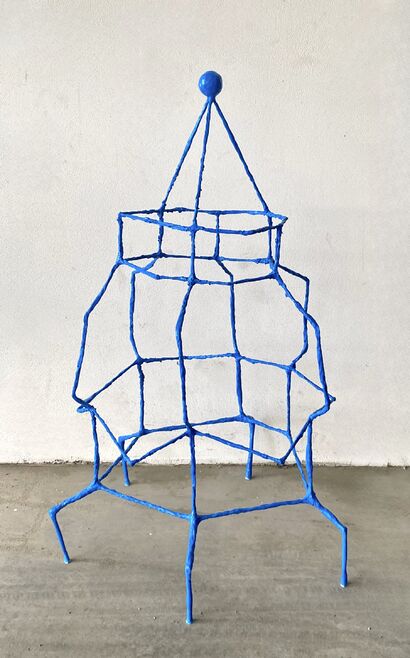
Francesco Felici (1986) lives and works in Cortona (AR). After studying agriculture and a brief experience in London, he decides to follow his interest in music and Italian singer-songwriters. In 2010 he graduated as a lyricist at CET music directed by Mogol, starting a musical career as a musician and singer in a band. In recent years the need to give one's expressiveness a concrete form has intensified, both to be able to experience the result of one's work first-hand and to continue to share one's feelings on tangible and not just ephemeral bases. He then begins to experiment with the visual arts. His first works were figurative paintings painted on canvas, followed by digital graphics printed on a rigid support, such as cardboard, PVC or forex. The subjects are always portraits of people, real or fictional, rendered with a childish style and bright colors that create a stark contrast with the faces of the characters themselves, distorted into dark or tormented expressions that a child would not normally represent. He also shapes a series of sculptures in polymer clay and acrylic, on which he translates the same grimaces of anguish, discomfort, fear, sadness and resignation of the previous drawings. He held his first solo exhibitions in Florence in 2016 and in Cortona in 2017. Francesco Felici continues to dedicate himself above all to the plastic rendering of materials, creating sculptures and design objects in cardboard and stucco, such as lamps and candle holders, characterized by smooth surfaces and shapes of geometric matrix. The latest sculptural production is characterized instead by irregular and unfinished conformations, the result of a more instinctive and less controlled manual skill, in which the trace of the creative gesture is left in evidence, as if it constituted a sort of identity transfer from the donor to the donor. receiving object, which thus takes on a new vital charge.