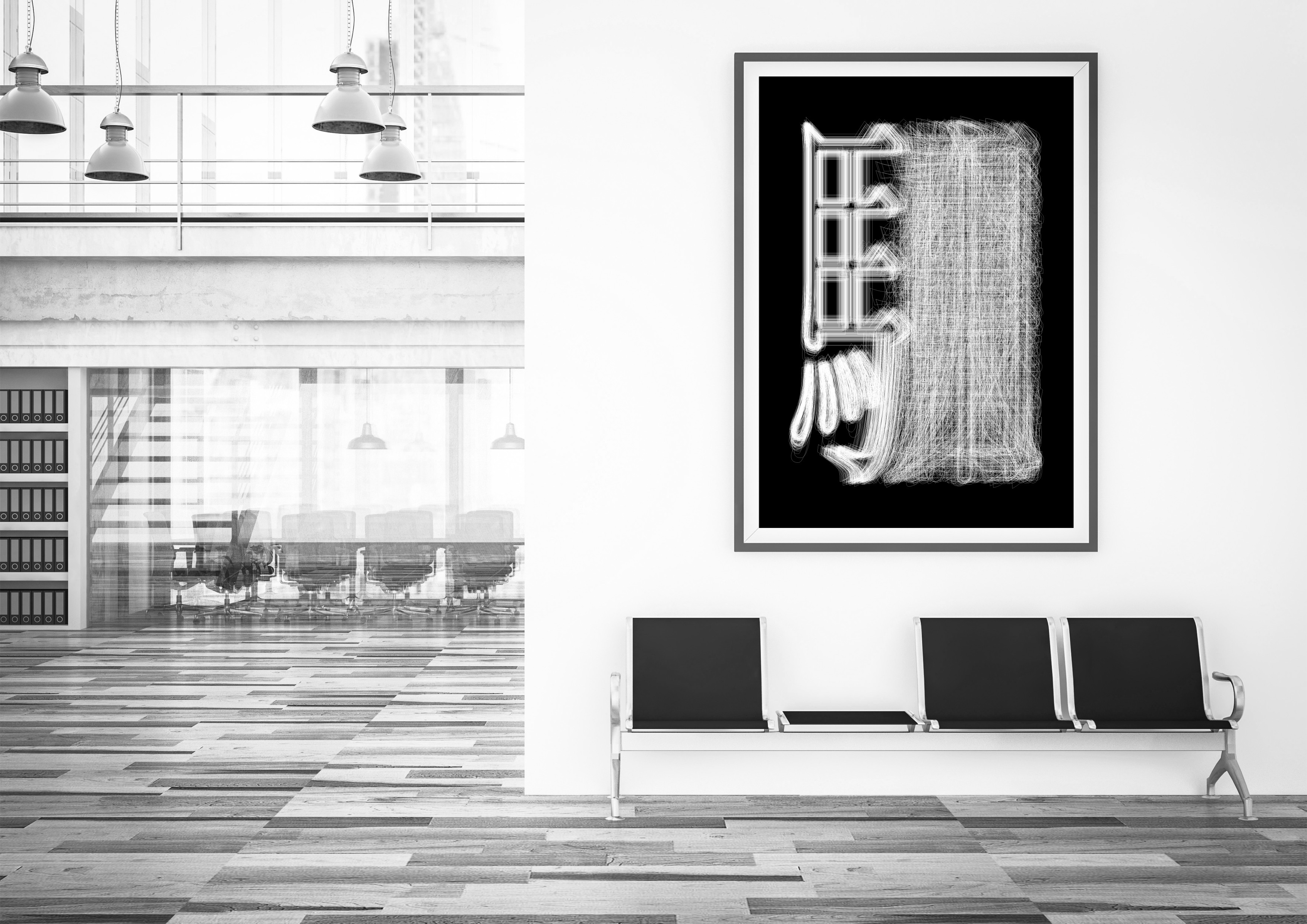
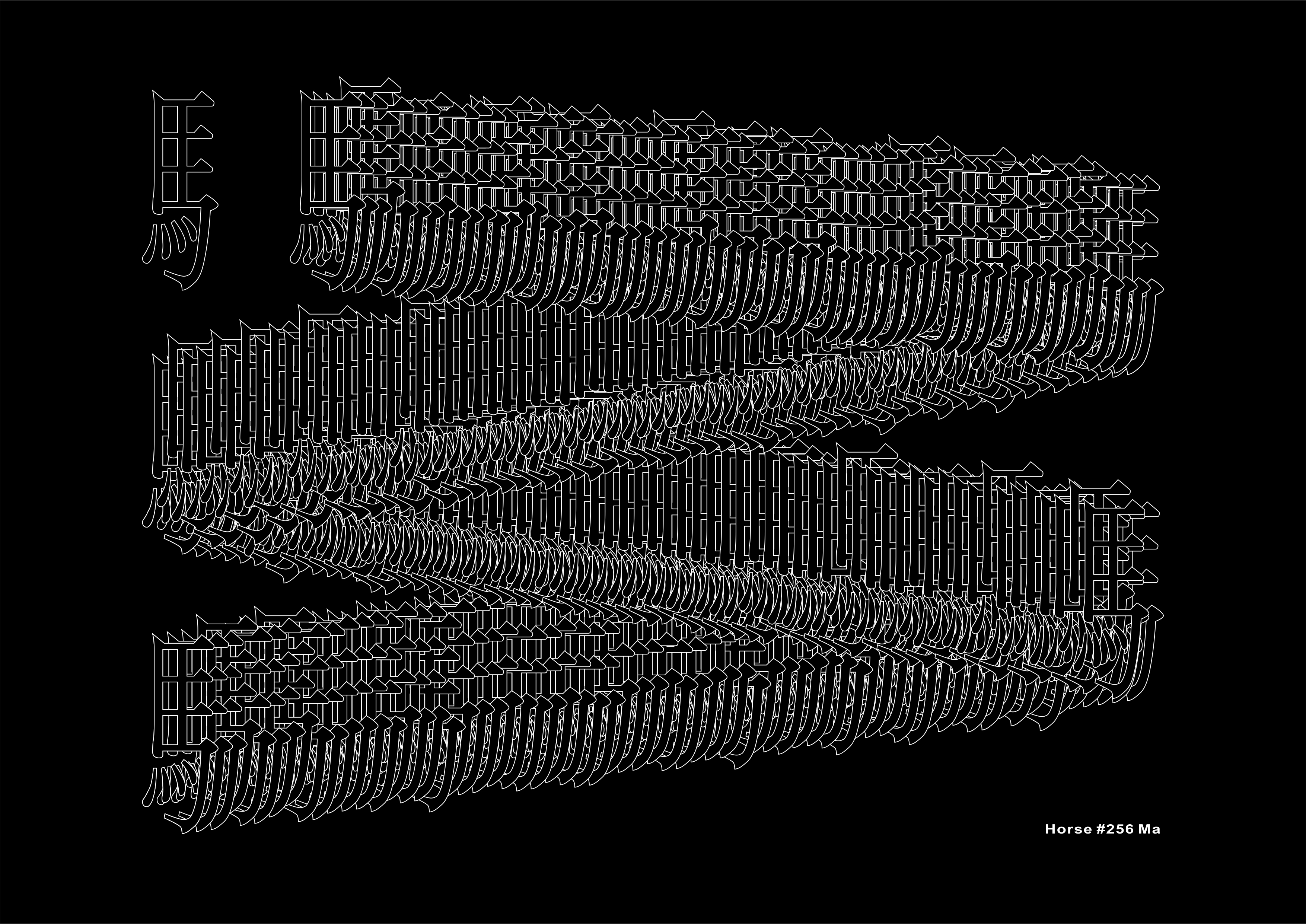
Chinese characters are the only writing system among the four ancient civilizations that continues in use today. Hanzi Gong (Palace of Chinese Characters) draws inspiration from the 1716 Kangxi Dictionary, the definitive standard for Chinese characters, selecting 18,046 characters and organizing them into 50 radicals. Through a method of “layered deconstruction,” the project unfolds into 51 cross-disciplinary artworks.
Each work is composed of hundreds of linear, outlined character structures woven together, creating vast, intricately complex virtual spaces. Here, Chinese characters are stripped of their communicative function, overturning the traditional human-centered mode of interpretation. Through a way of seeing in which absence reveals presence, the viewer shifts from spectator to observer, witnessing the sensory expansion of characters as they reclaim their subjecthood.
This is a confrontation over the power to define. Chinese characters are reimagined as living entities that coexist with natural laws: their external strokes fluctuate with emotional intensity, reflecting the transience of life, while their internal structures remain constant, sustaining the order of civilization. No longer mere tools of signification, they become projections of the human condition, probing the boundary between change and permanence.
As this vitality expands to its extreme and visual density reaches a critical threshold, established meanings begin to dissolve. Once precise instruments of communication, characters are alienated into geometric frameworks that resist interpretation, compelling us to relinquish our rational attachment to meaning. Within the pure rhythm of lines, the viewer is invited to rediscover a sensory resonance that transcends language, returning to the roots of visual perception.
Full:
https://www.behance.net/gallery/132494801/Hanzi-Gong