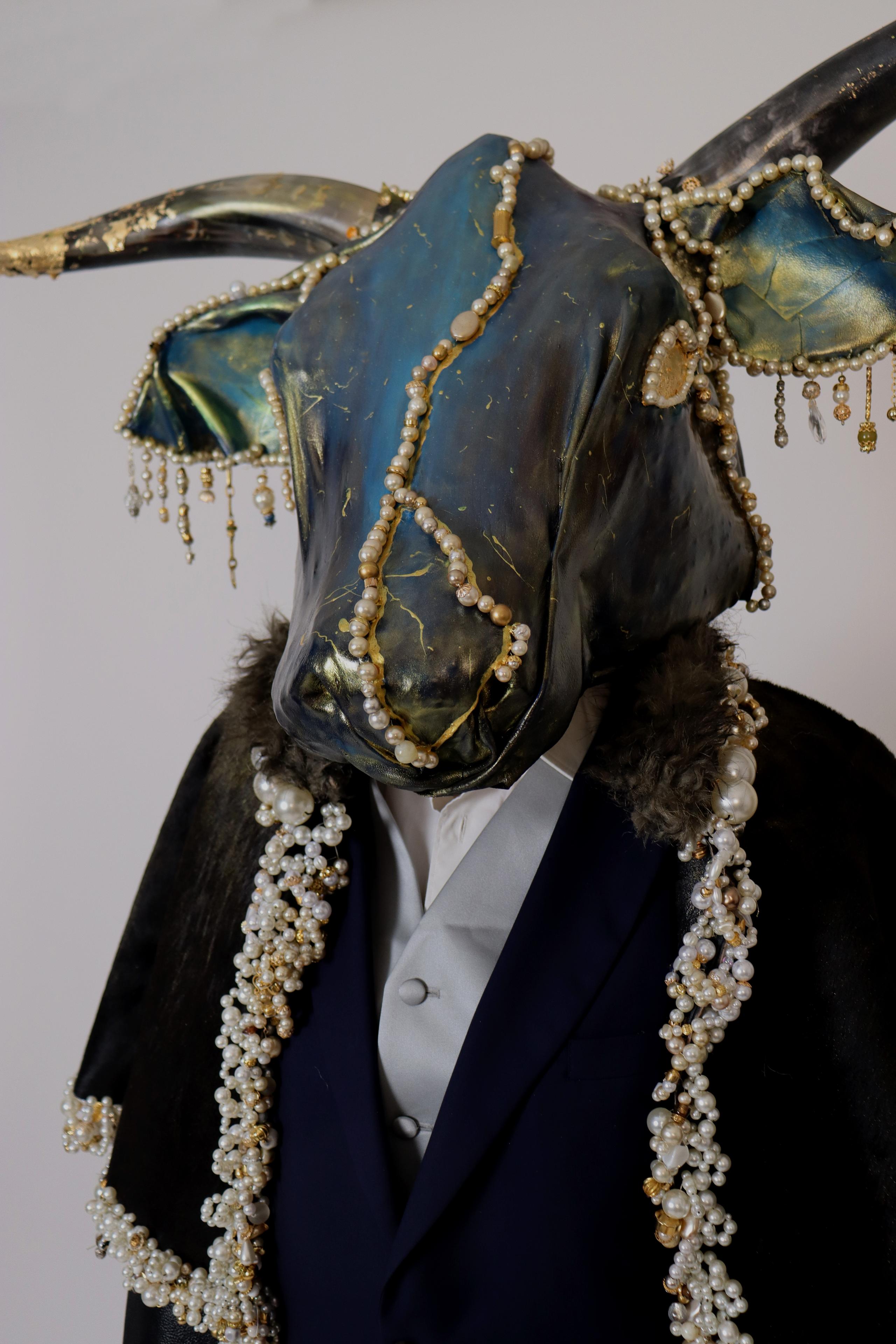
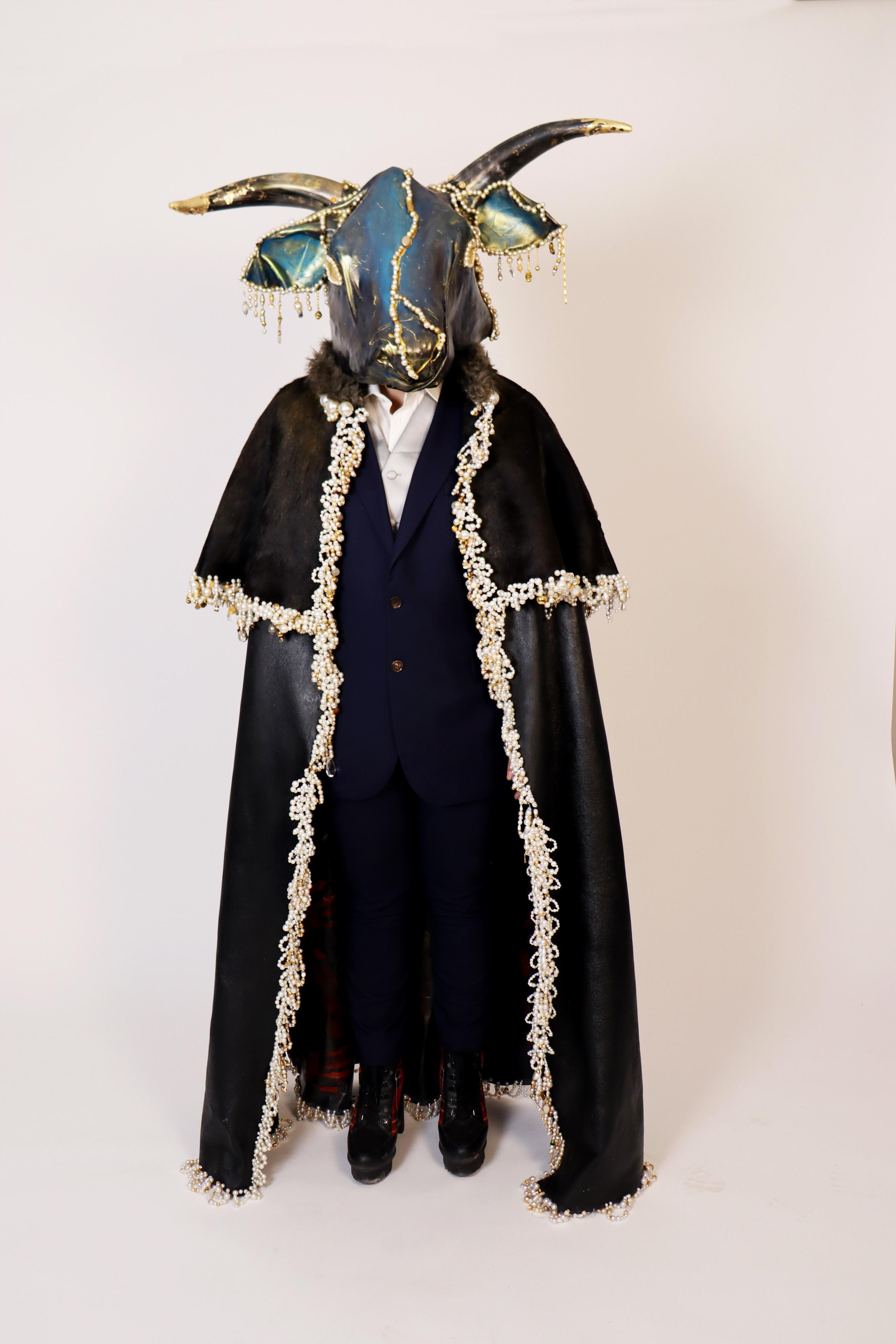
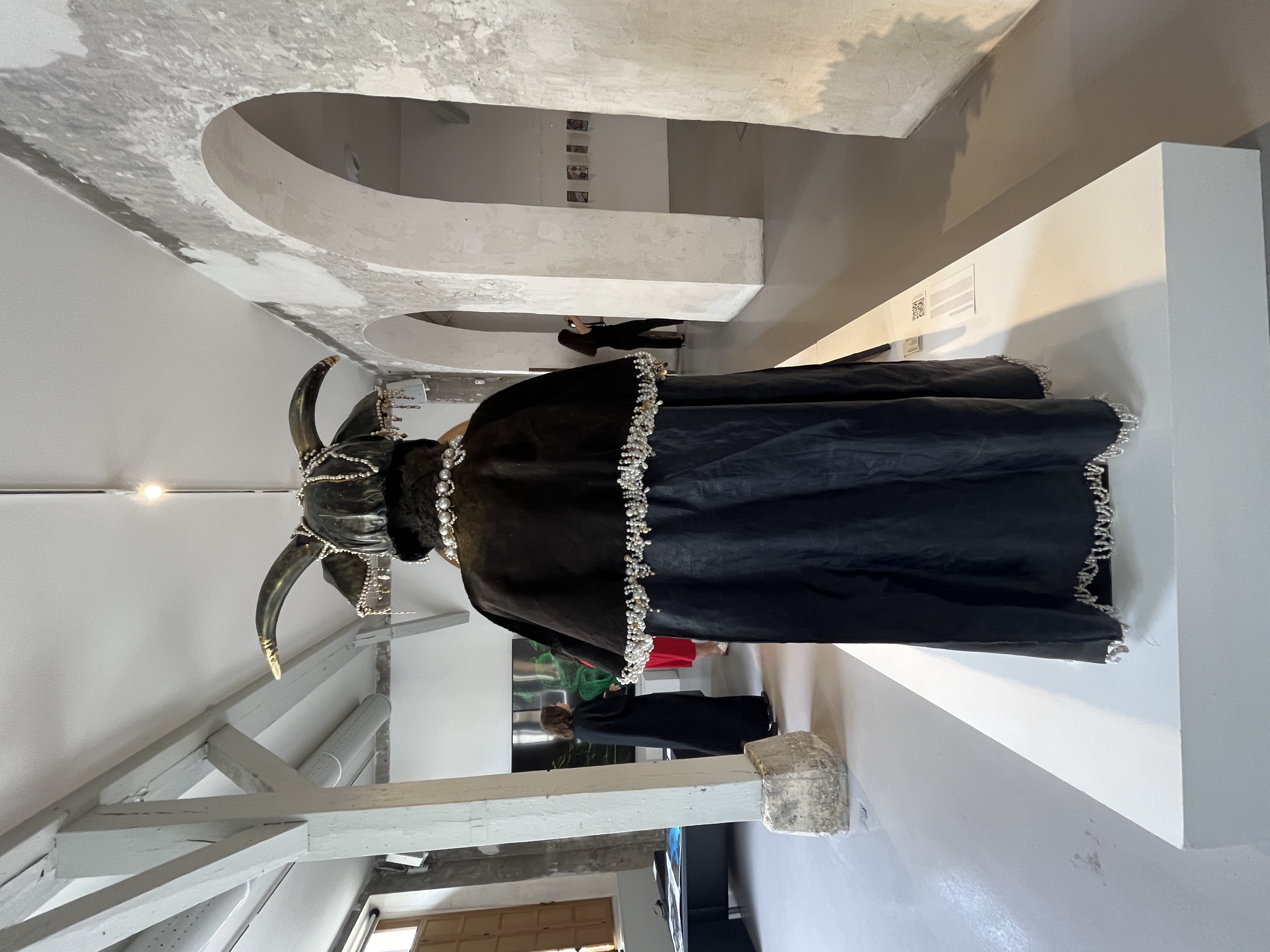
Raptio is a sculptural garment and installation that confronts the legacy of divine madness — Plato’s term for the uncontrollable lust that strips humans of reason and morality. In Phaedrus, Plato describes the soul overtaken by desire as being driven by a black horse, a beast of impulse and obsession that renders a person blind to anything but the object of their desire. He likens this madness to a transformation: we become beasts, four-legged animals overcome by lust.
This piece embodies that beast — the Taurus, the bull — a form that recurs in Greek mythology as a vessel for lust, abduction, and sexual violence. The figure of the bull is made opulent: cloaked in gold and pearls, shrouded in wealth and charisma. But beneath that surface lies violence. Raptio takes its name from the Latin word for abduction — not of people, but of property — echoing the erasure of personhood that happens in sexual assault.
The cloak is hand-stitched from heavy leather, weighed down with thousands of pearls. It is escapable, but only barely — a suffocating armor symbolic of the weight victims carry. Inside are blood-red handprints: a mourning for missing and murdered Indigenous women, a mourning for the silenced, the unseen, the violated. A teddy bear lies within, a marker of childhood lost — a testimony that this violence touches the most innocent.
The bull in this work is not a mythical creature — it is us. It is the lust that gets justified, hidden under the veil of beauty, charm, money, and power. The bull is the force every survivor has faced, and yet society continues to ask survivors to prove that the bull even exists. Raptio demands we stop looking away. It asks us to recognize the beast in ourselves and in the systems we uphold — because only then can we disarm it.