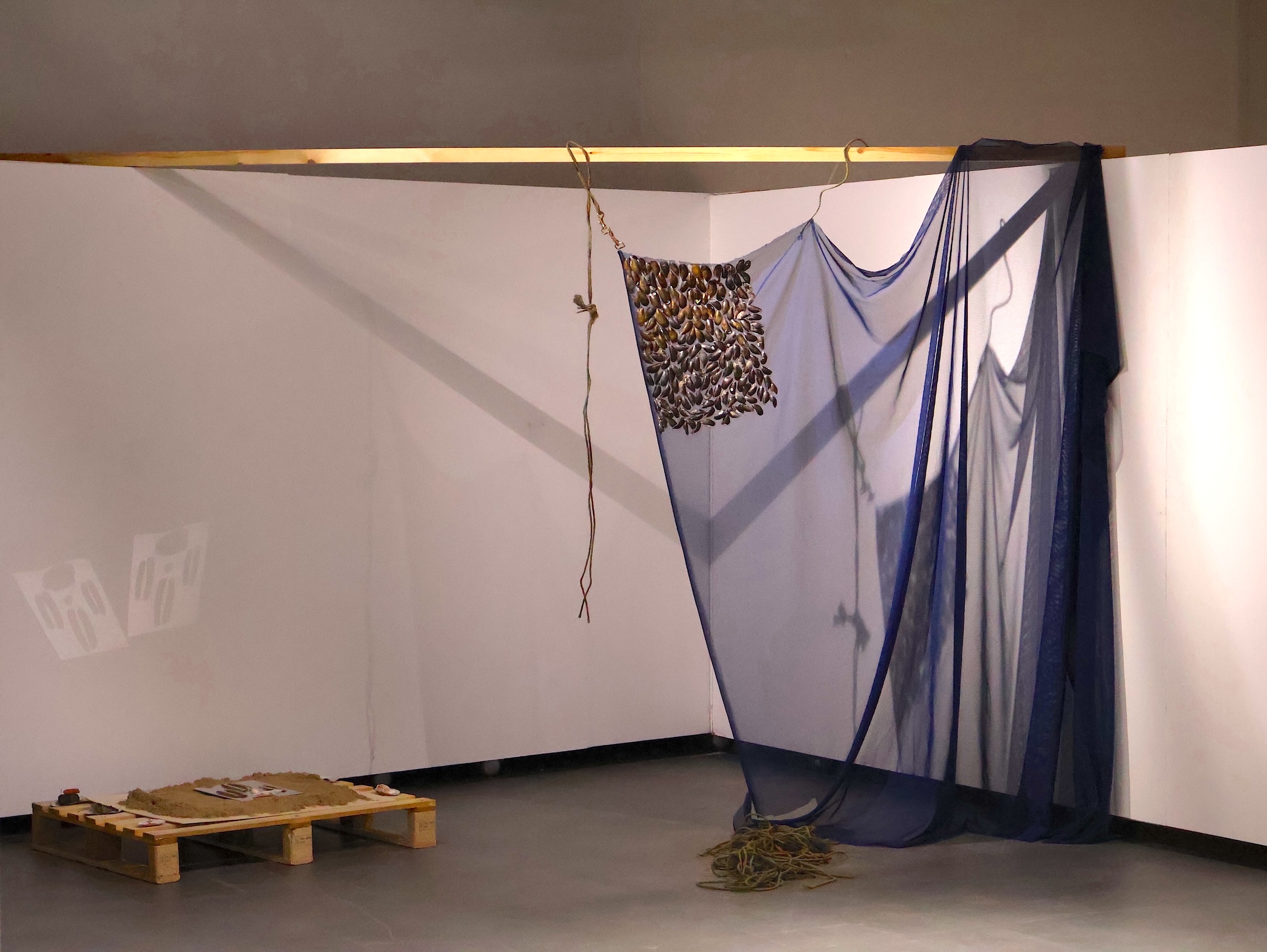
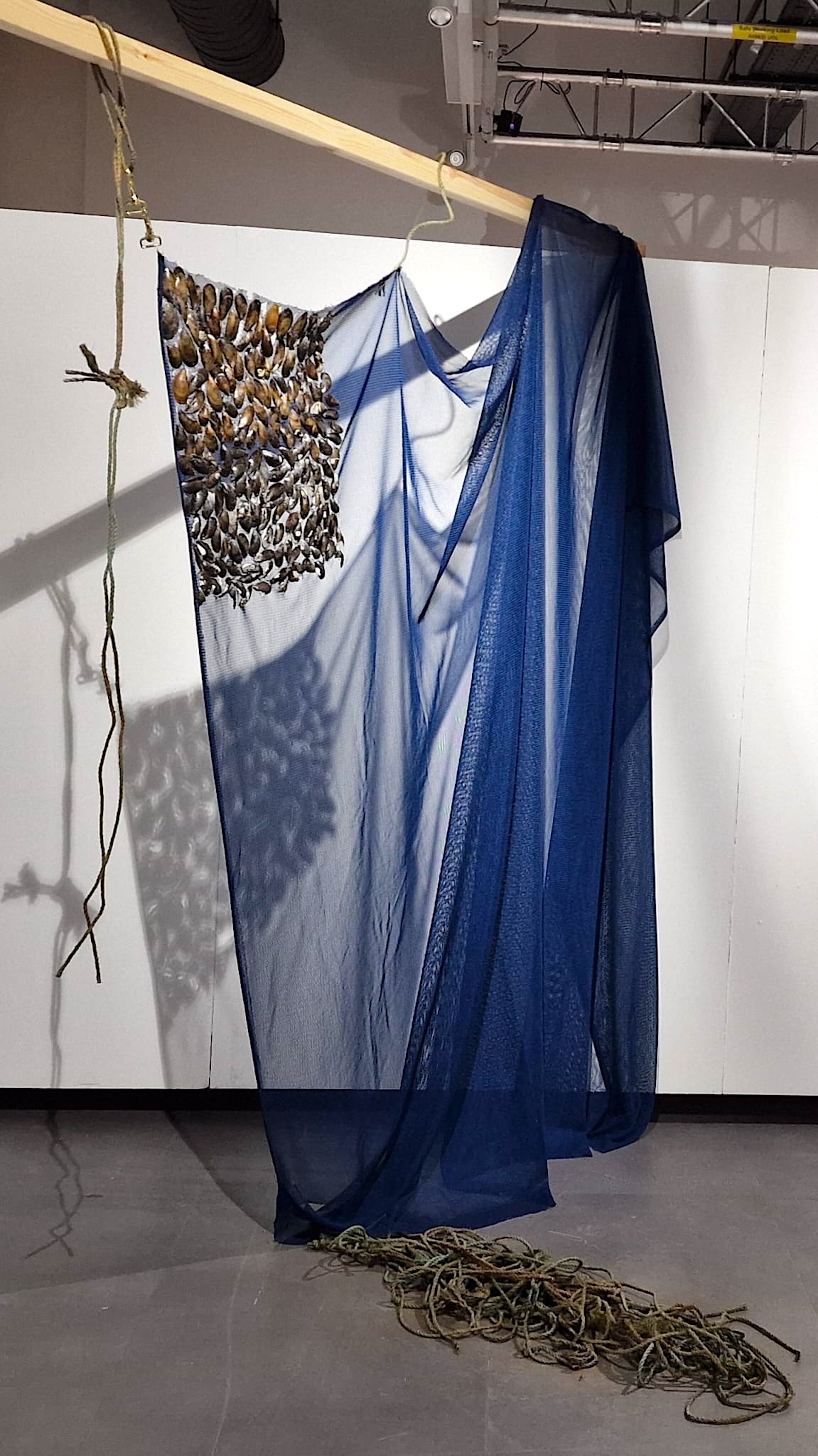
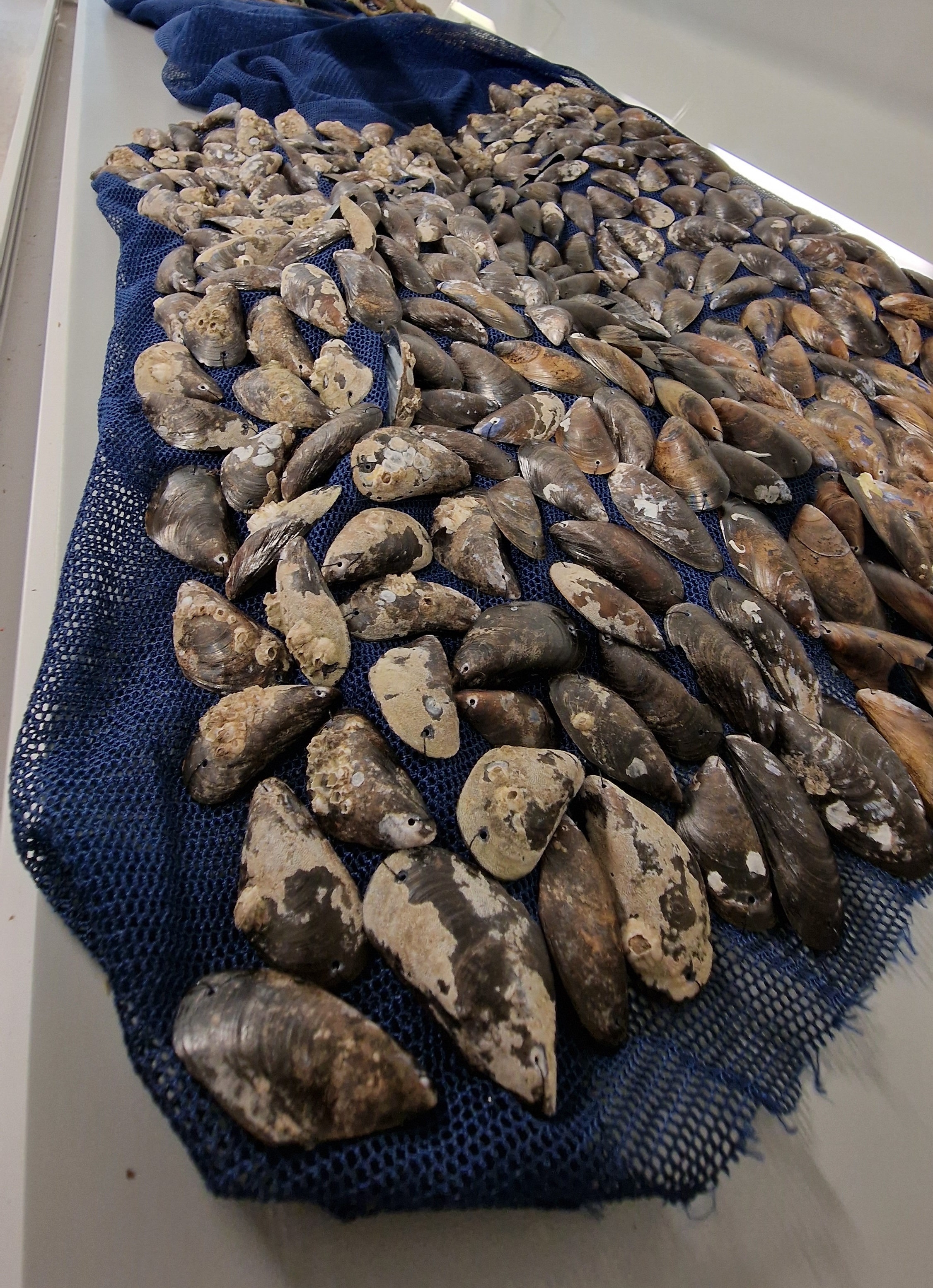
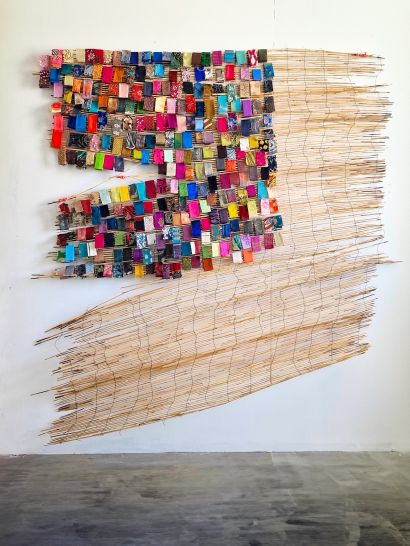
The Mussel Veil is a rectangular assemblage of mussel shells woven into a textile surface. Collected from different shorelines, the shells are organised into a rectilinear field, forming a dense plane that holds a tension between fragility and structure. Their colours map their origins: supermarket mussels I consumed introduce soft brown tones; shells from Crosby Beach deepen into near-black, while those gathered from the Wirral carry barnacles, bringing in greys and whites.
The work is rooted in a slow, labour-intensive process. Hundreds of shells were collected, cleaned, individually drilled, and woven onto donated mesh. Found rope from the docklands supports the structure, embedding it further within a cycle of use, discard, and recovery.
The ordered square format and repetitive gestures reflect the potent tension between notions of intuitive play and the ordering principles in disciplined construction, enacted in my engagement with materials. Light activates the textured surface, inviting close inspection and movement around the piece. The reverse side of the mesh has been partially burnt, revealing the undersides of the shells and allowing light to pass through, creating moments of translucency and exposure.
This work also functions as an evolving record. I intend to continue expanding it by collecting mussel shells from different cities and countries, allowing the piece to grow through time and geography.
Through my research, I learned that mussels, as filter feeders, are deeply affected by ocean pollution. Their shells can contain traces of toxins such as lead, cadmium, and arsenic. This knowledge shifted my approach to making, prompting me to consider not only the conceptual weight of the material but also the physical risks embedded in its handling, particularly through processes like drilling or sanding, which may release harmful dust. The shells become more than material; they are evidence. They hold within them the imprint of environmental damage. In this way, the work carries both a physical and symbolic weight, making visible the often unseen consequences of ecological harm.
The third image shows when further mussels were woven from the Wirral.