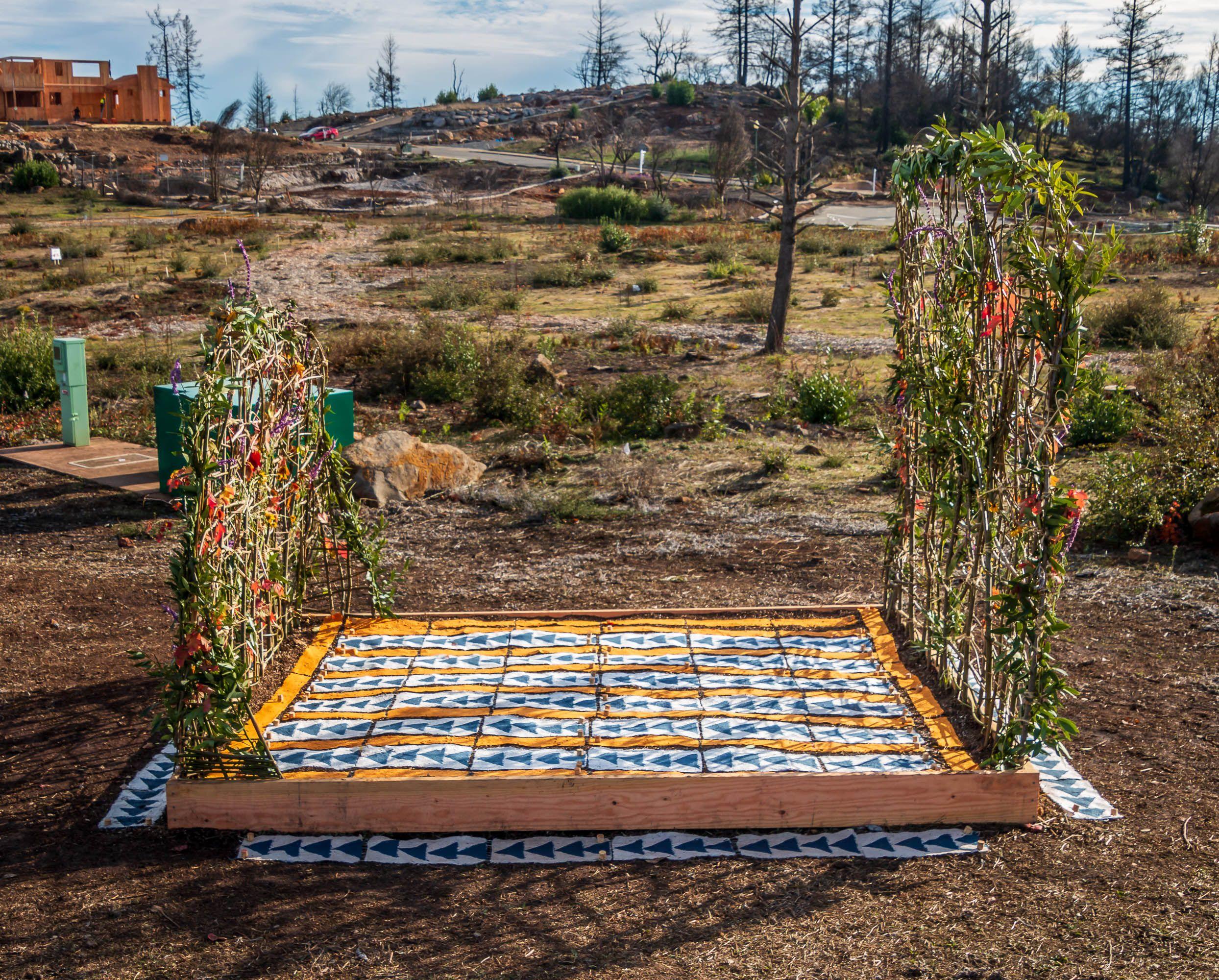
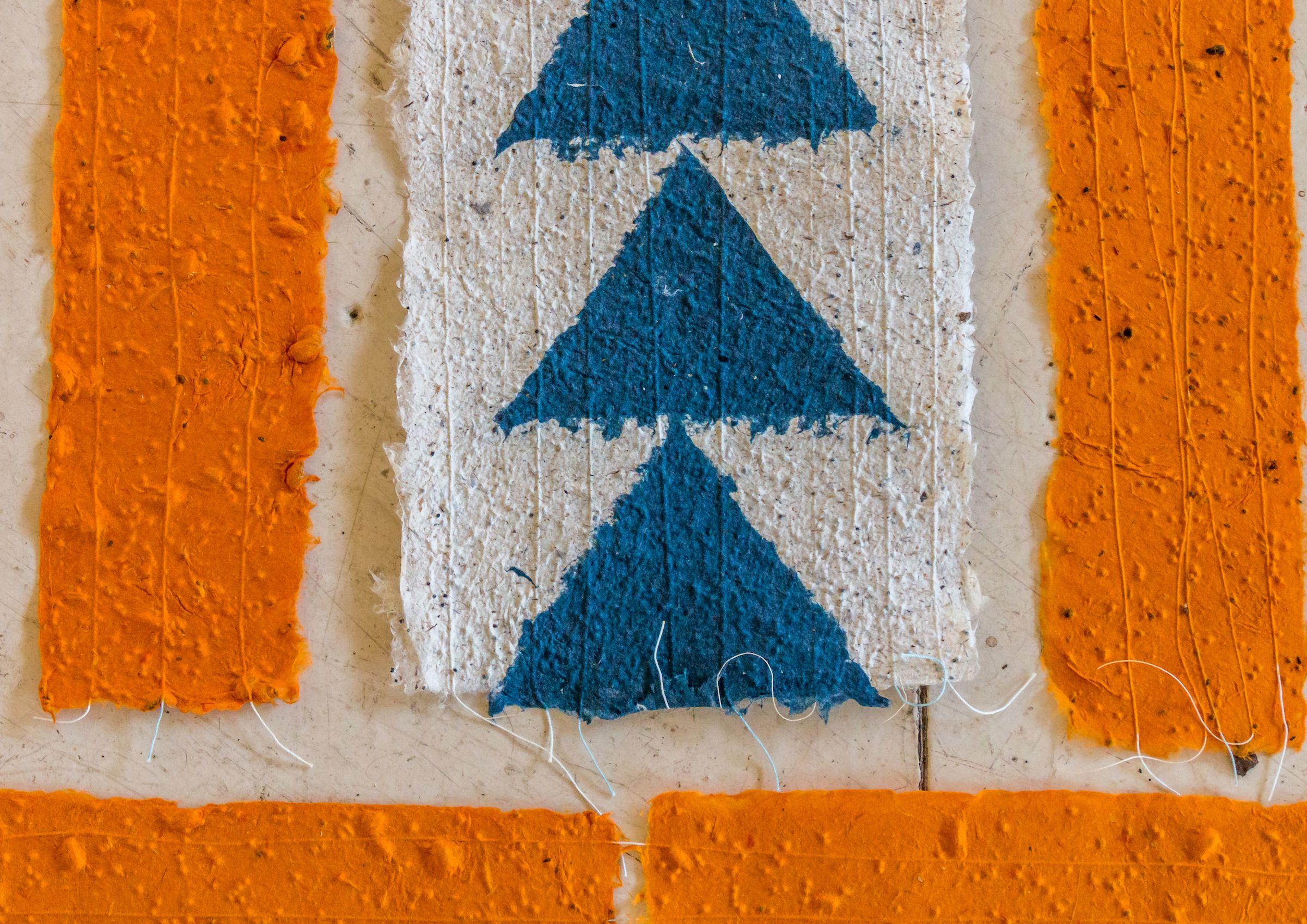
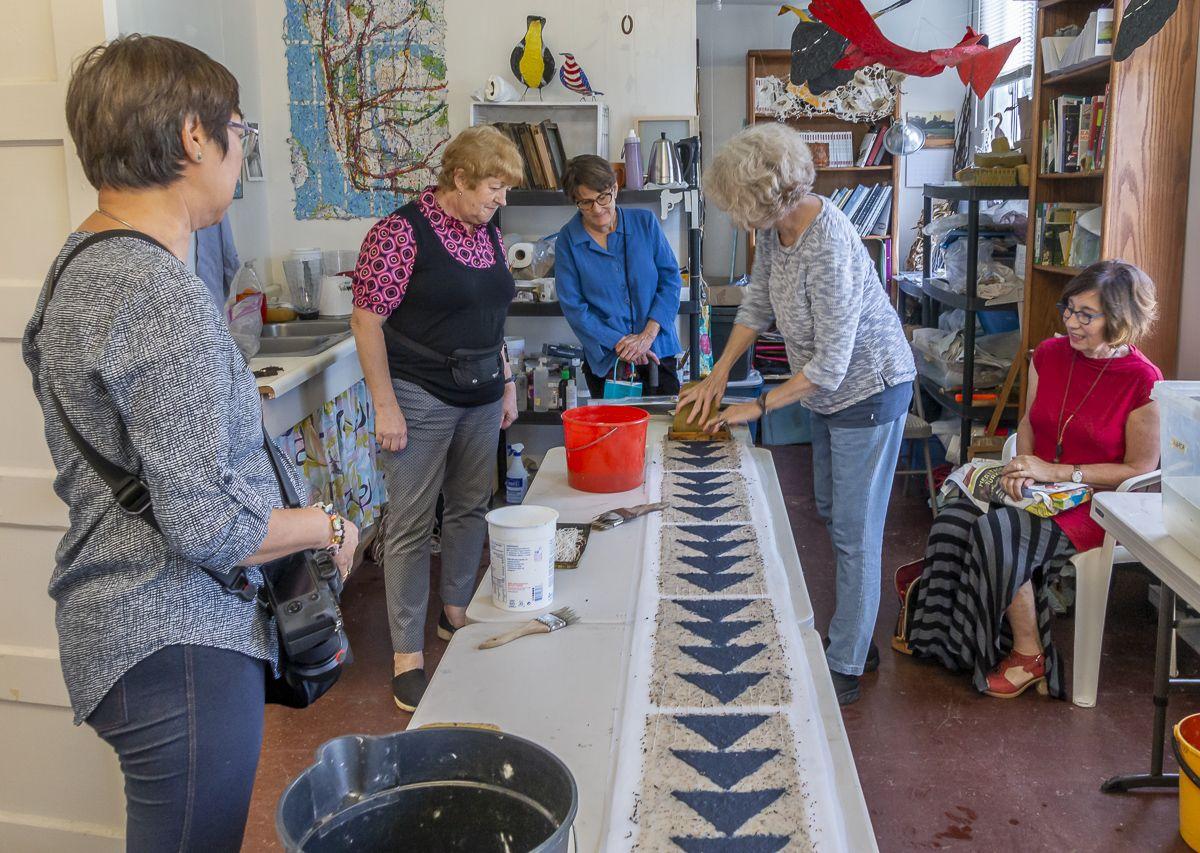
My “Living Quilts” are an ongoing series of outdoor public art installations that began in the mid 90s and grew out of my experiences making outdoor art installations and vainly trying to make the art permanent and last through wind, rain and other weather as well as human and animal interactions. Everything changes with time and with the elements, and permanence is a vain hope that ignores nature and the environment. So, I decided to go with the natural cycle of life and make my art purposefully change and celebrate its non-permanence and beauty in all stages. My works are meant to transform and change over time and produce a living blooming flower bed from the living quilt of handmade paper with seeds for wildflowers in the pulp. All materials are biodegradable and natural and can go back to the earth and nourish it.
There is something about a handmade quilt. It is made to keep you warm. It covers you in bed and snuggles around you outdoors or indoors. It is also beautiful with its organized colors and patterns and textures. It is usually made of scraps from clothes or other worn household fabrics. It might be made by your mother or grandmother or other female relatives or friends and gifted or passed down to you. Its design may follow a traditional pattern with individual creative touches and personal connections such as seeing a piece of a favorite dress when you were a child.
My “living quilts” are inspired by the traditional quilts I grew up with in Alabama. I think of my living quilts as providing a warm cover for the earth and giving seeds for new growth as well as creating art for aesthetic enjoyment in all its phases of transformation. The living quilt is a beautiful colorful and graphic design when installed, but I allow and encourage it to change and transform. The seeds in the paper pulp provide textural interest and they bring new life and color to the landscape. Each design for the quilt pattern has some meaning for or connection to the community and the place. TheI like seeing the quilt in all its phases of transformation. With rain or watering and time, the paper pulp begins to dissolve into mulch to nourish the earth, and the seeds start to sprout. The seedlings are different shades of green with different leafy textures, and eventually they bloom as wildflowers in the same colors of the quilt pattern a few months later. Then after the blooms have disappeared and the flowers have made seed, it all goes to sleep again and waits to reawaken the next spring. The pattern becomes more indistinct and some wildflowers bloom more than other and for longer periods of time. Watching this artwork over time helps us to appreciate natural transformation and the cyclical processes of nature and understand the importance of weather, water, soil conditions and human interactions on nature. We cannot control nature but we can work with nature as partner and co-creator. This work also connects us to the coming of Spring and the beginning of new life, like the tiny seedlings that sprout from the wildflower seeds embedded in the paper pulp. It is meant to give hope for a better future and a new beginning. Living Quilt for Santa Rosa commemorates the tragic wildfires in Santa Rosa and features the "flying geese" quilt pattern that reflects on escaping fires by flying away.