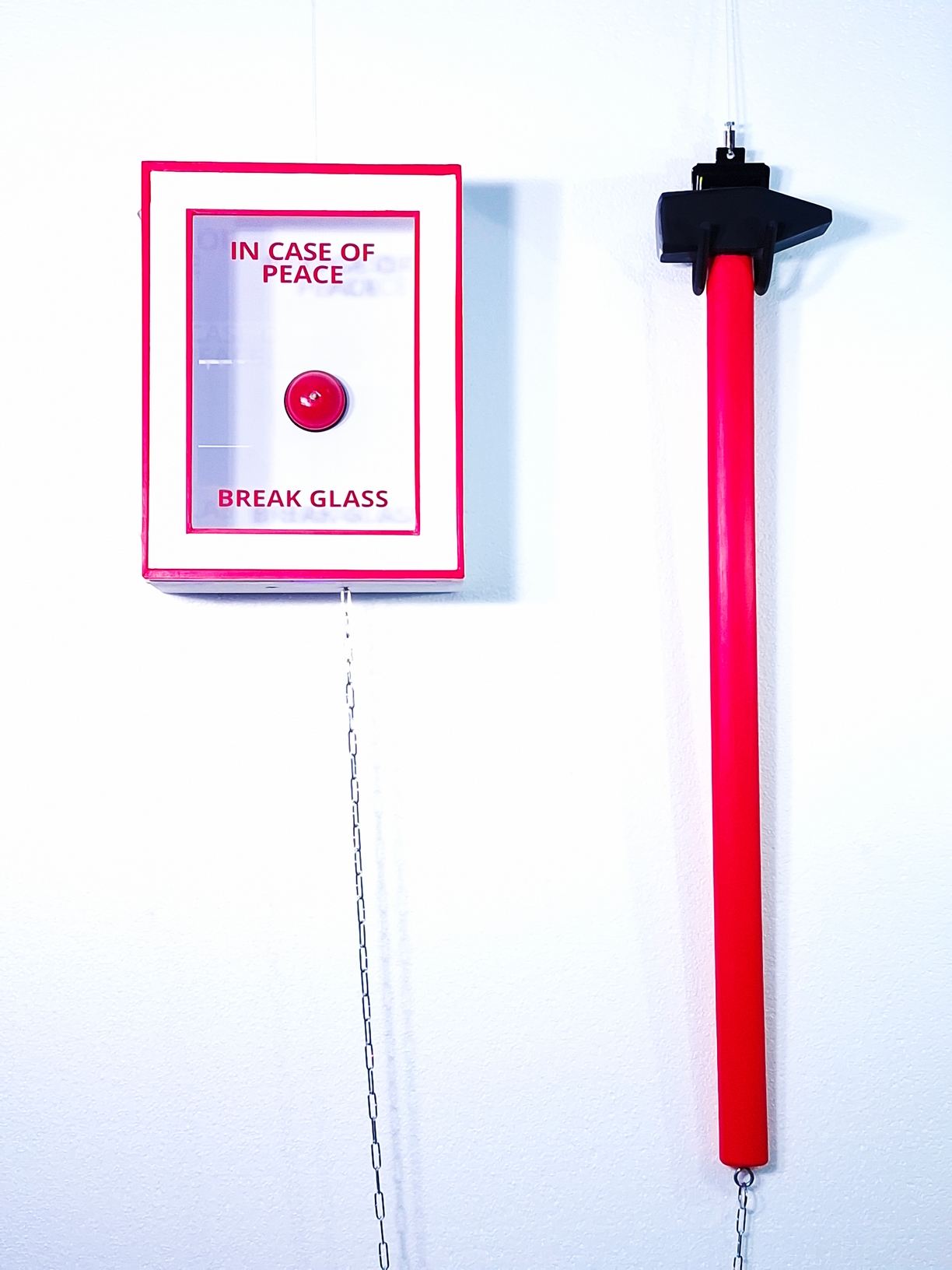
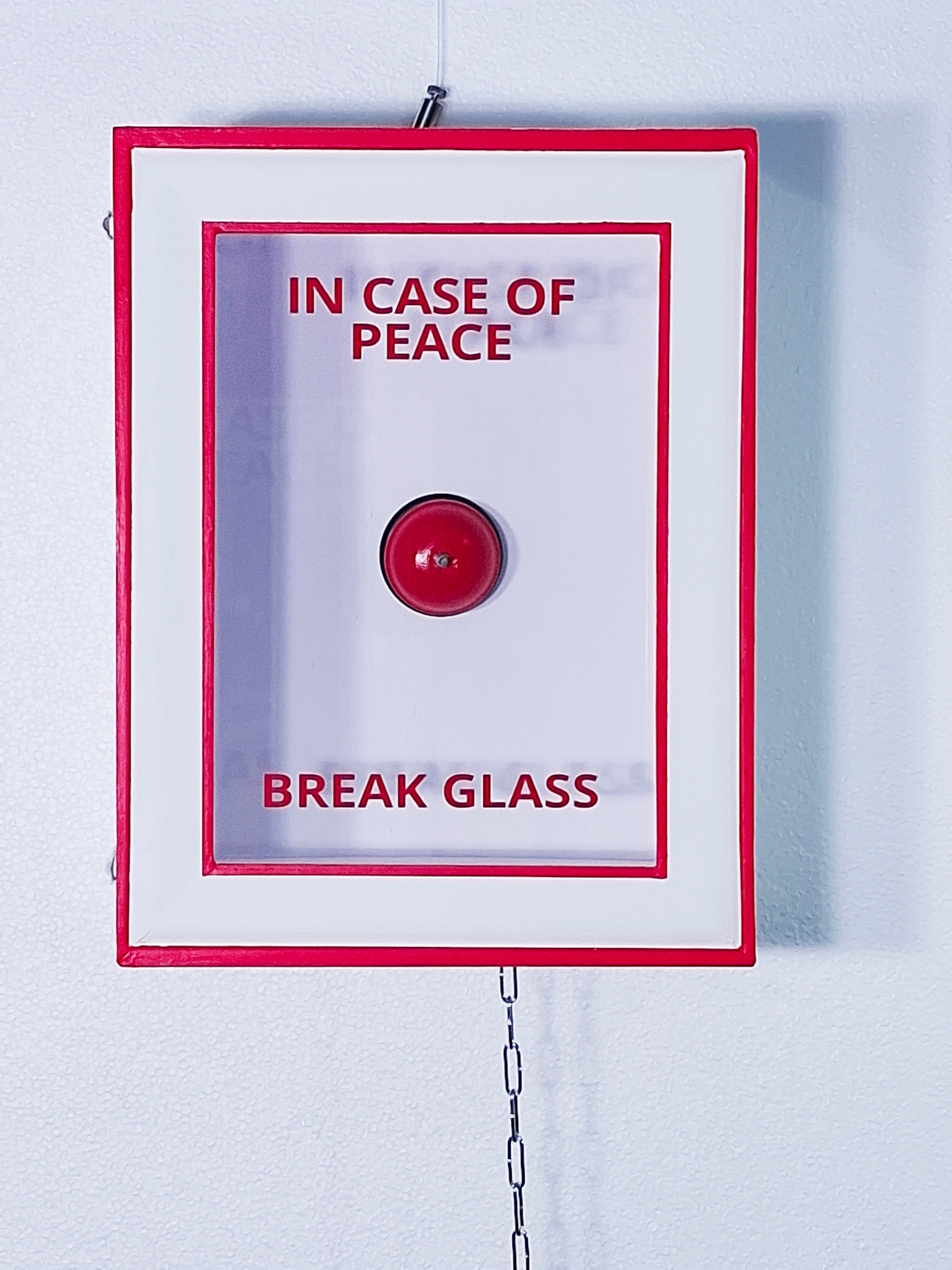
This installation plays with the familiar look of emergency devices. The white box with a red frame reminds us of the Red Cross, ambulances, hospitals, and alarm systems. These colors usually stand for help, safety, and care. We trust them. They signal protection in moments of danger.
Inside the box, however, the message reads: “IN CASE OF PEACE — BREAK GLASS.” Instead of offering help, it gives an order to destroy. This creates a strong contradiction. Peace is normally something we want to protect, yet here it is treated like an emergency that requires action.
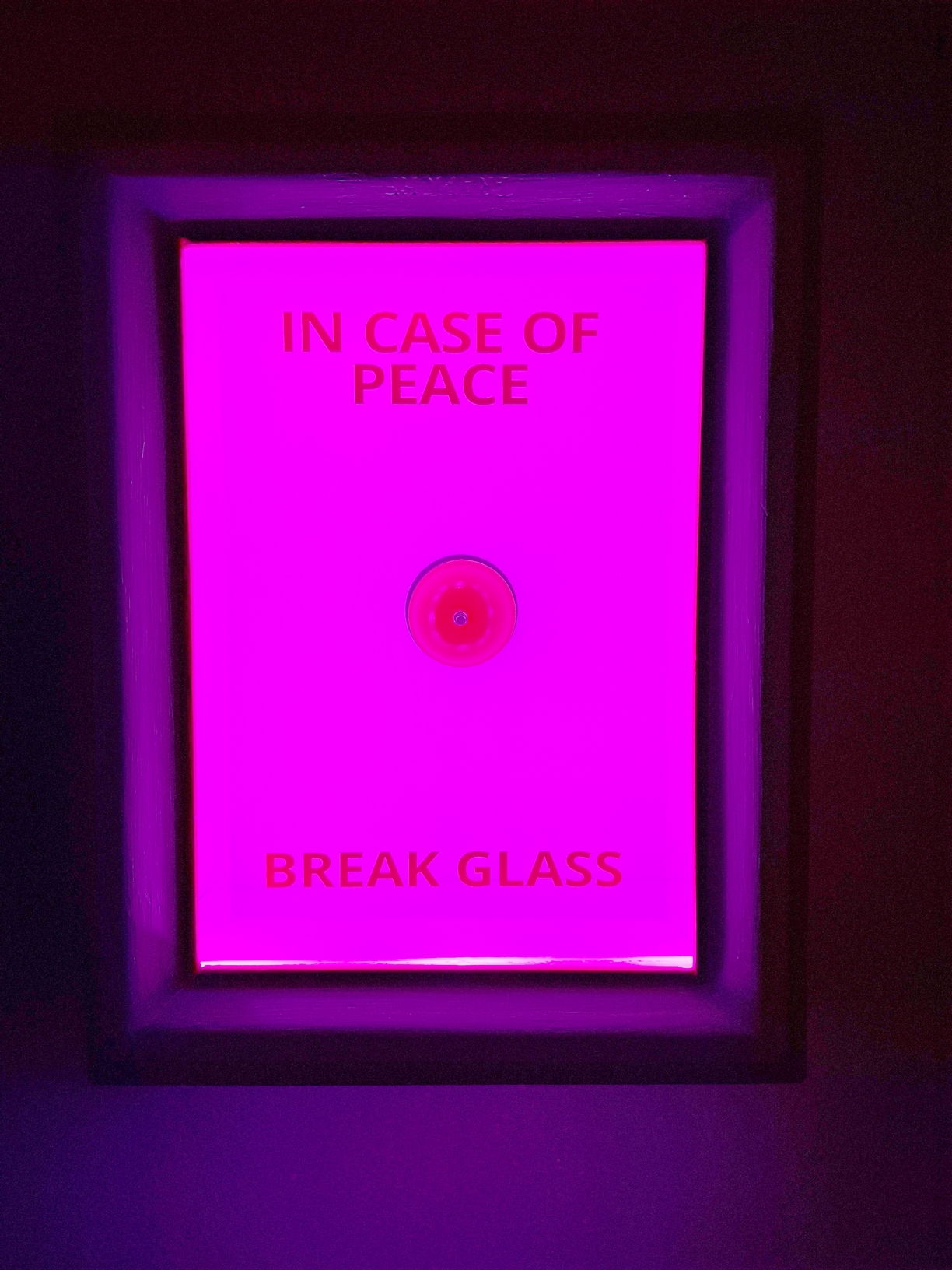
The purple LED light adds to this feeling. Its cool glow gives the box a sterile, clinical look, similar to a hospital or laboratory. The light feels controlled and institutional, as if the instruction is official and unquestionable. It makes the situation feel calm on the surface, but also emotionally distant.
The hammer hanging next to the box is important. A hammer is a tool of force. If peace happens, the viewer is told to use it—to break the glass. But breaking glass is already an aggressive act. It creates noise, damage, and disturbance. So the action meant to respond to “peace” immediately destroys it. Peace becomes something fragile that cannot last.
When there is peace, it is a fragile moment that deserves care. Instead of reacting quickly or striking the hammer, it may be better to pause and think. Peace asks for patience and reflection, reminding us that our actions can easily break what is calm and balanced. Sometimes the most important choice is not to act, but to protect the peace that is there.
At the same time, the work can be read as a warning. The instruction does not address only the viewer in the gallery, but symbolically all of us—including those who hold power. In a world where political decisions can quickly turn tension into conflict, the installation quietly asks world leaders and citizens alike to reconsider their reflex to act, react, or escalate. It reminds us that peace is fragile, and that once it is broken, repairing it is far more difficult than protecting it in the first place.